Confidence You Can See: Hot Men’s Swimwear Trends 2026
Swimwear sits at an unusual crossroads: it has to function in water, feel comfortable in motion, flatter the body in bright daylight, and still match personal style. That is why choosing the right pair is rarely about trends alone. A strong fit, smart fabric, and well-judged color palette can make one pair far more wearable than three impulse buys. For men refreshing their warm-weather wardrobe, understanding those details saves money and makes every beach, pool, and travel day easier.
Outline
- Why fit is the foundation of good swimwear and how to assess length, rise, leg opening, and support.
- How different body types, activities, and style goals influence the best swimwear silhouette.
- Which colors and patterns are expected to define 2026, from understated neutrals to confident statement prints.
- What modern fabrics now offer in terms of stretch, quick drying, durability, lining, and sun protection.
- How to combine all of these factors into a practical buying strategy for a swimwear wardrobe that feels current and wearable.
1. Why the Right Swimwear Fit Matters More Than Most Men Think
Fit is the first decision, the one that quietly shapes every other part of the swimwear experience. A strong color can catch the eye, and a premium fabric can feel impressive in the hand, but if the cut is wrong, the garment rarely earns a second outing. Good swimwear should support movement, stay comfortable when wet, and look intentional rather than accidental. That means a man choosing swimwear for 2026 should begin with proportion before thinking about trend language.
The most important fit elements are fairly simple:
-
Length: shorter trunks often create a cleaner, more athletic line, while longer styles offer more coverage and a relaxed feel.
-
Waist fit: the waistband should sit securely without digging in or sliding when wet.
-
Leg opening: too tight can restrict movement, too wide can look oversized and lose shape.
-
Rise and seat: enough room is essential, especially after a swim when fabric clings more closely.
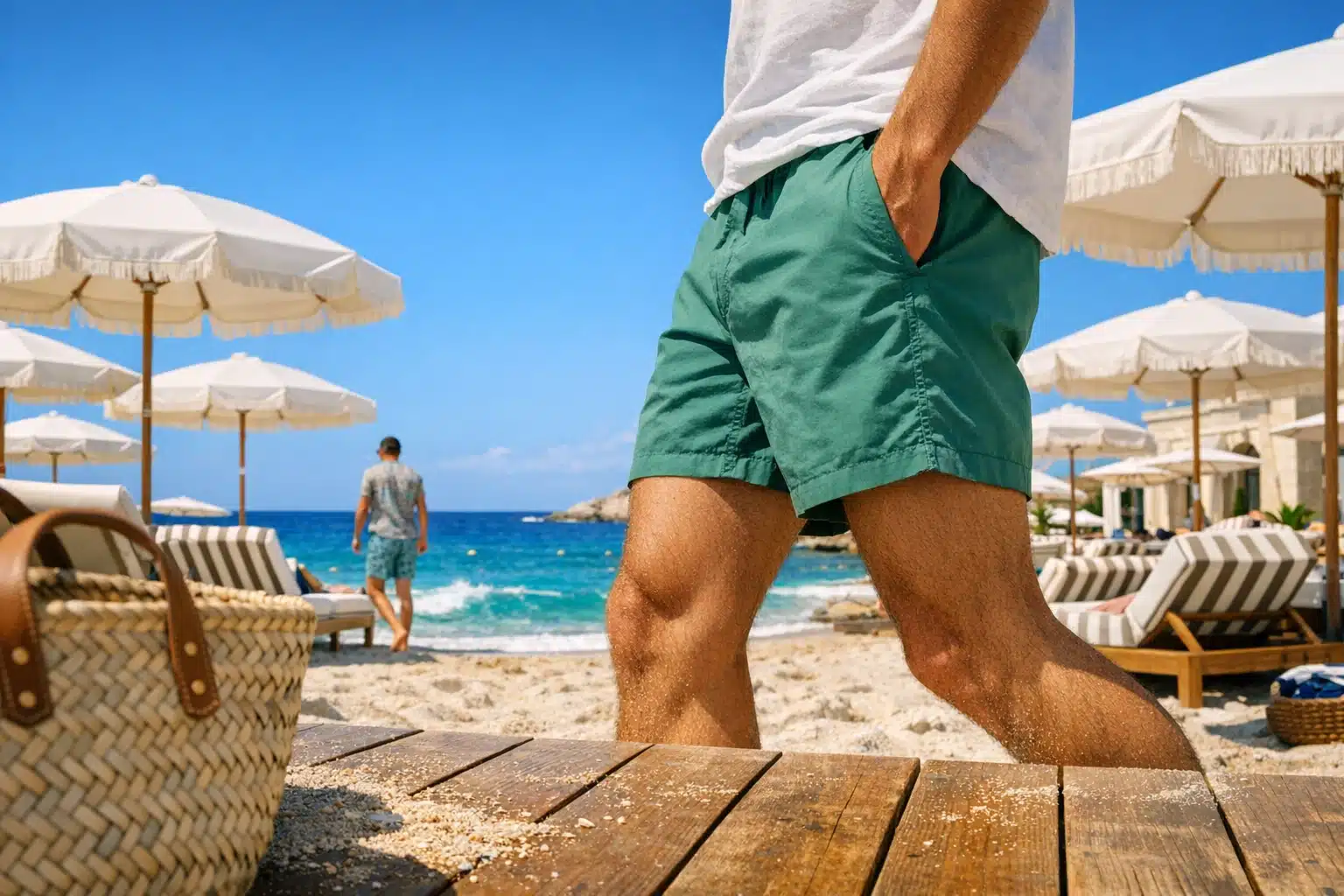
In recent years, mid-thigh lengths have become especially popular because they balance versatility and modern style. They usually work well on a wide range of heights and builds, offering enough coverage for comfort without the heavy visual effect that longer board-short silhouettes can sometimes create. Men with shorter legs may find that a slightly shorter inseam helps lengthen the overall look of the body, while taller men often have the freedom to experiment with a broader range of lengths.
Activity also matters. If the plan is serious lap swimming, a streamlined cut reduces drag and shifting. If the goal is a hotel pool, beach lunch, and boardwalk walk in the same afternoon, tailored swim shorts with a neater shape usually perform better. The ideal pair should move smoothly between settings instead of looking too technical or too sloppy for either one.
Explore 2026 men’s swimwear trends with insights on fit, fabrics, colors, and confidence‑boosting styles designed for comfort and modern appeal.
There is also a psychological side to fit that deserves attention. Men often describe confidence in clothing as a visual thing, but it is just as physical. A waistband that stays put, a lining that does not bunch, and a leg opening that does not flap or bind can change posture and ease. Good swimwear lets the wearer stop adjusting and start enjoying the setting. In that sense, fit is not vanity; it is usability. And in 2026, the best swimwear is increasingly designed with that idea in mind.
2. How to Choose a Fit That Works for Your Body Shape, Style, and Swim Plans
There is no single “correct” swimwear cut for every man, which is why the smartest approach is to match the fit to three variables at once: body shape, style preference, and intended use. This is where swimwear becomes more personal and more interesting. Two men can wear equally well-chosen trunks that look completely different because each pair responds to different needs.
For men with a lean frame, many silhouettes work well, but mid-length trunks with some structure often add presence without overwhelming the body. Very long shorts can sometimes make a slim build look narrower, especially when the fabric is loose and unlined. Men with a broader or more muscular build often benefit from cuts that skim rather than squeeze. A trim fit through the seat and a clean leg opening help maintain shape without creating unnecessary tension. For stockier builds, the goal is usually balance: enough room for comfort, a stable waistband, and a length that does not visually shorten the legs.
It helps to think in terms of visual proportion:
-
Shorter inseams often make legs appear longer.
-
Darker colors create a quieter, more streamlined effect.
-
Vertical pattern movement can elongate the body.
-
A tailored leg opening usually looks more polished than a boxy one.
The waistband deserves special attention. Elastic waists are practical and forgiving, but the best versions combine elasticity with a drawcord so the shorts can be adjusted once they are wet. Flat-front designs often look more refined outside the water, which makes them useful for travel or resort settings. Hybrid styles, which blend a tailored front with hidden stretch, are becoming more common because they solve both problems at once.
Then there is the question of how swimwear will actually be used. A man who spends more time swimming than sunbathing may prefer a more secure, closer fit and lightweight technical fabric. Someone looking for an all-day vacation piece may prioritize pockets, softer hand feel, and a silhouette that pairs well with a linen shirt or polo. The more active the day, the more important stability becomes. The more social the setting, the more important polish becomes.
A fitting room test can reveal a surprising amount. Sit down. Squat once. Raise a knee. Walk a few steps. If the waistband rolls, the fabric pulls sharply across the front, or the leg openings flare strangely, that pair is sending a clear message. Good swimwear should disappear into the day rather than demand constant correction. The right fit feels almost quiet, and that quietness is often what reads as confidence.
3. Trending Colors and Patterns for 2026: From Quiet Luxury to Playful Energy
Color is where swimwear becomes expressive. In 2026, men’s swimwear is expected to split into two broad directions: polished restraint and artful energy. One side leans on subtle, expensive-looking tones that feel timeless and versatile. The other embraces patterns and bolder shades that turn swimwear into a statement piece rather than an afterthought. Neither direction is inherently better; each simply communicates a different kind of confidence.
The refined end of the trend spectrum includes deep navy, mineral green, clay, sand, charcoal, faded teal, and off-black. These shades work particularly well for men who want swimwear that can move easily from water to terrace lunch. They also pair naturally with neutral resort staples like white shirts, woven sandals, and lightweight overshirts. There is a reason muted tones remain popular: they are dependable, flattering, and easy to style. They rarely look dated because they are rooted in classic menswear logic rather than short-lived novelty.
At the same time, 2026 does not appear to be a shy year. More adventurous collections are expected to feature sun-faded citrus tones, aquatic blues, coral accents, and prints inspired by retro postcards, abstract brushwork, coastal geometry, and reworked tropical motifs. The difference from older loud swimwear trends is in the execution. Instead of chaotic neon or oversized novelty graphics, the newer mood is more curated. Patterns feel designed rather than random, playful rather than gimmicky.
Men deciding between solids and prints can use a few simple style rules:
-
Choose solids if versatility is the priority.
-
Choose small or medium-scale prints if you want personality without visual overload.
-
Choose larger graphics when swimwear is the centerpiece of the look and the rest of the outfit is simple.
-
Use darker base colors if you prefer patterns that feel easier to wear.
There is also a practical side to color. Darker shades can appear more streamlined and may show less wear over time, while lighter colors and highly saturated prints sometimes reveal lining structure or water marks more easily. That does not make them a poor choice, only one that benefits from better construction and higher-quality fabric.
Perhaps the most interesting development is the way color now connects with mood. Minimal palettes communicate calm, control, and maturity. Brighter trunks suggest energy, openness, and holiday spirit. On a beach, where sunlight intensifies every hue, color becomes part of atmosphere. The best 2026 swimwear trends understand that fact: a pair of trunks is not just clothing, but a small piece of visual storytelling.
4. Fabric and Comfort Features in Modern Swimwear
If fit is the skeleton of swimwear and color is its personality, fabric is the living tissue that determines comfort in the real world. This is where modern swimwear has improved significantly. Today’s better options are designed not only to survive salt water, sun, and chlorine, but also to feel better during long wear. That matters because many men are no longer buying swimwear just for swimming. They want one pair that can handle a dive, a walk, a lunch stop, and an afternoon in the heat.
Most modern swim shorts are built from polyester, nylon, or blends that include elastane. Each brings different strengths. Polyester is widely valued for durability, shape retention, and resistance to chlorine. Nylon often feels softer and smoother, which gives it a more premium hand feel, though performance depends heavily on weave and finishing. Elastane, usually added in smaller percentages, improves stretch and recovery, making movement easier and the fit more forgiving.
Comfort now depends on a mix of technical details:
-
Four-way stretch for easier walking, sitting, and swimming.
-
Quick-dry finishing that reduces the clingy, heavy feeling after leaving the water.
-
Breathable mesh or compression-style lining that offers support without abrasion.
-
Flat seams or smoother interior construction to limit chafing.
-
UPF-rated fabric in some styles for added sun protection.
-
Lightweight recycled fibers that reduce bulk while appealing to sustainability-minded shoppers.
Lining is a particularly important comfort factor. Traditional mesh linings can work well, but low-quality versions often feel scratchy or bunch awkwardly. Newer swimwear sometimes uses softer mesh, abbreviated support panels, or boxer-brief style compression liners. Many men find these upgrades easier to wear for long periods because they reduce friction and create a more stable fit. The right choice depends on preference, but it is worth checking rather than assuming all linings feel the same.
Fabric weight matters too. Very light materials dry fast and pack easily, making them excellent for travel. Slightly heavier fabrics can drape better and look more refined outside the water. The best option depends on whether the priority is athletic performance, all-day comfort, or a more elevated resort appearance.
A final point often overlooked is texture. Some modern swimwear fabrics are matte and understated, others crisp and technical, and others softly brushed for a more luxurious finish. That surface quality changes how color appears and how expensive the garment looks. In other words, fabric is not just performance engineering. It shapes style, comfort, and the full wearing experience from first try-on to the final hour of a long summer day.
5. Conclusion for Men Shopping Smarter in 2026
For men updating their swimwear in 2026, the best approach is not to chase every trend but to choose selectively and well. Start with fit because it determines whether the garment actually works on your body and in your routine. A strong pair of swim shorts should sit securely, move comfortably, and hold its shape when dry or wet. Once that foundation is in place, color and pattern become much easier to navigate. You are no longer using design to rescue a weak cut; you are using it to express taste.
The trends themselves offer room for different personalities. If your style leans classic, there is plenty to like in deeper neutrals, refined mid-thigh silhouettes, and fabrics with a clean matte finish. If you want more character, 2026 also welcomes expressive prints, brighter accents, and retro-inflected patterns that feel upbeat without slipping into costume. The strongest choice is usually the one that reflects how you want to feel in the setting where you will actually wear it.
When comparing options, it helps to keep a practical checklist in mind:
-
Does the waistband stay secure without pinching?
-
Is the inseam flattering for your height and proportions?
-
Will the fabric feel comfortable after an hour, not just for thirty seconds in a fitting room?
-
Does the lining support you without irritation?
-
Can the color or print work with items you already own for holidays and weekends?
Men often underestimate how much better the right swimwear can make an entire trip feel. The difference shows up in small moments: walking to the water without self-consciousness, sitting down without adjusting the waistband, drying off quickly enough to head to lunch, and looking pulled together in photographs without trying too hard. Good swimwear does not need hype to justify itself. It proves its value through comfort, ease, and repeat wear.
So if you are shopping this season, think like an editor rather than an impulse buyer. Choose one or two pairs that genuinely fit, reflect your style, and use modern materials intelligently. That is the simplest route to a wardrobe that feels current, practical, and quietly confident. In a category where function and appearance are always competing, the most successful 2026 swimwear manages to satisfy both.