2-Night All-Inclusive Lake District Spa Retreat: What to Expect
The Lake District has a rare way of making a short trip feel substantial, which is exactly why spa breaks work so well here. Between lake views, wooded slopes, and hotels built for slowing down, even two nights can leave you feeling properly reset rather than briefly distracted. In this guide, you will find an outline of the best spa hotels in the region, practical advice for planning a compact wellness retreat, and a clear look at how all-inclusive packages differ from standard stays.
Outline:
- Why the Lake District is especially well suited to short wellness breaks
- How to choose among the area’s most appealing spa hotels
- Practical planning advice for making a two-night retreat feel spacious
- The real differences between all-inclusive packages and standard stays
- What a typical two-night all-inclusive spa break looks like in practice
Why the Lake District Works So Well for a Short Wellness Escape
A long retreat has obvious appeal, but many travellers are not trying to disappear for a week. They want something more realistic: a break that fits around work, family, or a crowded calendar and still feels restorative. The Lake District is unusually strong for that kind of trip. It offers a combination that is difficult to fake elsewhere in England: dramatic natural scenery, established hospitality, and spa hotels that understand the rhythm of a weekend stay.
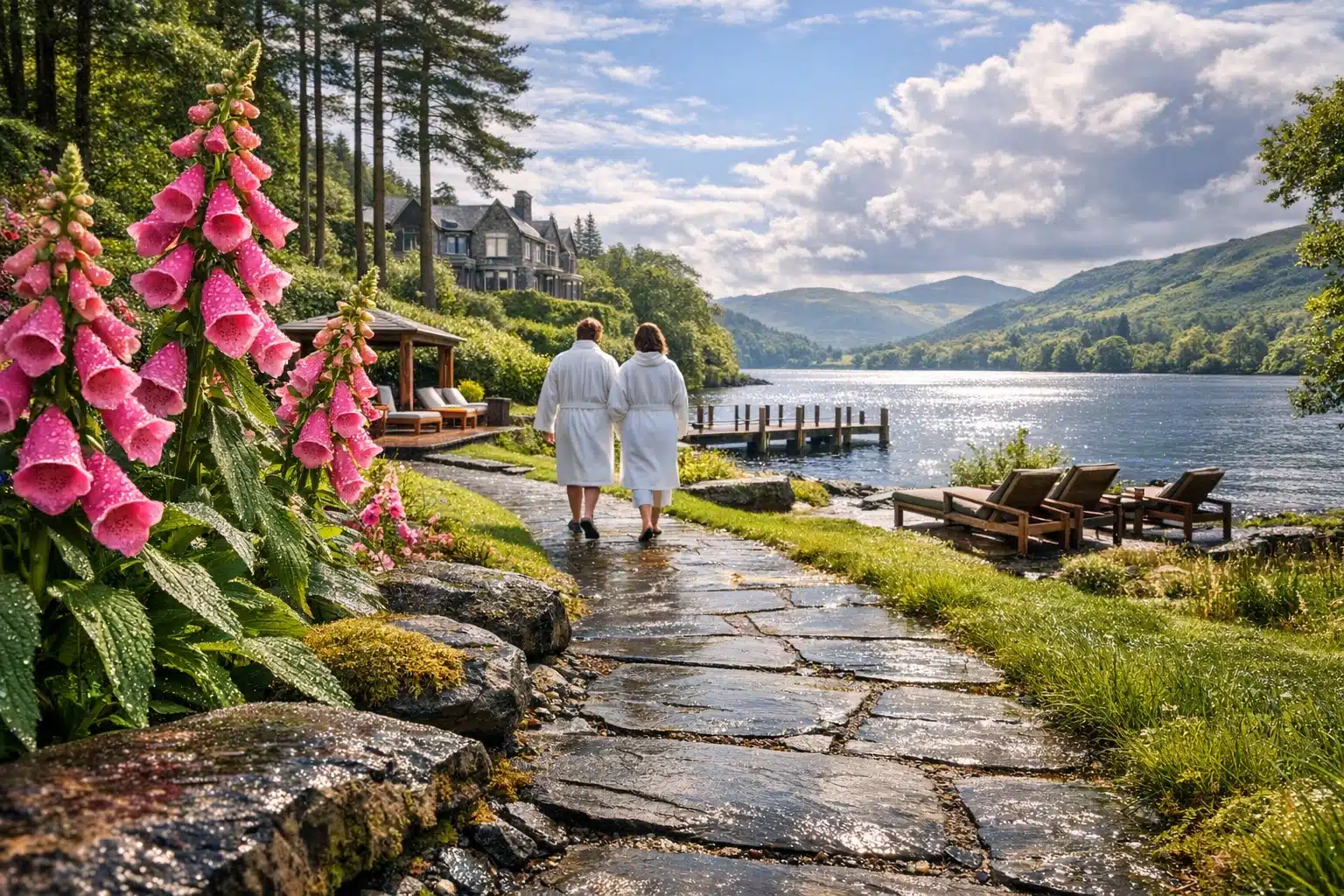
Part of the region’s appeal comes from contrast. Many people arrive from dense towns and fast schedules, then step into landscapes shaped by water, stone, and open sky. The shift is immediate. A lakeside walk before breakfast, an hour in a thermal suite, and dinner with a fell-side view can make a two-night stay feel richer than its short length suggests. It is not magic, but it can feel a little like borrowed time.
The area also suits different versions of wellness. For some guests, a retreat means hydrotherapy pools, aromatherapy treatments, and a silent reading corner. For others, it means a morning hike followed by a massage and an early night. The Lake District supports both. Many hotels combine indoor spa facilities with direct access to gentle trails, lake cruises, village high streets, or scenic drives. That flexibility matters because not everyone relaxes in the same way.
There is a practical reason the destination remains popular as well. The Lake District is a UNESCO World Heritage Site, recognised in 2017 for its cultural landscape, and it has a mature tourism infrastructure. That means visitors can often choose between luxury country-house properties, contemporary spa resorts, and smaller hotels with wellness features. Even when preferences differ, there is usually a suitable option within the broader region.
Short retreats are especially effective here for travellers who want:
- A change of scenery without planning a complicated overseas trip
- A mix of spa time and outdoor time rather than one or the other
- Good dining built into the stay, reducing decisions and travel between venues
- A hotel setting that feels distinct from daily life
The biggest advantage of a two-night break is focus. You are not trying to do everything. You are selecting a few experiences that work well together: one scenic arrival, one meaningful meal, one treatment, one unhurried morning. When people describe feeling refreshed after a short spa trip, that is often the real reason. The pace becomes deliberate. In the Lake District, where weather, water, and wide views encourage you to slow down, that deliberate pace feels natural rather than forced.
Best Spa Hotels in the Lake District: Standout Stays for Different Travellers
Any list of the best spa hotels in the Lake District should begin with a simple truth: there is no universal winner. The right property depends on whether you care most about lake views, treatment quality, dining, privacy, design, or access to walks. Some hotels excel because they feel polished and luxurious. Others stand out because they strike a satisfying balance between comfort and ease. A smart shortlist starts by matching the hotel’s style to your version of rest.
Lodore Falls Hotel and Spa in Borrowdale is one of the most talked-about options for travellers who want memorable scenery and a strong spa identity. Set against a dramatic backdrop near Derwentwater, it appeals to guests who want a resort-like experience without losing the sense of being deep in the landscape. The spa has built a reputation around its thermal journey and outdoor elements, making it particularly attractive for cooler months when steam and fresh air create that classic contrast spa visitors love.
Low Wood Bay Resort and Spa, near Windermere, is a strong choice for travellers who want a modern feel and easy access to one of the area’s most famous lakes. Its appeal lies in combining contemporary wellness facilities with a location that still delivers the visual drama people expect from the national park. If your ideal stay includes a sleek spa, an attractive dining setup, and a base that feels active rather than sleepy, this is often near the top of the list.
The Daffodil Hotel and Spa in Grasmere tends to suit guests who want calm without too much formality. Grasmere itself is one of the most attractive village bases in the region, and that matters because a short retreat often benefits from easy walkability. You can spend time in the spa, wander the village, and still feel that everything is close at hand. For couples planning a compact escape, that convenience can be more valuable than excess scale.
Another Place, The Lake on Ullswater stands out for travellers who prefer wellness with an active, outdoorsy edge. It often attracts guests who like thoughtful design, a less traditional country-house mood, and the option to blend paddleboarding, cold-water dipping, or fell walks with treatment time. This is useful for people who find relaxation in movement as much as in stillness.
Gilpin Hotel and Lake House, close to Windermere, is often associated with a more luxurious and private experience. It is especially appealing for special occasions, couples celebrating something quietly, or guests who want high-end dining to be as important as the spa component. It tends to sit at a higher price point, so value depends on whether that level of exclusivity matters to you.
Armathwaite Hall Hotel and Spa, near Bassenthwaite Lake, appeals to travellers who enjoy classic country-house character. The tone is more traditional, the grounds add to the sense of retreat, and the overall experience often suits guests who want a slower, more stately atmosphere rather than a contemporary resort mood.
When comparing these hotels, it helps to think in categories rather than in a simple ranking:
- For dramatic scenery: Lodore Falls, Low Wood Bay, Another Place
- For polished luxury: Gilpin, Armathwaite Hall
- For easy village access: The Daffodil Hotel and Spa
- For active travellers: Another Place, Low Wood Bay
- For couples seeking a special-occasion stay: Gilpin, Lodore Falls
A final point matters more than glossy photography: check how the spa operates in practice. Some hotels have impressive treatment menus but limited access windows. Others offer excellent thermal facilities yet require advance reservations for every stage of the experience. On a two-night break, logistics shape satisfaction. The best hotel is not only beautiful; it is the one whose layout, timetable, dining style, and atmosphere match the pace you want for your stay.
Tips for Planning Short Wellness Retreats Without Wasting Time or Money
A short wellness retreat succeeds or fails on planning. When you only have two nights, small decisions matter more than they do on a longer holiday. A treatment booked at the wrong hour, an overambitious travel plan, or a late dinner after a long drive can flatten the experience before it has properly begun. The goal is not to schedule every minute. It is to remove friction so the trip feels spacious even though the calendar is tight.
The first decision should be timing. If possible, choose travel dates that reduce pressure rather than amplify it. Midweek stays often feel quieter and can offer better value than peak weekends. Even if your budget allows either, a Tuesday-to-Thursday retreat may deliver more actual calm than a Friday-to-Sunday break crowded with check-ins, busy dining rooms, and a fully booked spa. If weekends are the only option, book farther ahead and reserve treatment times as soon as the stay is confirmed.
Next, be realistic about travel. The Lake District rewards scenic detours, but a short retreat is not the moment to build an exhausting route. Pick a hotel that is practical for your arrival method, whether that means driving from the North West, taking a train to Oxenholme or Penrith and arranging onward transport, or choosing a property close to the part of the national park you most want to see. One elegant trick for a better break is to arrive earlier than you think you need to. An unhurried lunch or simple walk before check-in can help the trip begin gently instead of in a rush.
Your retreat will usually feel better if you define a theme. That sounds slightly grand, but it is useful. Ask yourself what the break is for. Is it recovery after a demanding month? A birthday escape? A quiet trip with a partner? A solo reset with books and sleep? Once you know the purpose, booking becomes easier. You can stop comparing every hotel to every other hotel and start choosing what supports your goal.
Helpful planning habits include:
- Book treatments for the first afternoon or the following morning, not the final checkout rush
- Leave at least one open block of time with no formal plans
- Check whether dinner is included, fixed-menu, or credited rather than fully covered
- Confirm spa access rules, especially adult-only hours or timed sessions
- Pack for transitions: swimwear, walking shoes, a water bottle, and one comfortable outfit for dinner
It is also worth thinking about energy, not just itinerary. Many travellers accidentally turn a wellness break into a project by trying to fit in a lakeside cruise, a major hike, an afternoon tea, shopping, a treatment, and a full spa circuit in less than forty-eight hours. A better approach is to choose one anchor activity outside the hotel and let everything else support rest. In the Lake District, even a short stroll can be enough. A misty path around Grasmere or a quiet seat overlooking Ullswater often does more for your nervous system than a frantic attempt to “make the most” of every hour.
Finally, remember that wellness is not always expensive, but clarity prevents overspending. Read package details carefully, compare the room-only or bed-and-breakfast price to the bundle rate, and note what you would actually use. Paying more makes sense when the package removes decisions and includes experiences you genuinely want. It is less sensible when it merely adds items that look impressive on paper. Good planning gives the retreat shape; restraint gives it peace.
All-Inclusive Packages Compared With Standard Stays: Which Option Offers Better Value?
The difference between an all-inclusive spa package and a standard stay is not just price. It is structure. One approach bundles key elements into a single booking, while the other gives you more freedom to build the break your own way. Neither is automatically superior. The better choice depends on how you travel, how much certainty you want, and whether you actually intend to use the extras included in a package.
In the Lake District spa market, an all-inclusive package typically means accommodation plus several added components. These often include breakfast, dinner, spa access, and sometimes one treatment per person or a treatment allowance. Some packages also include lunch, prosecco on arrival, use of robes and slippers, wellness classes, or a late checkout. The strongest benefit is simplicity. You know what the break roughly costs before you arrive, and you spend less of your stay making small decisions about meals and timings.
A standard stay, by contrast, usually covers the room and perhaps breakfast. Everything else is either optional or charged separately. That can be excellent for guests who value flexibility. If you are unsure whether you want dinner in the hotel both nights, or you plan to spend a full day out walking, a standard booking may prevent you from paying for benefits you would not use. It can also work well for travellers who prefer to choose treatments spontaneously or skip the spa entirely on one day.
The comparison becomes clearer when you look at what each model tends to do well:
- All-inclusive packages are often better for: first-time visitors, couples wanting a seamless treat, busy professionals who do not want to plan, and guests celebrating an occasion
- Standard stays are often better for: independent travellers, guests with unpredictable plans, budget-conscious bookers, and people who prefer eating outside the hotel
The most common misunderstanding is assuming that all-inclusive always means unlimited everything. In many UK spa hotels, that is not the case. “Inclusive” may still involve a set dinner menu, a defined spa access window, or one treatment selected from a shorter list. That does not make the package poor value, but it does mean you should read the fine print. A package can be highly convenient without being completely unrestricted.
There is also a psychological difference. Packages reduce decision fatigue. After a long week, some travellers find that extremely valuable. Instead of comparing menus, checking treatment availability, or calculating add-ons, they arrive and follow a rhythm that has already been designed. For others, that same structure feels limiting. They want to wander into a village café, take a longer walk than expected, or choose dinner based on mood rather than schedule. For them, a standard stay feels more restful because it preserves choice.
When weighing value, ask three practical questions:
- Would you have paid for these meals and spa sessions anyway?
- Do the included timings fit how you actually want to spend your two nights?
- Does the package create ease, or does it push you into using amenities just because they are there?
A good package can save time, reduce friction, and make a short break feel cohesive. A good standard stay can lower costs and give you freedom to shape the trip as it unfolds. The smartest decision is rarely the one with the longest inclusion list. It is the one that matches your behaviour. If you like structure, bundles can work beautifully. If you dislike being steered, a simpler booking is often the better bargain.
What to Expect From a 2-Night All-Inclusive Lake District Spa Retreat, Plus Final Thoughts
Discover a 2‑night all‑inclusive spa retreat in the Lake District with scenic views, dining, and wellness amenities for a refreshing short break. That promise is attractive because it speaks to a modern need: rest that fits into real life. A well-designed two-night package usually begins with an easy arrival, a welcome drink or light refreshment, and clear information about your meal times, spa access, and any treatment reservations. From that point, the experience tends to run on quiet structure rather than constant planning.
On day one, expect the hotel to set the tone quickly. Many guests check in, change into spa wear, and spend the late afternoon moving through thermal facilities before dinner. This first session often works best when it stays simple: hydrotherapy pool, steam room, sauna, perhaps an outdoor hot area with views if the hotel has one. In the Lake District, that outdoor moment can be the memory that stays longest, especially when cool air meets warm water and the fells appear half-hidden behind drifting cloud.
Day two is usually the heart of the retreat. This is the ideal time for a treatment, a slow breakfast, and one short excursion rather than a full day of sightseeing. Depending on the hotel, you might fit in a lakeside walk, a village browse, or an hour with a book in a lounge before returning to the spa. The package works best when it leaves room for this breathing space. Too much inclusion can make the day feel crowded; the better stays understand that leisure still needs empty corners.
A typical rhythm may look like this:
- Arrival afternoon: check-in, spa access, relaxed dinner
- Full day: breakfast, treatment, light outing, second spa session, evening meal
- Departure morning: unhurried breakfast, brief walk or final swim, checkout
What should you watch for? First, check whether treatments are included or simply discounted. Second, confirm how dinner is handled, because an allowance is not the same as a fully inclusive menu. Third, look at the checkout time in relation to morning spa access. A package feels much more generous when the final morning is not compressed into a hurried exit.
For the target audience most likely to book this kind of break, the key message is straightforward. If you are a busy couple, a tired professional, a pair of friends in need of quiet, or a solo traveller craving a contained reset, the Lake District is one of the most effective places in England for a short spa escape. Choose the hotel according to atmosphere rather than hype, book only the extras you will genuinely use, and protect a little unscheduled time once you arrive. Done well, a two-night retreat does not need to be grand to be memorable. It just needs to feel coherent, comfortable, and far enough from ordinary life that you return home lighter than you left.