The Essential Guide to Elegant Hairstyles and Age-Friendly Beauty Tips for Senior Women
Introduction and Outline: Why Elegant Style Still Matters
Style in later life is less about chasing trends and more about choosing details that feel refined, comfortable, and distinctly your own. Hair texture, skin tone, and facial contours often shift over time, so beauty routines that worked at forty may feel less natural at seventy. That is exactly why a fresh, informed approach matters. With the right haircut, subtle makeup, and thoughtful styling, elegance can look effortless rather than staged.
For many senior women, beauty is no longer about following strict rules; it is about editing with wisdom. A polished look can support confidence, simplify mornings, and help you feel more at ease in social settings, professional environments, and family celebrations. Ageing hair often changes in density, pigment, and texture, while skin may become drier or more delicate. These are not flaws to hide. They are simply new conditions to understand, much like learning how light changes a room at different hours of the day.
This article follows a clear roadmap so the advice feels practical instead of overwhelming:
- How to think about elegance in a way that feels personal and relevant
- Which haircut shapes tend to balance features and reduce styling frustration
- How color, texture care, and scalp habits can keep hair looking healthy
- What age-friendly beauty choices help skin, brows, and makeup look fresher
- How timeless style in clothing and accessories completes the whole impression
There is also a larger reason this topic matters. Women are living longer, staying professionally and socially active later in life, and redefining what visible ageing can look like. That means the old idea that style belongs only to youth no longer fits reality. Today, elegant senior beauty is about adaptation, not surrender. It is about understanding proportion, softness, maintenance, and personality.
Think of this guide as a conversation with a very observant friend: one who notices how a haircut changes posture, how a scarf brightens the face, and how the right lipstick can make tiredness look less noticeable. The sections ahead build on one another, moving from hair shape to beauty details to lasting personal style.
Choosing Hairstyles That Balance Shape, Volume, and Ease
The most successful elegant hairstyles for senior women usually solve more than one problem at once. They frame the face, support thinning or changing texture, and remain realistic to maintain. This matters because ageing hair can become finer, drier, or less predictable, especially after hormonal shifts. A beautiful cut should not depend on forty minutes with a round brush unless that ritual genuinely brings you joy.
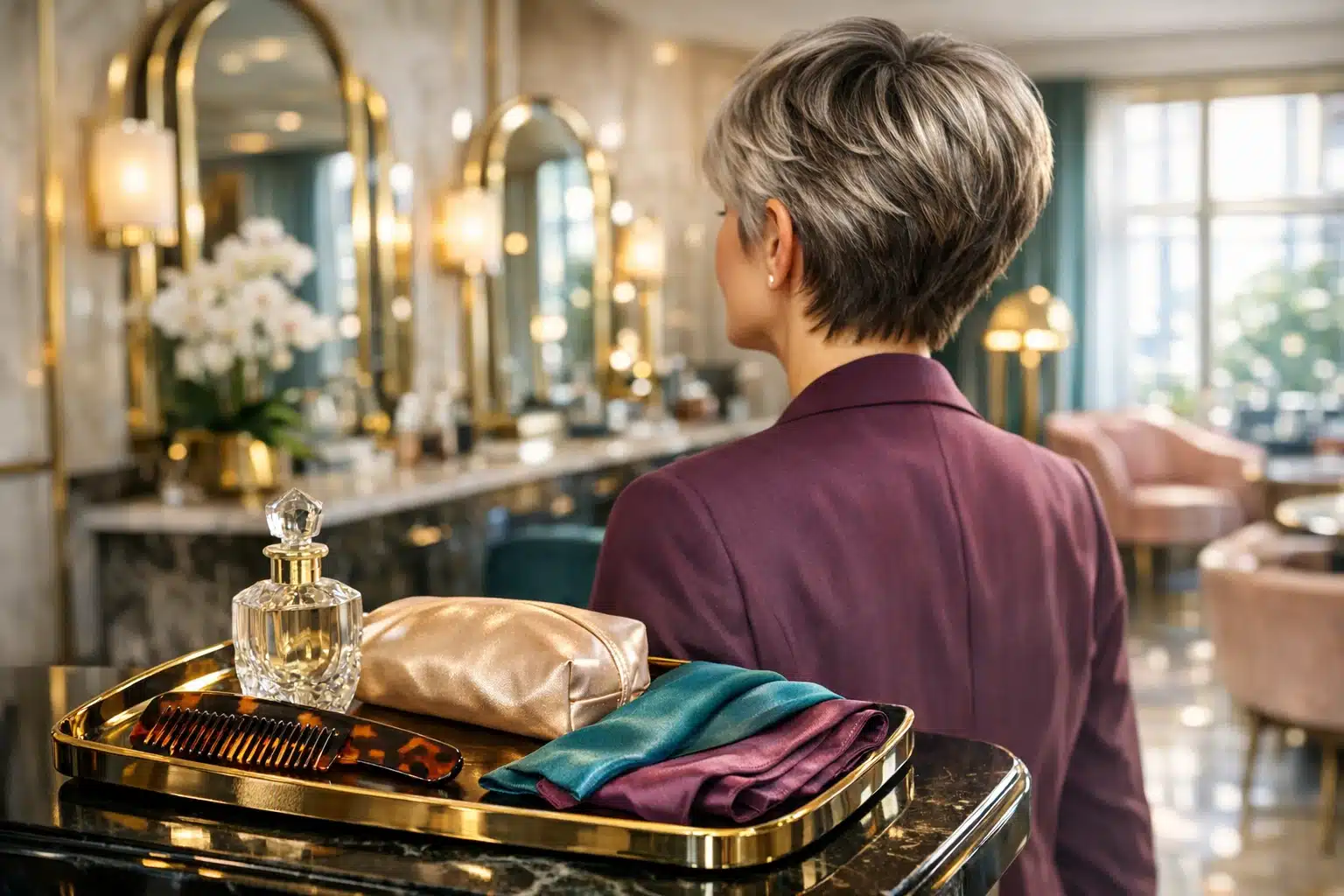
Short hair can look chic, clean, and energetic, but it is not automatically easier. A cropped pixie may need frequent trims to keep its shape, while a softly layered bob can offer more forgiveness between appointments. Medium lengths are often popular because they allow movement without overwhelming the jawline or neck. Longer hair can still look striking on older women, especially when it is healthy and intentionally shaped, but it usually benefits from strategic layering and clear silhouette.
Face shape is useful, though it should never become a prison. What matters more is visual balance. If your features are strong or angular, softer lines can create harmony. If your face is rounder or your cheeks fuller, a little vertical length around the crown can feel flattering. Glasses also play a major role, since frames act like a second architecture around the face. A haircut that looks plain without glasses may suddenly look sophisticated once both elements are working together.
Face-flattering layers help enhance your features while adding softness and movement to your hairstyle.
That principle is especially helpful when the goal is elegance rather than severity. Consider these common style directions:
- A chin-length bob offers structure and can make fine hair appear denser
- A layered pixie opens the face and often highlights the eyes and cheekbones
- A shoulder-length cut with gentle texture gives versatility for clips, waves, or a smooth blow-dry
- Side-swept bangs can soften the forehead and blend gracefully as they grow out
Maintenance should be part of the decision from the beginning. Ask whether a cut still looks good air-dried, whether it cooperates with your natural part, and whether it requires daily heat styling. Elegant hair should fit your life, not compete with it. A salon photo might be lovely, but the better question is whether that look still makes sense on a rainy Tuesday, during travel, or after a quick walk in the wind.
In practice, the best haircut often feels almost invisible. It lifts the face, supports your natural texture, and lets people notice you before they notice the styling. That is the quiet power of a well-chosen shape.
Color, Texture, and Hair Health After Sixty
Hair color becomes more important with age, not because gray needs covering, but because tone influences brightness, contrast, and how rested the face appears. As melanin production declines, hair turns gray or white, and the fiber often feels coarser even when overall density decreases. That combination can create a frustrating mix: strands feel rougher, yet the hairstyle has less body. Understanding that shift makes styling choices far more logical.
There is no single correct approach to color. Some women look luminous in natural silver, especially when the tone is bright and intentionally maintained. Others prefer lowlights, soft highlights, or a blended shade that reduces contrast at the roots. What usually looks most elegant is nuance. Flat, overly dark color can sometimes harden features, while multidimensional color tends to reflect light more gently. A softer brunette, warm beige blonde, champagne gray, or silver with dimension can create a fresher impression than solid pigment from root to tip.
Gray hair often benefits from extra moisture and shine support. Because natural oil production may slow with age, especially after menopause, the hair can look dull even when it is clean. Purple shampoos can help neutralize yellowing in white or silver hair, though overuse may leave a dry cast. Lightweight serums, leave-in conditioners, and heat protectants can improve surface smoothness without making the hair collapse.
Healthy hair care is usually built on a few steady habits rather than expensive complexity:
- Use a gentle shampoo suited to your scalp rather than your ideal fantasy hair
- Condition the mid-lengths and ends consistently to reduce roughness
- Limit high-heat styling when the hair is fragile or color treated
- Trim regularly to keep the shape clean and split ends under control
- Discuss shedding, sudden thinning, or scalp irritation with a dermatologist if changes seem abrupt
Texture styling also deserves attention. A precise blowout can look polished, but so can soft natural movement enhanced with a diffuser or curl cream. Many women find that embracing their real texture, whether wave, bend, or curl, creates a more modern and less rigid effect. A helmet-like finish rarely reads as youthful or elegant; it simply reads as fixed in place.
If you color your hair, maintenance strategy matters as much as shade. Root blending, gloss treatments, and partial highlights can extend time between appointments and soften the grow-out line. That makes the look less demanding and often more sophisticated. In the end, the most flattering hair color is not the one that turns back time. It is the one that brings clarity to your complexion and feels believable on you today.
Senior Beauty Beyond Hair: Skin, Makeup, Brows, and Finishing Details
Elegant beauty is never just about the haircut. Skin texture, brow shape, lip color, and even the finish of your makeup all influence whether the overall look feels fresh or tired. As skin matures, collagen production slows, moisture retention can decline, and tone may become less even. That does not mean you need heavier coverage. In fact, piling on product often emphasizes dryness and lines rather than disguising them.
A useful rule is to think in layers of light. Start with skin care that supports comfort and glow. Dermatologists commonly recommend daily broad-spectrum sunscreen with SPF 30 or higher, because sun exposure remains one of the biggest contributors to visible ageing. A hydrating moisturizer, a gentle cleanser, and targeted products chosen with professional guidance can do more for a refined appearance than a drawer full of impulse purchases. When skin feels calmer, makeup usually sits better.
Makeup for mature skin often works best when texture is prioritized over coverage. Cream blush, lightweight foundation, tinted moisturizer, and satin-finish concealer tend to move more naturally with the face than heavy matte formulas. Powder still has its place, but using less of it can keep the complexion from looking flat. If you want brightness, place it strategically: a touch of blush higher on the cheeks, soft definition around the lashes, and lip color that adds life without overpowering the face.
Brows deserve special attention because they frame the eyes and influence expression. Over-thinned brows can make the face appear less defined, while a softly shaped brow can restore structure. The goal is not a dramatic social-media brow. It is believable fullness and gentle lift. Neutral pencil strokes, tinted gel, or powder can help fill sparse areas without looking stamped on.
Small finishing choices often create the most polished effect:
- A flattering lipstick shade can wake up the complexion faster than heavy eye makeup
- Well-groomed nails, even in a sheer polish, contribute to an elegant impression
- Subtle fragrance can feel luxurious when applied with restraint
- A brightening concealer near the inner corners of the eyes can reduce a tired look
Beauty at this stage should feel supportive, not corrective. It should help you look like yourself on a particularly good day. There is something quietly powerful about that approach. It leaves room for character, expression, and softness, which are often far more memorable than perfection.
Timeless Style in Practice: Clothing, Accessories, and a Confident Conclusion
Timeless style is often misunderstood as dressing cautiously, but true elegance has more energy than that. It is not about disappearing into beige or wearing whatever is considered age appropriate by someone else. It is about choosing proportion, fabric, color, and accessories in a way that creates coherence. When hair, beauty, and clothing speak the same language, the result looks intentional.
Fit is the foundation. Tailoring matters more than trend, especially when body proportions change over time. A jacket that skims the shoulders properly, trousers that break at the right point, and skirts that move comfortably can make an outfit look expensive even when it is not. Fabrics also matter. Crisp cotton, quality knitwear, fluid crepe, soft wool, and linen blends tend to age well both visually and practically. They hold shape, drape nicely, and often feel better on the body than stiff or overly synthetic materials.
Color choices should support your natural contrast rather than overpower it. Some women glow in navy, ivory, soft berry, teal, or olive. Others look best in camel, charcoal, plum, or clear jewel tones. The point is not to memorize a rigid palette. The point is to notice what brightens your skin, complements your hair, and still feels wearable for real life. Accessories then become the punctuation marks. A scarf can lift a simple top, a good earring can draw attention upward, and a structured handbag can add polish without fuss.
A practical timeless wardrobe often includes:
- A well-cut blazer or lightweight jacket
- Trousers or jeans with excellent fit and comfortable rise
- Simple knit tops in reliable colors
- One or two dresses that can shift from daytime to evening with accessories
- Comfortable shoes that still look refined, such as loafers, low block heels, or sleek flats
Posture and presence also shape style more than many people realize. Standing tall, moving at your own pace, and wearing pieces you genuinely enjoy can transform even a simple outfit. There is a kind of elegance that enters a room before a single detail is examined, and it usually comes from comfort matched with self-knowledge.
For senior women, the most lasting beauty advice is wonderfully straightforward: choose hairstyles that support your features, use skin care and makeup to add clarity rather than disguise, and build a wardrobe that feels graceful in motion. You do not need to dress younger to look vibrant. You need choices that reflect who you are now, with all the insight that time has given you. That is timeless style at its best: not frozen, not nostalgic, but alive, personal, and fully your own.