Luxury Hotel Rooms with Hot Tubs: Are They Worth It?
A luxury room with a private hot tub sounds indulgent, yet the real question is whether the upgrade improves a trip in ways a standard room cannot. For couples, tired business travelers, and weekend escape artists, that answer often depends on privacy, timing, and price rather than pure glamour. This guide looks at how these rooms shape comfort, mood, and convenience across city hotels, spa resorts, and airport properties. It also explains when the extra spend feels sensible, when shared wellness facilities offer better value, and how to book without disappointment.
Outline
This article begins by defining what luxury hotel rooms with hot tubs actually include, because the label can mean very different things from one property to another. It then examines price and value, looking at rate differences, hidden costs, and the situations where the premium may be justified. The next part focuses on privacy and travel comfort, especially for guests who want quiet, recovery, or a memorable setting. After that, a practical booking section explains what to verify before paying extra. The final section brings everything together with a clear verdict for different kinds of travelers.
1. What a Luxury Hotel Room with a Hot Tub Really Offers
Not every room described as having a hot tub delivers the same experience, and that distinction matters more than many travelers expect. In one hotel, the phrase may refer to a large jetted bathtub inside a marble bathroom. In another, it could mean a deep soaking tub beside a window, a whirlpool integrated into a terrace, or a genuine outdoor spa-style tub with stronger jets and more space. The difference affects comfort, privacy, cleaning expectations, room size, and ultimately whether the upgrade feels worthwhile. A glossy photo can suggest romance and calm, but the useful question is simpler: what kind of bathing setup are you actually paying for, and how usable is it during your stay?
Luxury properties usually position hot-tub rooms as part of a broader comfort package. The tub often comes with more floor space, upgraded bedding, premium bath products, better views, and a quieter location within the building. In many cases, the tub itself is not the only value; it is the symbol of a slower pace. After a late flight or a long day of walking through a city, the idea of stepping into warm water without leaving your room has obvious appeal. There is also a psychological element at work. Private in-room amenities can make a short stay feel more intentional, almost like pressing pause on the noisy parts of travel. Even the ritual of filling the tub, dimming the lights, and hearing the muted rush of water can shift the mood of a trip.
Still, the room category can be misunderstood. A jetted bath is not always a hot tub in the spa sense, and a balcony tub is not automatically better than an indoor one. Climate, noise, and layout matter. A terrace tub overlooking a coastline may be magical at sunset, while the same setup in a cold or windy city might go unused. Likewise, a tub placed in the middle of the bedroom can feel stylish to one guest and impractical to another. Useful distinctions include: • whether the tub is meant for one person or two • whether it is indoors or outdoors • whether the water stays warm for long soaks • whether jets are mild, moderate, or spa-like • whether the bathroom has ventilation and enough space to move comfortably.
Travel comfort is also shaped by maintenance standards. A well-managed luxury hotel will have clear sanitation procedures, trained housekeeping staff, and prompt maintenance support if a jet system fails. Yet even at excellent properties, tubs can occasionally be noisy, slow to fill, or temporarily unavailable due to servicing. That does not mean the concept is flawed; it means the amenity should be evaluated like any other premium feature. When travelers understand what is behind the label, they are less likely to book on fantasy alone and more likely to choose a room that genuinely suits the rhythm of their trip.
2. Costs, Value, and the Real Price of the Upgrade
Explore the value of luxury hotel rooms with hot tubs, including costs, privacy, comfort, and practical booking tips. That sentence captures the real decision travelers face, because the upgrade is rarely about extravagance alone. It is about comparing the extra nightly rate with the amount of actual use and satisfaction the feature will provide. In many destinations, a room with an in-room or private-terrace hot tub can cost roughly $50 to $250 more per night than a standard room at the same hotel, though the spread can be much higher in peak season or at exclusive resorts. A city property may charge a moderate premium for a jetted suite, while a cliffside or overwater resort can attach a far steeper price because the tub is tied to views, architecture, and scarcity rather than plumbing alone.
The smartest way to judge value is to move beyond the headline rate. Travelers should look at the total package, including breakfast, spa access, transport, resort fees, and cancellation flexibility. A more expensive room can sometimes be the better buy if it includes services that would otherwise be paid separately. For example, if a standard room is $300 and a hot-tub suite is $430, the difference may seem easy to dismiss. But if the suite also includes lounge access, a late checkout, a larger terrace, and evening refreshments, the premium may compare favorably with piecing together those comforts individually. On the other hand, if the rate jumps mainly for the tub and the room is otherwise similar, the value depends almost entirely on whether you will use it.
Timing matters enormously. On a one-night airport stopover, the upgrade may make little sense if you arrive late and leave before sunrise. On a two-night anniversary trip, the same feature can become central to the experience. Seasonality changes the equation too. Shoulder-season rates may make premium rooms feel surprisingly attainable, whereas holiday weekends can push prices into territory where a larger suite or a hotel with a full spa becomes the wiser option. Key price drivers often include: • destination popularity • room size • view category • whether the tub is outdoors • weather and seasonal demand • minimum-stay rules • package inclusions and upgrade restrictions.
There is also the question of opportunity cost. The money spent on a hot-tub room could fund a better location, an extra night, a special meal, or airport transfers that reduce travel stress. For budget-conscious travelers who still want comfort, that trade-off matters. The best value usually appears when the tub aligns with the purpose of the trip: recovery after skiing, romance during a short retreat, or private downtime when shared facilities feel crowded or impersonal. When the feature matches the moment, the premium often feels justified. When it is chosen only because it photographs well, the room can become a very expensive backdrop.
3. Privacy, Atmosphere, and the Comfort Factor
Privacy is one of the strongest arguments in favor of a luxury hotel room with a hot tub, and it is also the hardest benefit to measure in simple financial terms. Shared spa areas can be beautiful, but they come with schedules, other guests, noise, and sometimes a self-conscious atmosphere that not everyone enjoys. A private tub removes those variables. You control the timing, the music, the lighting, and the pace. For some travelers, that freedom is the true luxury. It means unwinding after midnight without checking pool hours, or enjoying a quiet soak at dawn before the city has properly woken up. In the language of travel comfort, privacy often turns convenience into emotional relief.
The comfort advantage varies by traveler type. Couples often appreciate the intimacy of a private setting, especially on short celebrations where the room itself becomes part of the itinerary. Solo travelers may value the tub differently. For them, it can be a space for decompression after overstimulation, a warm reset after long museum days, conferences, or cross-time-zone travel. Business travelers, who are frequently overlooked in marketing for these rooms, may benefit more than expected. After a day of meetings, airports, rideshares, and screens, ten or twenty quiet minutes in warm water can feel more restorative than a crowded hotel bar. In that sense, the amenity is not always about indulgence; sometimes it is simply about recovery.
Atmosphere, however, depends on layout and design. The most satisfying hot-tub rooms are usually those where the feature feels integrated rather than awkwardly inserted. Good design gives the tub enough space, nearby towel storage, sensible flooring, soft lighting, and privacy from neighboring rooms. A well-placed window, skyline, garden, or sea view can transform the experience. By contrast, a tub squeezed into a corner with harsh lighting and little ventilation may technically meet the description but fail to deliver the mood guests expect. Comfort checkpoints include: • strong sound insulation • easy temperature control • robes and quality towels • slip-resistant surfaces • room-service friendliness for in-room relaxation • enough seating and surfaces for personal items.
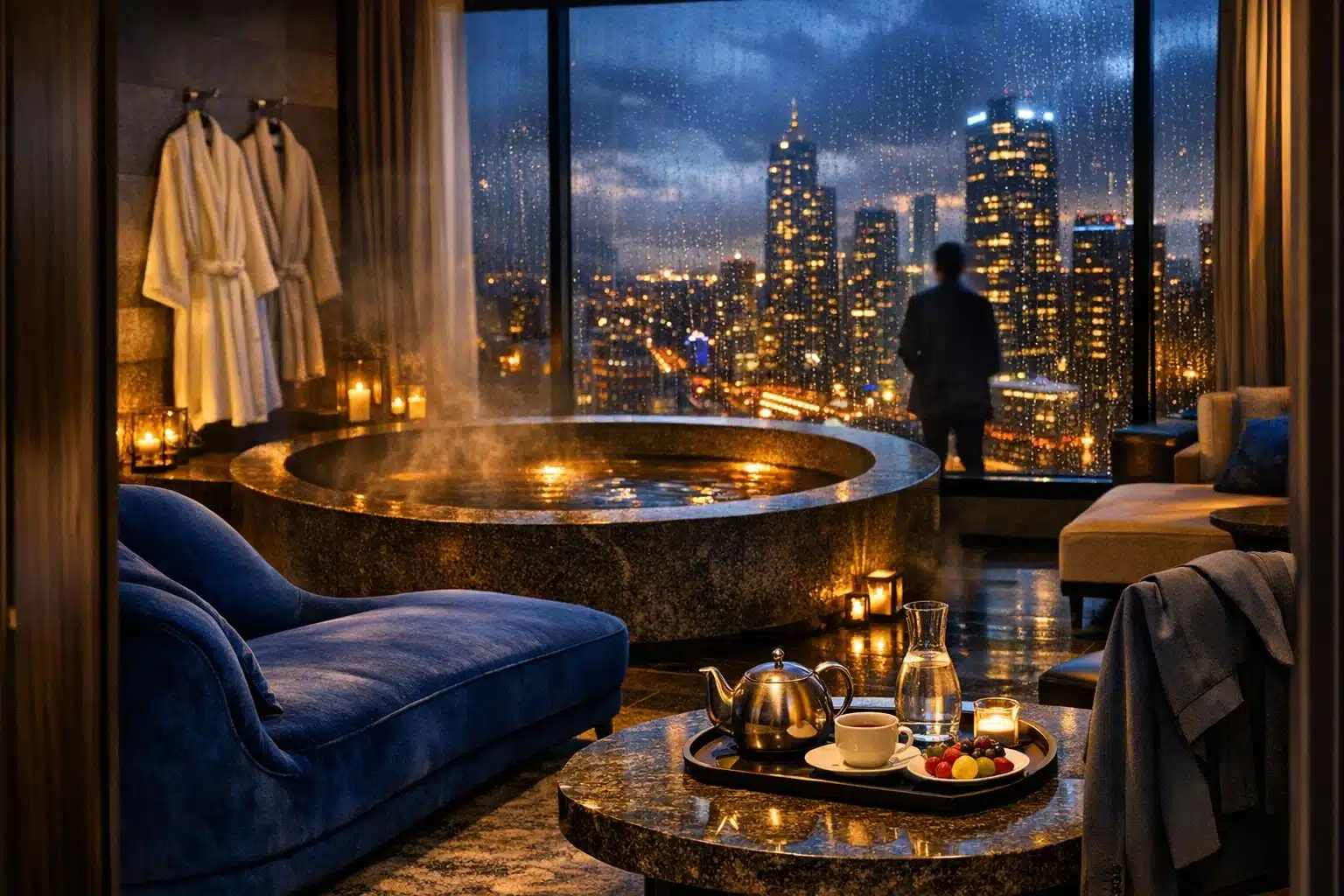
There is also a practical comfort angle that guests sometimes miss. A tub may sound wonderful, but if it takes too long to fill, loses warmth quickly, or sits beside a drafty door, the pleasure can fade fast. Accessibility matters as well. Guests with mobility concerns may prefer a walk-in shower and shared spa hydrotherapy area over climbing into a deep tub. This is why comfort is not a universal formula. The ideal room for one traveler may feel inconvenient to another. When a hotel gets the details right, though, the result can be memorable in a quietly cinematic way: warm water, softened lights, city rain tapping the glass, and no need to be anywhere else for a while.
4. Booking Smart: Questions to Ask Before You Pay More
Booking a luxury hotel room with a hot tub is easiest when travelers treat the amenity like a technical feature rather than a romantic assumption. Listing photos can be flattering, wide-angle lenses can exaggerate space, and room names vary widely between brands and independent properties. A “spa suite” might have a large soaking bath with no jets, while a “wellness room” might prioritize steam showers or sauna access instead. Before spending extra, the first step is to confirm exactly what the room contains. Read the description closely, compare photos across the hotel website and third-party platforms, and check whether the tub appears consistently in multiple images. If the room category is important to the trip, calling or emailing the hotel directly is often worth the effort.
The most useful booking questions are surprisingly practical. Ask whether the tub is inside or outside, whether it is private to your room, whether it is heated continuously, and whether seasonal weather affects usability. If the hot tub sits on a balcony or terrace, ask about screening, wind exposure, and operating hours. Some properties limit outdoor features late at night to reduce noise complaints. It is also reasonable to ask how the tub is sanitized between stays and what happens if maintenance issues make it unavailable. A luxury hotel should answer these questions clearly and professionally. If responses are vague, that is a warning sign. Travelers paying premium rates are not being difficult when they request specifics; they are protecting the value of their reservation.
Policies matter just as much as room features. Flexible cancellation can be particularly valuable for premium bookings, because weather, travel disruptions, and changing plans can alter whether the upgrade still makes sense. Rate type also matters. Sometimes the hotel website offers perks such as breakfast or later checkout, while an online travel agency offers a lower upfront price but fewer protections or benefits. Useful checks before booking include: • exact tub type and size • recent room photos • renovation date • guest reviews mentioning cleanliness and functionality • noise concerns near the room • blackout curtains and climate control • whether the bathroom layout suits your needs.
Guest reviews deserve careful reading, but not blind trust. Look for patterns instead of dramatic single complaints. If several recent guests mention weak jets, mildew smells, or unreliable room temperatures, believe the pattern. If the criticism is vague and isolated, it may be less meaningful. Also pay attention to how the hotel responds. A calm, solution-oriented reply suggests professional management. Finally, consider the timing of your stay. If you plan full days outside the hotel, an expensive in-room feature may go largely unused. But if your schedule includes downtime, room service, or recovery from strenuous travel, then the booking logic becomes much stronger. Smart reservations are rarely about chasing the fanciest listing; they are about aligning room features with actual behavior.
5. Who Should Book One and When Another Option Makes More Sense
So, are luxury hotel rooms with hot tubs worth it? For the right traveler and the right trip, yes, very often. The upgrade tends to work best when the room is meant to be part of the experience rather than a place to sleep between activities. Couples planning a short celebration, travelers seeking a restorative weekend, and guests arriving physically tired from long flights or outdoor adventures are all strong candidates. In these cases, the tub delivers more than novelty. It creates a private pause, a self-contained comfort zone that can make even a brief stay feel fuller and calmer. When the hotel also offers strong service, thoughtful design, and reliable maintenance, the result can justify the price with surprising ease.
That said, the upgrade is not universally sensible. Travelers who spend most of the day exploring and most of the night sleeping may get little practical return from paying more for an amenity they barely use. Families may prefer extra square footage, better bedding configurations, or a room closer to pools and dining. Guests who prioritize fitness, hydrotherapy circuits, or full-service spa treatments may find that a hotel with excellent communal wellness facilities offers better value than an in-room tub. A shared thermal suite, sauna, and lap pool can deliver broader benefits than one private feature, especially during longer stays. Sometimes the smartest luxury choice is not the flashiest room, but the one that supports how you actually travel.
A helpful way to decide is to match the booking to your travel objective. If the goal is romance, privacy matters. If the goal is recovery, ease of use matters. If the goal is efficient business travel, location and sleep quality may outrank everything else. Ask yourself whether the hot tub will be used once for a photo, twice for novelty, or repeatedly because it fits the rhythm of the stay. Practical indicators that the room may be worth the premium include: • you have meaningful downtime in the itinerary • the rate gap is reasonable for the destination • recent reviews confirm cleanliness and function • the room includes other valuable perks • the tub setup suits the climate and your comfort preferences.
For travelers drawn to comfort but cautious about overspending, the best conclusion is balanced rather than dramatic. A luxury hotel room with a hot tub is not automatically an unnecessary splurge, and it is not automatically a brilliant deal either. It is a targeted upgrade. When chosen with clear expectations, it can elevate a trip in ways that are tactile, quiet, and deeply satisfying. When chosen impulsively, it can become a line item that looks better in memory than it felt in the moment.
Conclusion for travelers: if you want privacy, slower evenings, and a room that contributes directly to the pleasure of the trip, a hot-tub upgrade can be worth every extra dollar. If your plans revolve around sightseeing, short stays, or hotel amenities you will not use, redirect the budget toward location, service, or an extra night. The most comfortable travel decisions are rarely the loudest ones; they are the ones that fit your habits, your timing, and the kind of rest you actually need.