 Artificially generated image
 Swimming Pool With Jacuzzi: What you might need to know before you install
A swimming pool with a Jacuzzi can transform a backyard into a place for exercise, relaxation, and everyday gathering, but the finished result depends less on impulse and more on preparation. Shape, depth, plumbing, heating, electrical work, permits, and long-term care all interact like parts of the same machine. When those decisions are coordinated early, the project tends to run more smoothly, costs stay easier to understand, and the final space feels intentional rather than improvised.
Outline and Early Planning Decisions
Every successful pool project starts with an honest outline, not a shopping spree. Before comparing finishes or imagining evening lights reflected on the water, it helps to define the purpose of the space. Some homeowners want a lap-friendly pool for exercise. Others picture a social area with shallow lounging space, a raised spa, and enough deck room for family gatherings. The answer shapes almost everything that follows, from dimensions and circulation systems to heating strategy and fencing requirements.
Here is a practical outline to begin with:
• Define the main use: recreation, exercise, entertaining, therapy, or a mix.
• Assess the site: slope, drainage, soil type, sunlight, wind exposure, and privacy.
• Review local rules: setbacks, permits, barriers, electrical codes, and utility access.
• Establish a real budget that includes construction, landscaping, and yearly upkeep.
• Build a timeline that allows for design revisions, inspections, and weather delays.
Learn what to consider before installing a swimming pool with a Jacuzzi, including design, costs, maintenance, and planning tips.
Site conditions deserve more attention than many people expect. A flat yard may reduce excavation complexity, while a steep site could require retaining walls or drainage work. Soil matters too. Expansive clay, rocky ground, or high groundwater can raise engineering demands and construction costs. Sun and wind are equally important: a pool that receives steady sun may be easier to warm naturally, while strong wind can increase evaporation and cooling, leading to higher heating bills. Even neighboring trees play a role, because roots, falling leaves, and shade affect both construction and ongoing maintenance.
Early planning should also include access and logistics. Can excavation equipment reach the yard easily, or will narrow side access require smaller machinery and more labor? Are there underground utilities that need to be marked and protected? These questions may sound mundane, but they are the gears behind the glossy finished picture. A pool is part landscape, part hydraulic system, and part building project. Treating it that way from day one usually leads to better design choices, fewer change orders, and a backyard that works as well as it looks.
Pool Design: Form, Function, and Site Fit
Pool design is where imagination meets geometry. A beautiful pool is not simply a hole filled with water; it is a composition of proportions, movement, materials, and practical use. The shape should match both the architecture of the house and the way the space will be used. Rectangular pools remain popular because they suit modern homes, simplify cover installation, and work well for swimming laps. Freeform designs can feel softer and more natural, especially in gardens with curved planting beds or organic stonework. Compact plunge pools are useful where space is limited, while larger family pools need enough shallow and deep zones to serve different age groups safely.
Depth planning is often underestimated. Many households discover that a moderately deep pool with generous standing area gets more everyday use than a very deep design intended mainly for occasional diving. A common planning mistake is sacrificing deck space to maximize water surface. In practice, a balanced layout often performs better because people spend a surprising amount of time around the pool, not just in it. Comfortable circulation paths, shaded seating, and storage for towels or equipment all improve the real-life experience.
Material selection affects appearance, durability, and maintenance. In many markets, the three broad choices are concrete or gunite, fiberglass, and vinyl-lined construction. Each has trade-offs:
• Concrete offers design freedom and can suit custom shapes, vanishing edges, and integrated spas, but it usually involves longer construction time and may require more surface care over time.
• Fiberglass installs relatively quickly and has a smooth shell that many owners find easy to clean, though shape and size options may be less flexible.
• Vinyl-lined pools can be cost-conscious at installation, but liners typically need replacement after years of wear.
Design should also account for circulation and safety. Skimmer placement, return jets, and water features need to support good movement so debris does not settle in dead zones. Slip-resistant decking, proper fence placement, handrails, and lighting are not decorative afterthoughts; they are part of responsible design. A well-planned pool feels easy and graceful, almost like it was always meant to live in that yard. That quiet sense of fit is usually the result of disciplined decisions rather than luck.
Jacuzzi Installation Options and Technical Requirements
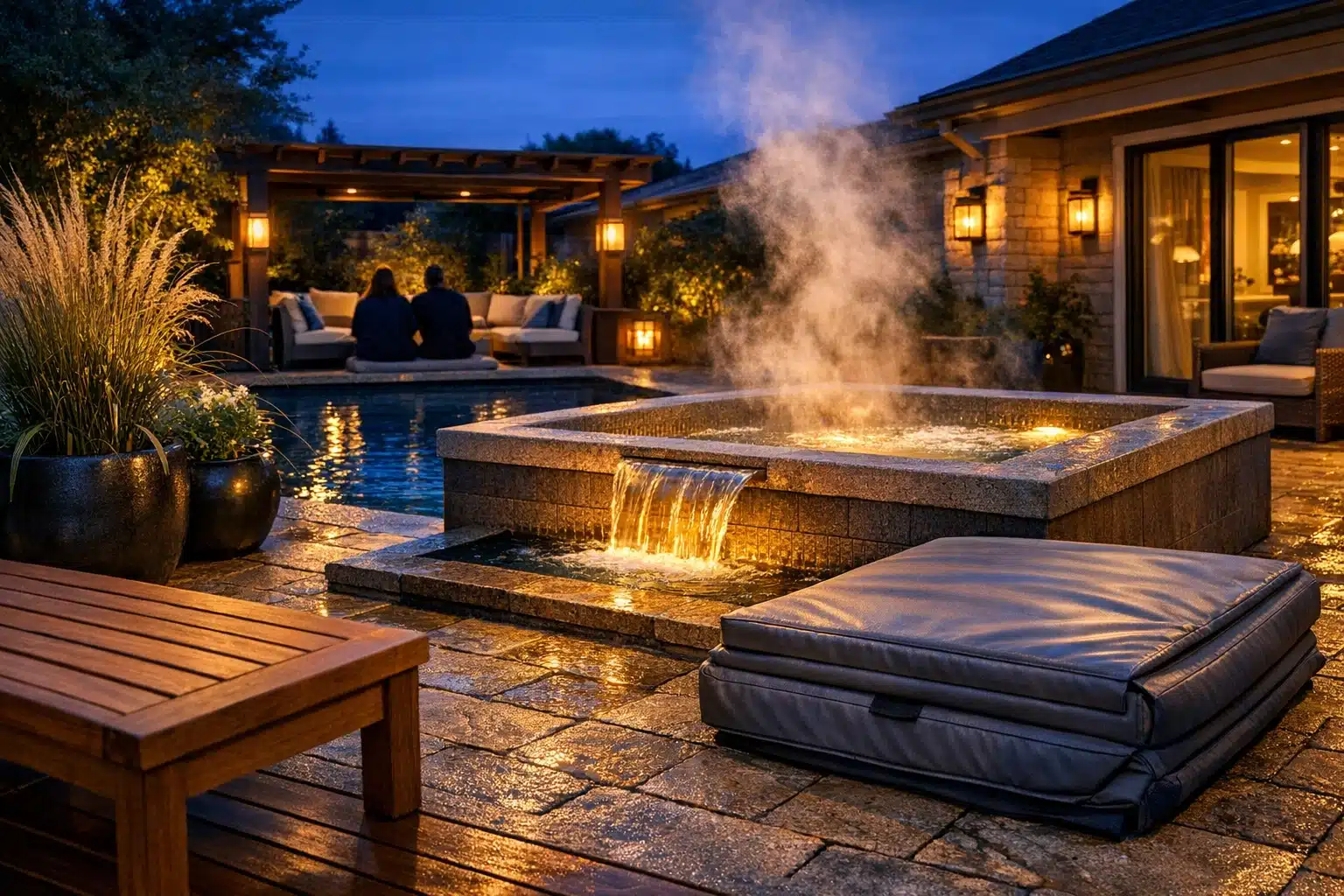
When people say Jacuzzi, they often mean a jetted spa or hot tub, though the final installation can take several forms. The biggest decision is whether to build an integrated spa as part of the pool structure, add a raised spillover spa that shares some systems, or install a separate portable unit nearby. Each approach changes the budget, the visual effect, and the complexity of operation. An integrated spa usually creates the most unified appearance, especially when finishes and coping materials match the pool. A separate unit may offer simpler installation and independent controls, which some owners prefer for easier year-round use.
The technical side is where planning becomes essential. A spa needs water circulation, jets, heating, drainage, and safe electrical connections. If the spa is attached to the pool, the design must account for shared plumbing lines, valves, and automation logic. The system has to move water efficiently between pool mode and spa mode. Poor hydraulic design can lead to weak jet pressure, slow heating, or noisy operation. For that reason, equipment sizing should not be based on guesswork. Pump capacity, pipe diameter, heater output, and jet count all need to be coordinated.
Placement matters more than many first-time owners expect:
• A spa near the house can improve convenience, especially in cooler weather.
• A raised spa can create an attractive visual anchor and a spillway sound effect.
• A sheltered location may reduce heat loss from wind exposure.
• Adequate service access is critical for future repairs to pumps, heaters, and controls.
Electrical and safety requirements are especially important. Most spa installations require dedicated circuits, bonding, grounding, and code-compliant disconnects performed by qualified professionals. Covers are another practical detail with long-term impact. A well-insulated cover helps retain heat, reduces evaporation, and keeps debris out when the spa is not in use. Modern automation can also make a difference by allowing owners to schedule heating cycles, control lighting, and switch modes through a wall panel or app. In other words, the spa should not be treated as an add-on after the pool is designed. It is its own comfort system, and when installed thoughtfully, it turns a nice backyard amenity into a space people genuinely use across more months of the year.
Budgeting, Energy Use, and Long-Term Value
Pool budgeting is most useful when it moves beyond the initial construction quote. The visible headline number often covers excavation, shell construction, and core equipment, but the real project cost may include permits, engineering, electrical upgrades, drainage work, fencing, decking, landscaping, covers, and automation. In many regions, an in-ground pool can range from tens of thousands of dollars to well over six figures depending on size, materials, site difficulty, and design complexity. Adding a built-in spa or Jacuzzi-style jetted area can increase the figure further because of additional plumbing, heating, jets, controls, and finish work. Exact costs vary sharply by location, labor market, and access conditions, so estimates should be compared line by line rather than headline by headline.
Operating cost deserves equal attention. A pool and spa consume money through electricity, gas or other heating fuel, water replacement, chemicals, cleaning supplies, and equipment wear. Heaters are often one of the biggest operating variables. A frequently used spa maintained at higher temperatures will usually cost more to run than a pool kept unheated for seasonal use. Evaporation, local energy rates, and climate can shift monthly expenses substantially. This is why energy-efficient design is not just a green talking point; it is a budgeting tool.
Several upgrades can improve long-term efficiency:
• Variable-speed pumps generally use less electricity than older single-speed models under many operating conditions.
• Good insulation and quality spa covers reduce heat loss.
• Automatic controls help avoid unnecessary run times.
• Solar exposure planning and wind protection can lower heating demand.
• LED lighting usually reduces electrical consumption and lamp replacement frequency.
There is also the question of value. A pool may increase enjoyment far more reliably than it increases resale price, and that distinction matters. In some markets, a well-designed pool appeals to buyers. In others, maintenance concerns narrow the audience. Homeowners should therefore judge value in two layers: personal lifestyle return and potential property impact. If the pool will be used often, support exercise or family time, and fit the home naturally, the investment may make strong sense. If it is likely to sit idle while generating monthly costs, a smaller design, a plunge pool, or even a standalone spa might be the wiser route. The best budget is not the cheapest plan; it is the one aligned with how the space will actually be lived in.
Pool Maintenance and Final Guidance for Future Owners
A pool with a spa stays inviting only when maintenance is treated as a routine rather than an emergency response. Water care begins with testing and balance. In general, owners monitor sanitizer levels, pH, total alkalinity, calcium hardness, and stabilizer where relevant. For many residential pools, a pH range around 7.2 to 7.8 and total alkalinity around 80 to 120 ppm are common reference points, though product instructions, local water conditions, and professional advice should guide final targets. Spa water often needs closer attention because its smaller volume, higher temperature, and heavier bather load can change chemistry more quickly than the pool itself.
Mechanical upkeep matters just as much as chemistry. Filters need cleaning on schedule, pump baskets should be checked, and surfaces benefit from brushing even when the water looks clear. Leaves, sunscreen residue, body oils, and airborne dust do not always announce themselves dramatically; they accumulate quietly. That is why consistent habits usually beat occasional deep-cleaning marathons.
A practical maintenance rhythm often includes:
• Testing water at least weekly, and more often during heavy use or hot weather.
• Emptying skimmer and pump baskets before flow is restricted.
• Brushing walls, steps, benches, and spa seats to limit buildup.
• Vacuuming or using a robotic cleaner to manage debris on the floor.
• Inspecting heaters, covers, jets, and automation settings for early signs of trouble.
Seasonal care also changes the equation. In warm climates, owners may focus on continuous operation and evaporation control. In colder regions, closing procedures, winter covers, and freeze protection become essential. It is also wise to budget for periodic professional service, especially for heater inspections, leak detection, or opening and closing tasks. Small issues such as an air leak, a failing seal, or incorrect valve setting can become expensive if ignored.
For homeowners, renovators, and property planners, the clearest takeaway is simple: a pool with a Jacuzzi works best when design ambition is matched by realistic upkeep plans. Choose a layout that fits the yard, a spa system that matches how often you will use it, and equipment that you can maintain without frustration. If you build with both enjoyment and responsibility in mind, the result is more than a backyard feature. It becomes a dependable part of daily life, ready for quiet morning laps, lively summer weekends, and the kind of evening soak that makes the rest of the day feel far away.