 Artificially generated image
 Budget-Friendly Backyard Bliss: The Ultimate Guide to Small Fiberglass Pools
A compact yard does not have to rule out the pleasure of cooling off a few steps from your back door. Small fiberglass pools have become a practical option for homeowners who want a cleaner layout, predictable maintenance, and a controlled project budget. When paired with thoughtful compact garden design, even a narrow outdoor space can feel layered, relaxing, and surprisingly open. This guide explains how size, installation, landscaping, and long-term costs fit together before you commit.
Article Outline
- How small backyard pools fit compact properties and why they appeal to modern homeowners
- What fiberglass pool costs usually include, from the shell to site work, permits, and finishes
- How to shape a compact garden around a small pool without losing seating, privacy, or greenery
- How fiberglass compares with concrete and vinyl in performance, maintenance, and design flexibility
- How budget-conscious homeowners can plan wisely, avoid common mistakes, and decide if a small pool is the right investment
Why Small Backyard Pools Work So Well in Compact Gardens
Small backyard pools have gained attention for a simple reason: they match the way many people actually use outdoor space. Not every household wants a large swimming area for laps, diving, or big parties. In many cases, homeowners want a place to cool off, relax after work, entertain a few guests, or create a more polished landscape. A compact pool can deliver all of that without overwhelming a modest garden.
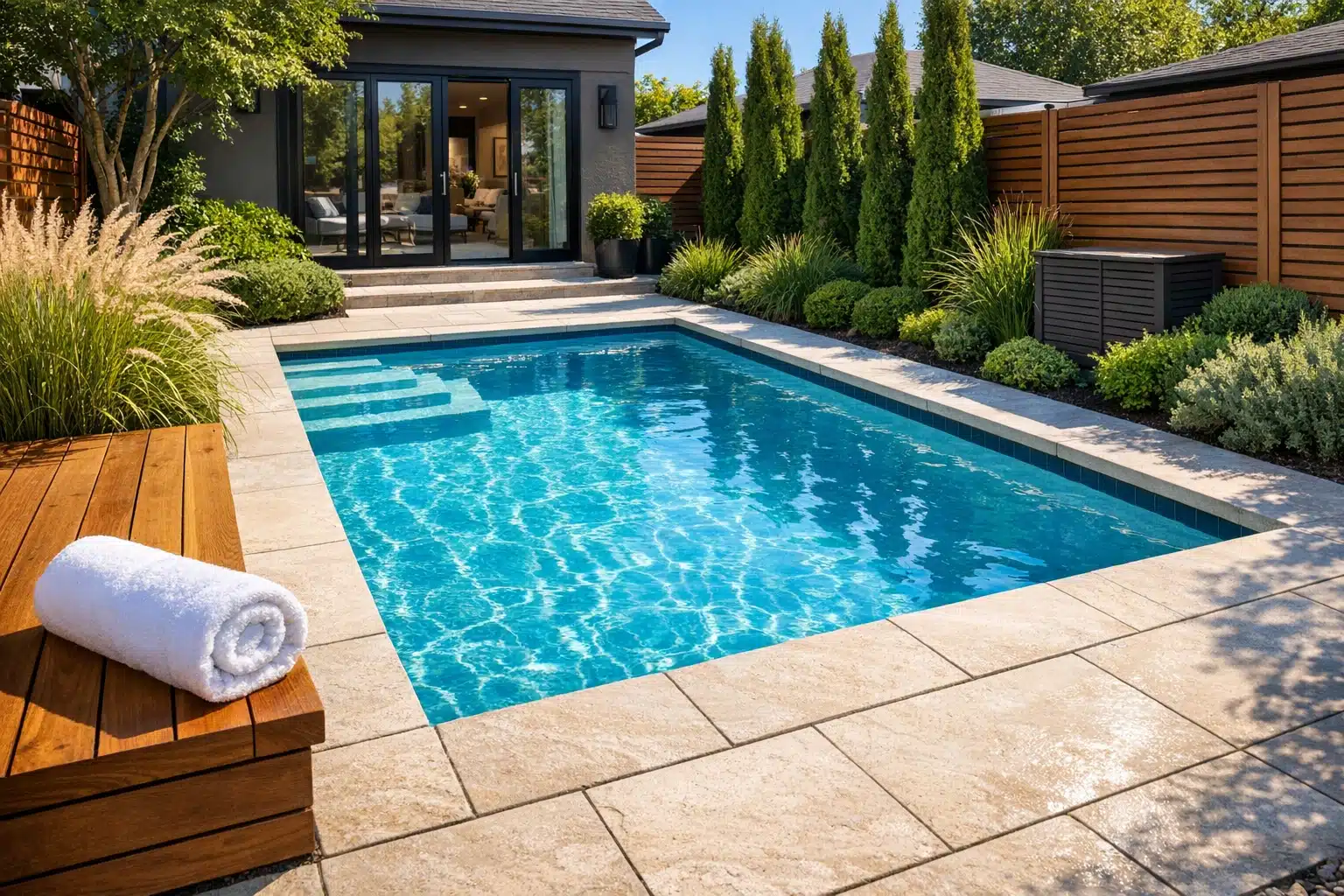
In practical terms, a small pool often means dimensions in the range of about 10 by 16 feet, 10 by 20 feet, or similar plunge-style footprints, though exact sizing varies by manufacturer and site conditions. This scale can fit more comfortably into urban lots, side courtyards, and narrower suburban backyards. It also leaves room for essential support zones such as walking paths, planting beds, outdoor dining, and pool equipment access. That balance matters. A yard should not feel like one object dropped into the middle of empty paving.
There are also planning advantages. Smaller pools generally require less excavation, fewer finishing materials, and a reduced water volume compared with full-size installations. That can lower not just construction costs, but also ongoing expenses tied to cleaning, heating, and chemical use. It does not make a pool cheap in absolute terms, but it often makes the project easier to justify for homeowners who want a measured upgrade instead of a dramatic overhaul.
Before choosing a size, it helps to think in zones rather than in square footage alone. A successful compact garden usually needs:
- a safe circulation path around the pool
- a small lounging or seating area
- privacy screening from neighbors
- space for drainage and service access
- sun and shade in a reasonable mix
One of the most overlooked details is scale perception. A tiny yard can still feel calm and elegant when lines are clean, materials are limited, and planting is layered vertically. Imagine stepping outside to water that catches afternoon light, grasses moving at the edge, and a bench tucked beside a wall of green. The pool becomes less of a luxury statement and more of an organizing element for the whole garden.
That is why small backyard pools often outperform larger ones in compact settings. They preserve function, reduce visual clutter, and support a lifestyle centered on easy use rather than maximum size. For many homeowners, that is the smarter version of outdoor living.
Understanding Fiberglass Pool Costs From Shell to Installation
Fiberglass pool costs are easier to understand when you separate the project into parts. Many first-time buyers focus on the shell price, but the total installed cost depends on much more than the basin itself. Delivery access, excavation complexity, fencing requirements, utility work, decking, and regional labor rates can all move the number significantly.
For a small fiberglass pool, the shell alone may fall roughly in the range of 12000 to 30000 dollars, depending on size, shape, finish, and built-in features such as tanning ledges or benches. Once installation is added, many small projects land somewhere between 25000 and 55000 dollars, though premium landscaping, difficult access, or extensive hardscaping can push totals well beyond that. These are broad estimates rather than fixed quotes, and local contractors will always provide the most accurate figures.
A typical budget often includes the following categories:
- pool shell
- excavation and soil removal
- gravel base and backfill materials
- delivery and crane placement
- plumbing and filtration equipment
- electrical connections and lighting
- permits, inspections, and fencing
- coping, decking, and drainage work
- optional heating, covers, or water features
So what changes the price most? Site access is a major factor. If a crane can set the shell in place easily, installation is usually simpler. If the crew must work around tight side yards, overhead wires, retaining walls, or steep grades, labor and logistics increase. Soil conditions matter too. Rocky ground, unstable soil, or a high water table may require extra preparation and engineering. Even drainage design can affect costs, especially in regions with heavy rainfall.
Get the facts on small fiberglass pool costs and effortless installation to transform your garden on a budget.
That sentence sounds appealing because fiberglass often is faster to install than concrete. Since the shell is factory-molded, on-site construction time can be shorter once the site is prepared. Still, “effortless” should be understood as relative convenience, not a promise of zero disruption. There will still be excavation, delivery scheduling, equipment setup, inspections, and finish work.
The smartest approach is to request itemized quotes from at least three installers. Ask what is included, what is excluded, and what could trigger change orders. A low headline price can hide later costs for drainage, decking, fencing, or electrical upgrades. Clear numbers at the start protect both your budget and your expectations.
Compact Garden Design Ideas That Make a Small Pool Feel Bigger
A small pool performs best when the surrounding garden is designed as carefully as the water feature itself. In a compact yard, every material, plant, and path has visual weight. The goal is not to fill every corner, but to create a sense of flow. Good compact garden design turns a limited footprint into a sequence of usable moments: a place to swim, a place to sit, a place to breathe, and a place to look.
Start with circulation. People need a comfortable route from the house to the pool, and that path should feel natural rather than squeezed. Straight runs can make narrow spaces feel organized, while gentle offsets can soften hard geometry if the yard is boxy. Keep the palette restrained. Too many paving textures or plant varieties can make a small landscape feel busy. Repeating a few materials often creates a calmer result.
Vertical layering is especially powerful in compact gardens. Instead of spreading plants widely, build height with slender trees, trellises, climbing vines, and raised planters. This draws the eye upward and adds privacy without consuming much floor area. Evergreens can provide year-round screening, while ornamental grasses and compact shrubs soften the pool edge. In warm climates, fragrant planting near seating areas can make a modest yard feel like a retreat after sunset.
Some useful design principles include:
- use built-in benches instead of several separate chairs
- choose one main focal point, such as the pool or a feature wall
- leave open paving around entries to avoid crowding
- integrate storage discreetly for hoses, toys, and cleaning tools
- add lighting at plant level and step level for depth at night
Water color, decking tone, and border thickness also influence perception. Pale paving can brighten the garden, though it may show dirt more readily. Darker finishes can feel dramatic and modern, but they may absorb more heat. Narrow coping and flush transitions often help a small pool blend into the broader landscape instead of appearing boxed in. If space is very tight, consider extending the same paving from indoor to outdoor zones to visually stretch the yard.
The best compact gardens do not try to imitate large resort layouts. They embrace intimacy. A slim pool beside textured planting, a timber screen casting shadows across stone, and a small café table under soft lighting can create more atmosphere than a larger but poorly planned space. Design is less about square footage than about editing, rhythm, and proportion.
Fiberglass Versus Concrete and Vinyl in a Small Backyard
Choosing fiberglass is easier when you understand how it compares with other common pool types. In small backyards, the decision is not just about appearance. It affects installation time, maintenance needs, design flexibility, and long-term operating effort. Each material has strengths, but fiberglass often stands out in compact settings because it simplifies several parts of the process.
Concrete pools are highly customizable. If you want an unusual shape, a very specific size, or integrated architectural details, concrete offers broad design freedom. That flexibility is valuable on complex sites. However, concrete projects usually take longer to build on site, and the surface can require more maintenance over time. Finishes may need resurfacing eventually, and the rougher texture can encourage more algae growth compared with a smooth fiberglass shell.
Vinyl liner pools can sometimes offer a lower initial entry cost than other types, especially for straightforward installations. They also allow for multiple shapes and can be gentler underfoot. The trade-off is that liners may need replacement over time, and puncture risk, while manageable, is part of ownership. For homeowners who want a long interval between major updates, this is worth factoring into the decision.
Fiberglass tends to appeal to buyers who value predictability. Because the shell is made in a controlled factory setting, finish consistency is often strong, and installation can move faster once the site is ready. The smooth surface is generally easier to brush and maintain than rougher alternatives. In a small backyard, reduced construction duration can matter a lot. Fewer weeks of disruption means less strain on daily life, landscaping, and access around the house.
Still, fiberglass has limitations. You choose from available mold shapes and sizes rather than designing completely from scratch. Transporting a preformed shell also means access must be feasible from the street to the installation point. If your property has severe access restrictions, a poured-in-place material might be more practical despite the longer timeline.
A useful comparison looks like this:
- fiberglass: faster installation, smooth finish, shape options limited to manufacturer molds
- concrete: maximum customization, longer build time, potentially higher maintenance
- vinyl: flexible shapes, often lower initial price, liner replacement should be expected over time
For many small yards, fiberglass sits in the sweet spot between convenience and quality. It may not be the perfect answer for every lot, but it often aligns well with homeowners who want a neat, efficient project and a clean modern finish.
Conclusion: How Budget-Conscious Homeowners Can Plan With Confidence
If you are deciding whether a small fiberglass pool belongs in your garden, the clearest answer is this: it can be an excellent fit when the project is sized honestly, priced carefully, and designed as part of the whole landscape rather than as a stand-alone feature. Small pools work best for homeowners who want regular enjoyment, easier upkeep, and a well-composed yard, not a sprawling aquatic centerpiece. That distinction saves money and usually leads to better decisions.
The strongest projects start with realistic priorities. Do you want a plunge pool for cooling off, a family-friendly splash zone, a visual anchor for a modern patio, or a compact wellness space with heating and jets? Each goal points to a different layout and budget. Once that purpose is clear, the rest of the planning becomes easier. You can compare shell sizes more intelligently, decide how much decking you truly need, and avoid paying for extras that look impressive in a brochure but add little to daily use.
Before signing a contract, keep this checklist in mind:
- measure usable yard space, not just property size
- confirm setbacks, permit rules, and fencing requirements
- ask for itemized bids with clear inclusions and exclusions
- budget for drainage, electrical work, and access challenges
- plan planting, seating, storage, and lighting alongside the pool
- set aside contingency funds for unforeseen site conditions
For the target audience here, namely homeowners with limited outdoor space and a practical spending mindset, fiberglass often offers a balanced path. It can reduce complexity, support clean compact garden design, and keep maintenance more manageable than many people expect. That does not mean it is automatically inexpensive, but it can be more cost-efficient across the life of the project when size, site, and expectations align.
The best backyard upgrades are not always the biggest ones. Sometimes the smartest transformation is a modest pool, a thoughtful planting plan, and a garden that finally feels used instead of merely owned. When function, budget, and design pull in the same direction, even a small yard can feel like a destination.