2026 Jeep Compass: The High-Tech Compact SUV Built for Modern Adventure
Compact SUVs have become the default choice for drivers who want city-friendly size without giving up cargo room, confidence in rough weather, or the freedom to leave pavement behind. That makes the 2026 Jeep Compass a useful lens for exploring what buyers now expect from this class. Features, off-road hardware, and smart tech are no longer separate checkboxes. They work together to shape comfort, capability, safety, and long-term value.
Outline and Why Compact SUVs Matter in 2026
Before diving into details, it helps to map the road ahead. This article follows a simple outline:
• what makes compact SUVs relevant in today’s market
• which everyday features matter most in a model like the Compass
• how to judge true off-road ability instead of brochure language
• where smart vehicle technology adds convenience and where it can distract
• which type of driver is most likely to benefit from this package
The compact SUV segment has expanded because it answers a practical question better than most body styles: how do you fit commuting, family errands, road trips, and occasional exploration into one vehicle without stepping up to a large, expensive SUV? Buyers who once chose a sedan for efficiency or a midsize SUV for versatility now often land in this middle ground. A compact SUV usually offers upright seating, useful rear cargo space, easier entry and exit than a low car, and a footprint that still behaves well in parking garages and narrow streets.
In market terms, this category is intensely competitive. Models such as the Toyota RAV4, Honda CR-V, Mazda CX-5, Subaru Forester, Hyundai Tucson, and Ford Bronco Sport all chase slightly different priorities. Some lean toward fuel economy, others prioritize a polished ride, and a few are designed to look or feel more adventurous. Jeep occupies a distinctive corner of that landscape because its brand identity is tied to trail capability. That matters because many buyers do not just want rugged styling cues. They want at least some genuine hardware and engineering behind the image.
The 2026 Jeep Compass is therefore relevant beyond its badge. It represents a bigger conversation about what shoppers expect from a modern compact SUV. People want an efficient daily companion, but they also want all-weather traction, flexible cargo solutions, strong infotainment, and driver-assistance features that reduce fatigue on longer trips. In addition, more consumers now pay close attention to software quality, screen usability, camera resolution, smartphone integration, and the availability of over-the-air updates.
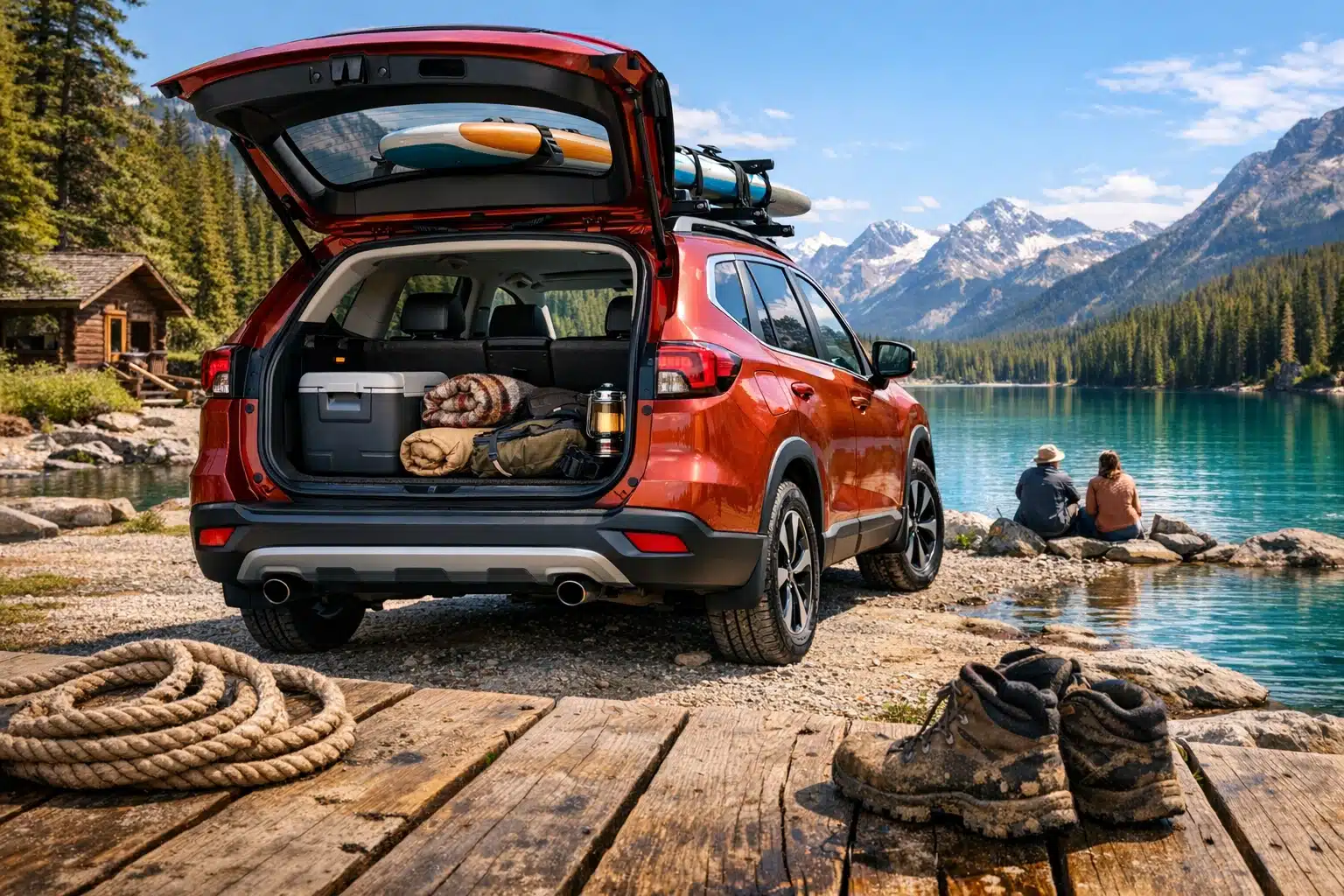
There is also an emotional side to this category. Compact SUVs promise movement without drama. On Monday they handle school drop-off and office traffic. On Saturday they carry camping gear, muddy shoes, and a cooler full of snacks. That split personality is exactly why the details matter. The difference between a merely fashionable crossover and a genuinely capable one often comes down to seating comfort, drivetrain tuning, suspension travel, tire choice, and the intelligence of the technology built around the driver.
Everyday Features That Define a Strong Compact SUV
For most owners, the most important test of any compact SUV happens far from a mountain trail. It happens in morning traffic, at grocery store loading zones, in wet winter parking lots, and during long stretches of stop-and-go suburban driving. That is why everyday features deserve close attention before anyone gets distracted by bold styling or marketing slogans. A good compact SUV should feel easy to live with from the first week onward.
In a model such as the Compass, packaging is a major advantage. The higher seating position improves forward visibility, which makes lane placement, intersections, and low-speed maneuvering less stressful. Rear seat access matters too, especially for families with child seats or for adults who regularly carry coworkers and friends. Cargo usability is equally important. A low lift-over height, a wide rear opening, split-folding seats, and intelligently shaped storage bins often matter more in real life than raw cargo-volume numbers alone. In this class, many rivals offer roughly 25 to 40 cubic feet of room behind the second row, but shape and flexibility can be just as important as size on paper.
Interior controls are another decisive factor. Touchscreens can look modern, yet a vehicle still benefits from physical knobs or shortcut buttons for climate, volume, and defrost functions. Drivers should not need to dig through menus to make simple changes while moving. For many shoppers, the appeal is easy to summarize in one line: A refined compact SUV delivering standard 4×4 power, and a 10.1-inch Uconnect screen for daily drives or trail adventures. That phrase captures the balance many buyers want now: comfort, confidence, and intuitive technology in one package.
Comfort details are often underestimated until the honeymoon period ends. Supportive front seats, a quiet cabin at highway speed, decent rear legroom, and a suspension that absorbs broken pavement can shape owner satisfaction more than flashy trim pieces. It also helps when the vehicle includes:
• multiple USB ports for front and rear passengers
• wireless phone integration where available
• thoughtful cupholder and door-pocket design
• available heated seats and steering wheel for colder climates
• roof rail compatibility for bikes, boxes, or outdoor gear
Compared with some softer, road-focused rivals, a Compass-style compact SUV may appeal to drivers who value a slightly tougher character. The trade-off can be worth it when the vehicle still delivers solid ride quality and cabin refinement. The best feature set is not the one with the longest brochure. It is the one that fits daily habits without creating friction, confusion, or wasted space.
Off-Road Capability: What Is Real, What Is Cosmetic, and Why It Matters
Off-road capability is one of the most misunderstood topics in the compact SUV segment. Many vehicles wear rugged trim, dark plastic cladding, and aggressive wheel designs, yet remain tuned almost entirely for pavement. That does not make them bad vehicles, but it does mean buyers need to separate appearance from actual ability. If the 2026 Jeep Compass is part of the conversation, this distinction becomes especially important because Jeep is judged by a higher standard than a typical crossover brand.
The first item to examine is drivetrain design. In this class, there is a meaningful difference between occasional-slip all-wheel drive and a system designed for consistent traction over loose, uneven terrain. A more serious setup may include terrain-select modes, low-speed traction tuning, hill-descent control, and a driveline calibrated to send power where it is needed rather than simply reacting after wheelspin begins. Standard four-wheel-drive availability can be a real advantage for drivers in snowbelt regions or for those who routinely reach campsites, trailheads, and unpaved work locations.
Ground clearance is the next checkpoint. Many compact crossovers sit too low to handle deep ruts or rocky breakovers without scraping the underside. A model aimed at real back-road travel should provide enough ride height to clear obstacles that would stop a purely urban vehicle. Protective elements such as skid plates, durable tires, underbody shielding, and off-road-oriented bumpers can also change what the vehicle is willing to tackle. Approach angle, departure angle, and suspension articulation may sound technical, but they are the difference between a controlled climb and a front bumper meeting dirt at the wrong moment.
There is also a practical middle ground that suits most owners. Not every buyer needs extreme capability. A well-prepared compact SUV can be ideal for:
• muddy access roads after heavy rain
• snowy mountain weekends
• gravel trails to fishing spots or cabins
• sandy beach parking areas where permitted
• deeply potholed routes that punish lower vehicles
Compared with mainstream rivals such as the CR-V or Tucson, a Jeep-badged compact SUV traditionally aims to offer more genuine trail credibility. Compared with a Ford Bronco Sport or Subaru Forester Wilderness-style approach, the competitive question becomes one of balance: which vehicle gives enough rugged ability without sacrificing comfort, efficiency, and everyday quietness? That is the right way to judge the Compass. A vehicle does not need to conquer extreme rock gardens to be meaningfully capable. It simply needs hardware that expands where you can go, and engineering that lets the driver feel calm while getting there.
Smart Vehicle Tech That Improves the Drive
Technology has become one of the main reasons shoppers move from an older vehicle into a new compact SUV. Ten years ago, a higher seating position and decent cargo room might have been enough. Today, buyers also expect crisp screens, seamless smartphone connectivity, useful driver assistance, and software that does not turn simple tasks into a scavenger hunt. In that environment, smart vehicle tech is no longer a luxury add-on. It is part of the core ownership experience.
A central infotainment display, such as the Uconnect setup associated with the Compass line, matters most when it combines clarity with speed. Screen size grabs attention, but interface design keeps owners happy. Menus should be logically organized, touch response should feel immediate, and key functions should remain accessible within one or two taps. Apple CarPlay and Android Auto support are now close to mandatory in this class because many drivers prefer their own maps, media libraries, and messaging tools. Wireless pairing is especially valuable for short trips because it reduces clutter and makes the system feel invisible in the best possible way.
Driver-assistance technology deserves equal scrutiny. Features such as adaptive cruise control, blind-spot monitoring, rear cross-traffic alert, lane-keeping assistance, automatic emergency braking, and traffic-sign recognition can reduce workload when calibrated well. Yet not all systems are equally refined. The best versions intervene smoothly, provide clear alerts, and avoid becoming overprotective or distracting. A compact SUV that nails this balance feels modern in a helpful sense rather than modern for its own sake.
Digital convenience extends beyond the dashboard. Many buyers now look for:
• over-the-air software update capability
• remote lock and start through a mobile app
• multiple charging solutions, including USB-C ports
• configurable digital instrument displays
• high-resolution parking cameras with useful viewing angles
There is another layer to smart tech that often gets overlooked: integration with the physical vehicle. A good camera system supports parking in tight urban spaces, but it also helps on trails where wheel placement matters. Navigation is useful on the highway, but it becomes even more valuable when it quickly reroutes around traffic or poor weather. Voice commands can reduce distraction if they work naturally. Even materials and sound insulation relate to technology, because microphones, navigation prompts, and hands-free calls are easier to use in a cabin that controls background noise. In a well-rounded compact SUV, the best technology does not shout. It quietly removes friction from the drive.
Conclusion: Who the 2026 Jeep Compass Makes Sense For
The most appealing version of a compact SUV is the one that fits the owner’s actual life, not the one that wins the loudest comparison online. For a buyer considering the 2026 Jeep Compass, the central question is whether a blend of urban usability, authentic all-weather confidence, and a more adventurous identity matches the way the vehicle will be used. If the answer is yes, the Compass concept becomes very compelling.
This kind of vehicle makes particular sense for drivers who want one machine to handle several roles gracefully. Commuters benefit from the upright seating position, manageable exterior dimensions, and connectivity features that make daily travel less tedious. Small families gain flexibility from the cargo area, rear-seat practicality, and available safety systems. Outdoor-minded owners appreciate the reassurance that the vehicle is not limited to smooth pavement or lightly dusted roads. In a market crowded with competent crossovers, that broader operating range is meaningful.
Shoppers should still compare carefully. A road-focused rival may offer more rear legroom or slightly better fuel economy. Another competitor may deliver sportier steering or a more premium cabin feel. That is why the smartest approach is to build a shortlist around personal priorities:
• choose the Compass if traction, trail readiness, and rugged character rank high
• choose a softer crossover if maximum efficiency and rear-seat space dominate
• choose a tech-forward alternative if screen design and digital features matter most
• choose the vehicle that feels easiest to live with after a long test drive, not a short spin around the block
The strongest takeaway is simple. A modern compact SUV should not force a compromise between intelligence and utility. It should provide comfort for weekday routines, enough capability for weather and rough terrain, and technology that feels genuinely supportive. If the 2026 Jeep Compass delivers those qualities in a balanced way, it will speak directly to buyers who want substance behind the styling. For readers in that audience, the real advantage is not just owning a vehicle that looks ready for adventure. It is owning one that can handle the ordinary with polish and the unexpected with composure.