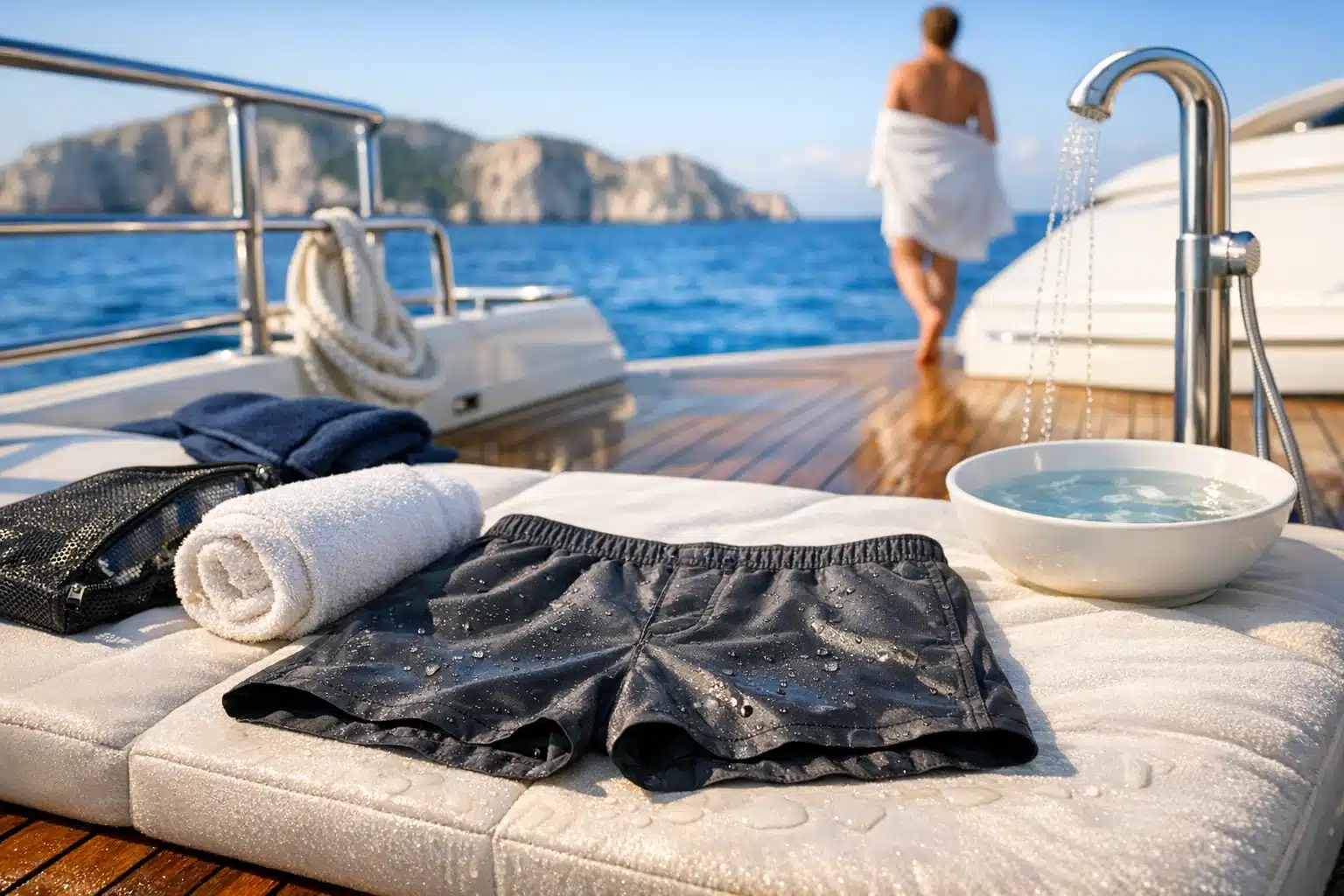
 Artificially generated image
 Gentle Care for Wet Look Swimwear for Men: Why Skipping the Wring Matters
Understanding the Fabric and Mapping Out the Right Care Routine
Wet look swimwear has a distinctive finish that can lose its edge when routine care becomes too rough. Many men focus on fit and style when buying a pair, yet the real test begins after the pool, the sea, or a long session in the sun. Small habits, like how you rinse, squeeze, wash, and dry the fabric, shape how long it keeps its shine and stretch. A little attention now can spare you fading, sagging, and surface wear later.
Before getting into techniques, it helps to understand why this category of swimwear deserves a gentler routine than standard trunks or loose board shorts. Many wet look designs use smooth synthetic blends, often with elastane for stretch and a surface that reflects light more noticeably than matte fabrics. That visual effect is part of the appeal: the material catches movement, contours the body, and keeps a sleek profile. The downside is that this same polished appearance can show stress faster. A rough twist, a hot dryer, or a long wait in chlorinated water can leave the suit looking tired sooner than expected.
Here is a simple outline for caring for this type of swimwear:
• Understand what makes wet look fabric sensitive.
• Skip wringing and use low-stress water removal instead.
• Rinse promptly after every swim.
• Wash with restraint rather than with force.
• Dry patiently and keep heat out of the equation.
A useful comparison is this: loose swim trunks are often treated like utility clothing, while wet look swimwear should be treated more like performance apparel with a cosmetic finish. The fabric is built to stretch and recover, but it is not meant to be twisted, baked, or scrubbed as if it were an old towel. Chlorine, salt, sunscreen, body oils, and friction all build up in layers, and those layers do not usually announce themselves in one dramatic moment. Instead, they work quietly. The shine dulls first, then the hand feel changes, then the fit starts to relax where you least want it to.
This article follows that care path from the first mistake many men make, wringing, through smarter post-swim habits, better washing decisions, and drying methods that preserve the look people bought the garment for in the first place. Think of it as maintenance with a light touch: fewer dramatic rescues, more steady preservation.
Why Skipping the Wring Really Matters
Wringing feels efficient. You step out of the water, grab the swimwear at both ends, twist hard, and watch water pour out. It seems practical, but for wet look swimwear, that shortcut can be one of the fastest ways to stress the fabric. When the material is wet, it is heavier and more vulnerable. Add twisting force to that extra weight, and the strain no longer spreads evenly across the garment. It concentrates at seams, elastic edges, and any area already under tension from fit.
That matters because stretch fabrics are designed to recover from extension, not from aggressive twisting combined with pulling. In simple terms, the fabric can handle movement around the body far better than a spiral torque through soaked fibers. The more fitted the cut, the more obvious this becomes. Briefs, square-cut styles, and close-fitting swim shorts rely on shape retention. When you wring them, the waistband can warp slightly, leg openings may lose their crisp line, and the material can develop subtle distortions that are hard to notice immediately but easy to spot after repeated wear.
The surface finish is another reason to stop. Wet look fabrics are prized for their sleek appearance, and that look can become uneven when the outer layer is repeatedly twisted or creased while saturated. Imagine folding glossy paper when damp rather than dry; the surface memory changes. Swimwear is more flexible than paper, of course, but the principle is similar. The finish can end up with tiny stress marks, dull patches, or a less uniform sheen.
Common signs of wringing damage include:
• stretched seams that no longer sit flat
• a waistband that feels slightly twisted
• shine that looks patchy in strong light
• fabric that dries into a misshapen outline
The better approach is simple. Hold the swimwear flat, press water out with your hands, and if possible roll it briefly in a clean towel. This removes moisture without forcing the garment into an unnatural shape. It takes a little longer, but the trade-off is worth it. One rough twist may not destroy a suit, yet repeated wringing acts like a slow tax on the fabric. For men who want their swimwear to keep its structure, the smartest move is also the least dramatic: do less, and do it more gently.
Better Post-Swim Care Starts the Moment You Step Out of the Water
Good swimwear care does not begin in the laundry room. It starts in that narrow window right after swimming, when chlorine, salt, sand, sweat, sunscreen, and body oils are still sitting on the fabric. Leaving the suit bunched up for hours gives those residues more time to settle into the fibers and surface finish. Chlorine can dry out elastic blends, salt crystals can add abrasion, and sunscreen can leave a film that changes both texture and appearance. The longer they remain, the more work your washing routine has to do later.
A quick rinse with cool or lukewarm fresh water is one of the most useful habits you can build. It does not need to be elaborate. Even a brief shower rinse at the pool or beach is better than waiting until night. That simple step dilutes chemicals and removes loose debris before it starts to cling. If you are traveling, a sink rinse at the hotel works well enough. The point is speed, not perfection.
Explore simple care tips for men’s wet look swimwear, from gentle rinsing and drying to preserving its sleek finish, stretch, and shape.
There are also a few small mistakes that cause outsized damage. One is sealing a damp suit in a plastic bag and forgetting about it in a hot car or gym locker. Heat, trapped moisture, and chemical residue make an unpleasant team. Another is tossing swimwear in with wet towels, where rough loops and heavy fabric create extra friction. Wet look material benefits from breathing room and a cleaner environment.
A smart post-swim checklist looks like this:
• rinse as soon as possible
• do not sit in the suit longer than necessary if it is heavily chlorinated or sandy
• press out water instead of twisting
• keep it separate from rough, damp items
• move on to washing or proper drying within a reasonable time
There is also a comfort angle. A suit that is rinsed early usually smells fresher, feels smoother against the skin on the next wear, and is less likely to hold onto that stiff, overworked texture some men mistake for age. In reality, it is often neglected residue. Better post-swim care is not about fussiness. It is about interrupting the damage cycle before it has time to settle in. When done consistently, it reduces the need for harsher cleaning later and helps the swimwear age with more grace than guesswork.
Washing Habits That Protect Shine, Stretch, and Shape
Once the suit has been rinsed and handled gently, washing becomes less about deep cleaning and more about careful maintenance. This is where many otherwise well-meaning routines go wrong. People often assume that if a garment has been in chlorine, seawater, or sunscreen, it must need a strong wash. In reality, wet look swimwear usually responds better to a light hand than a heavy one. Harsh detergent, hot water, and aggressive machine settings can wear it down faster than the swim itself.
Hand washing is the safest baseline. A basin, cool or lukewarm water, and a small amount of mild detergent are usually enough. Let the garment move through the water, gently rub any areas with residue, then rinse thoroughly. This process removes buildup without grinding the fabric against itself. It also gives you a chance to inspect the suit for sand trapped in seams or spots where sunscreen has collected.
If you need to use a washing machine, caution matters. Place the swimwear in a mesh laundry bag, choose a delicate cycle, and keep the water cool. Avoid mixing it with garments that have zippers, hooks, Velcro, or rough denim textures. Those items can create friction that scuffs the finish. A wet look suit does not need to share a cycle with the rest of your weekend laundry just because it fits in the same basket.
Some washing choices are especially worth avoiding:
• bleach, which can weaken fibers and alter color
• fabric softener, which can leave a coating and affect stretch recovery
• stain removers with strong solvents unless the care label explicitly allows them
• hot water, which can stress elastic fibers
Comparisons help here. You would not wash a technical running top the same way you wash work jeans, and you should not treat fitted swimwear like a basic cotton garment. The goal is to remove residues while preserving performance and appearance. A mild wash also reduces the chance of that gradual flattening effect, when the suit starts to look less sleek and more ordinary.
Frequency matters too. After every swim, a rinse is essential, but a full detergent wash only needs to be as strong as the condition of the garment requires. Overwashing can create its own wear pattern. Think measured, not minimal: clean enough to protect the fabric, gentle enough to keep the finish intact.
Drying Without Damage and a Practical Takeaway for Men
Drying is the final stage of care, and it is often where patience makes the biggest difference. A wet look swimsuit may survive careless drying for a while, but repeated exposure to heat and gravity can quietly alter its fit. Tumble dryers are the clearest risk. High heat can fatigue elastane, reduce snap-back, and leave the fabric feeling older than it is. Even when visible damage does not appear right away, the recovery of the material can weaken over time. That means a suit that once fit cleanly may start to feel less precise around the waist or legs.
The best option is air drying away from direct high heat. Lay the swimwear flat on a clean towel or hang it in a way that does not pull the wet fabric downward at one point. If you hang it, make sure it is balanced rather than clipped awkwardly at the edge, which can stretch one area while the rest dries. Indoors or in shade is usually safer than long exposure to strong sun, especially if the garment is dark, coated, or highly elastic. Sunlight helps dry fabric, but prolonged harsh exposure can also fade color and stress the finish.
Good drying habits are straightforward:
• never use a radiator, hair dryer, or tumble dryer as a shortcut
• keep the suit out of prolonged direct sun when possible
• let air move around the garment
• reshape it lightly before leaving it to dry
• store it only when it is fully dry
For men who swim often, rotation is a practical advantage. Having more than one pair reduces the temptation to rush the drying process or to put on a suit that is still damp and partly stretched from the previous session. That is not a luxury tip; it is simply a way to avoid compressing wear into one garment.
The larger takeaway is simple. Wet look swimwear rewards calm handling. Skip the wring, rinse early, wash with restraint, and dry with patience. Those four habits do more for longevity than expensive fixes or last-minute rescue attempts. If you like swimwear that keeps a sharp line, a smooth finish, and a dependable fit, careful maintenance is not overthinking. It is part of owning the style well. For the man who wants his swimwear to look polished beyond the first few outings, gentleness is not weakness. It is strategy.