 Artificially generated image
 Classic Sandwich Recipes From Decades Past: A Tasty History of Lunch Favorites
Lunch once carried a stronger sense of ritual, and the sandwiches on midcentury tables reflected changing tastes, new conveniences, and a growing fascination with casual dining. This article looks beyond nostalgia to examine why certain fillings, breads, and serving styles became household standards. Explore classic sandwiches from decades past, from tea-room favorites and diner staples to nostalgic recipes still worth making today. Along the way, you will find practical ideas for reviving these dishes with ingredients that still make sense in a modern kitchen.
Outline: How This History of Vintage Sandwiches Unfolds
Before revisiting specific recipes, it helps to see the larger map. Classic sandwiches did not all come from the same place, and they certainly did not serve the same purpose. Some belonged to polished tea rooms where lunch was light, social, and carefully presented. Others thrived on diner griddles, where speed, heat, and appetite mattered more than lace napkins. Still others came from home kitchens shaped by school schedules, office routines, church suppers, bridge clubs, and the growing influence of supermarkets. Looking at them together reveals a practical history of how people ate in the first half and middle decades of the twentieth century.
This article follows that path in five steps. First, it sets out the framework so the reader can understand why sandwiches became such a useful lens for food history. Then it moves into tea-room and luncheon traditions, where restrained portions and tidy assembly carried as much meaning as flavor. After that comes the diner world, with sandwiches built for full appetites and quick service. A fourth section examines midcentury lunch traditions at home, at school, and at work, because a recipe often makes more sense when viewed in its original setting. Finally, the conclusion turns to the present and asks which recipes deserve revival, which need updating, and why they still appeal.
Several themes connect these sections:
– portability and convenience
– changes in grocery distribution and refrigeration
– regional tastes and social class
– the rise of prepared ingredients
– the lasting appeal of contrast, such as creamy fillings on soft bread or crisp bacon against cool tomato slices
Comparisons will matter throughout. A tea-room chicken salad sandwich and a tuna melt from a diner may both be classics, yet they reflect different expectations about texture, presentation, and occasion. Facts also support the story. By the mid-twentieth century, sliced sandwich bread, canned fish, jarred condiments, and household refrigeration had become common enough to reshape lunch habits in many American homes. In that sense, the humble sandwich became a quiet record of modern life: efficient, adaptable, and surprisingly expressive.
Tea-Room Favorites and the Polished Art of the Luncheon Sandwich
Long before lunch became something eaten one-handed over a keyboard, it often had ceremony. Tea rooms and ladies’ lunch spots helped define a softer side of sandwich culture in the early twentieth century, especially in cities and shopping districts. These places served women meeting friends, travelers breaking up the day, and shoppers who wanted something elegant but not heavy. Their sandwiches were designed to be civilized rather than dramatic. Crusts might be trimmed, fillings neatly spread, and portions arranged in triangles or slender fingers. Even the names suggested order and restraint: chicken salad, egg salad, cucumber, watercress, pimento cheese, deviled ham, and cream cheese with olive or nut additions.
What made these sandwiches memorable was balance. Fillings tended to be moist but not sloppy, seasoned but not aggressive. Chicken salad often included celery for crunch, mayonnaise for body, and sometimes walnuts or grapes for contrast. Egg salad relied on a similar formula, using chopped hard-cooked eggs, mustard, and a little acidity to keep the mixture lively. Cucumber sandwiches, so often dismissed as dainty relics, actually demonstrate a smart understanding of texture and temperature. Thin slices of cucumber, lightly salted, paired well with butter or cream cheese because the richness offset the vegetable’s cool freshness. A reader looking back may find these recipes modest, yet modesty was part of their appeal.
Tea-room sandwiches also reflected changing food systems. Canned pimentos, commercial mayonnaise, packaged cream cheese, and increasingly reliable bread production made consistency easier for both restaurants and home cooks. These were important developments, not trivial ones. A cook could produce a polished lunch with ingredients that were shelf-stable or easy to store, which helped popularize these recipes at church gatherings, showers, and club meetings. Compared with diner sandwiches, tea-room favorites were lighter in weight but not lesser in influence. They taught generations how to think about proportion, seasoning, and presentation. When made well, they still feel satisfying because they respect the small pleasures of lunch: tenderness, freshness, and the quiet elegance of something assembled with care rather than haste.
Diner Staples, Lunch Counters, and the Rise of Hearty Sandwich Comfort
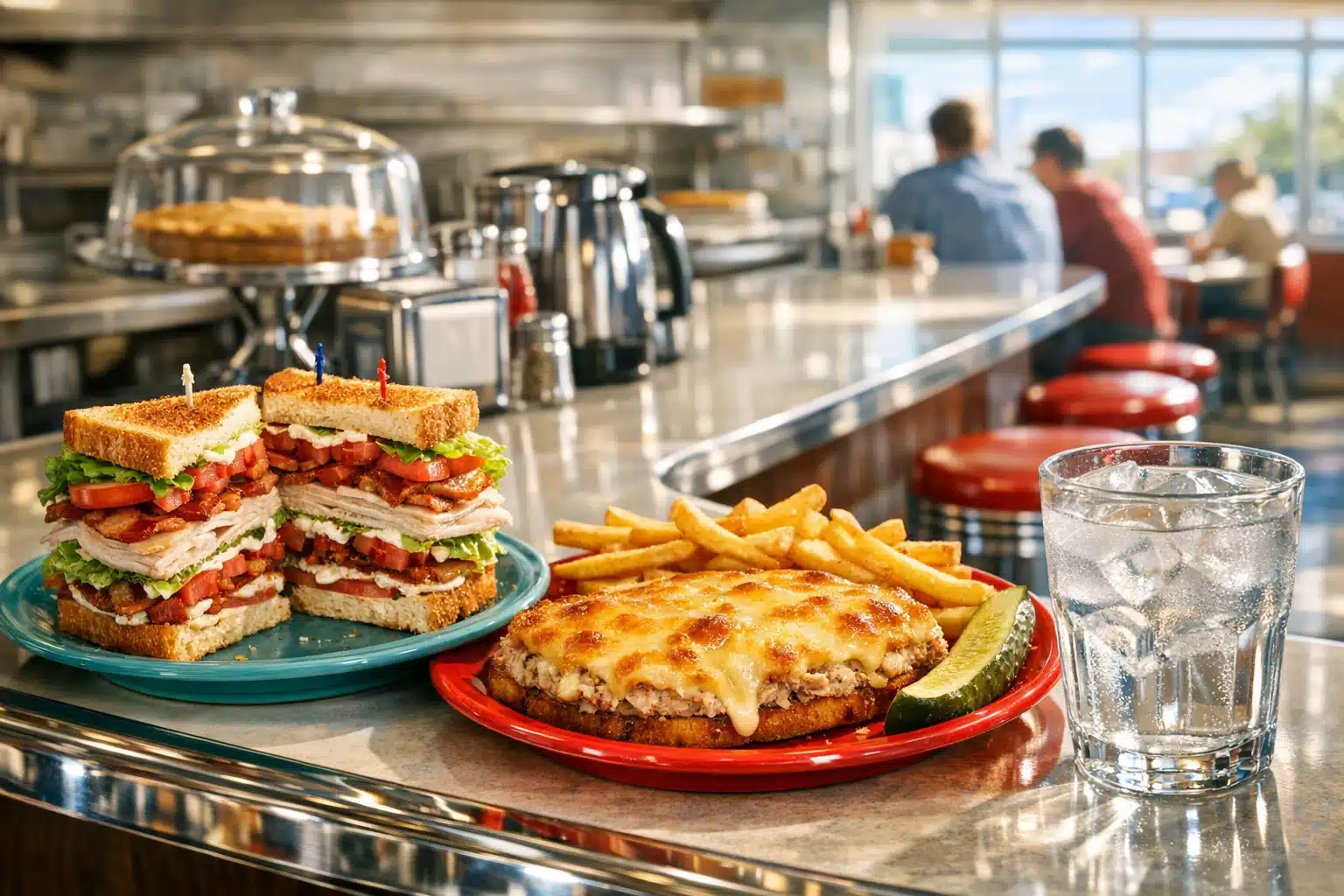
If tea-room sandwiches whispered, diner sandwiches spoke clearly and often with a sizzle. Midcentury lunch counters and diners were shaped by movement: workers on breaks, travelers on highways, teenagers with spare change, and regulars who wanted something dependable. In these settings, a sandwich had to deliver value, speed, and strong flavor. That is why griddled classics became so durable. The tuna melt, grilled cheese, patty melt, BLT, club sandwich, and hot roast beef variations all answered the same practical question: how do you turn common ingredients into a filling meal without slowing the kitchen down?
Take the tuna melt. It combined pantry logic with diner technique. Tuna salad could be made in advance, portioned quickly, topped with cheese, and finished on toasted bread until crisp outside and creamy inside. The patty melt worked from a similar principle, but with a hamburger patty, onions, rye bread, and melted cheese, often served with a pickle spear and a mound of fries. The club sandwich offered another form of abundance. Built in layers with turkey or chicken, bacon, lettuce, tomato, and mayonnaise, then cut into quarters and secured with picks, it looked almost architectural on the plate. These sandwiches were not delicate, but they were structured. They relied on contrast: warm against cool, fat against acid, crunch against softness.
Several characteristics made diner sandwiches successful:
– they used ingredients already stocked for multiple menu items
– they could be cooked or assembled fast during rush periods
– they were easy to pair with soup, slaw, fries, or pie
– they rewarded repetition because consistency mattered to regular customers
Postwar car culture and expanding roadside dining helped cement these sandwiches in popular memory, but their staying power comes from more than nostalgia. They are efficient recipes with clear sensory logic. A BLT is still hard to improve because its design is simple and exact. Crisp bacon brings salt and crunch, lettuce adds freshness, ripe tomato gives sweetness and acid, and mayonnaise rounds the edges. Diner staples remain worth revisiting because they respect appetite without becoming complicated. They show that a sandwich can be honest, comforting, and technically sound all at once.
Midcentury Lunch Traditions at Home, at School, and at the Office
To understand why certain sandwiches became classics, it is necessary to leave restaurants and step into ordinary routines. Midcentury lunch traditions were built around packed lunches, school cafeterias, desk meals, church socials, and family kitchens that increasingly depended on convenience. In the United States, the National School Lunch Act of 1946 helped formalize school meal programs, while the broader postwar period brought more refrigerators, more processed staples, and wider supermarket distribution. For many households, lunch was not a performance. It was a puzzle that had to be solved daily, quickly, and within budget. Sandwiches solved that puzzle better than almost any other format.
Home lunch habits reflected the tools and products of the era. Wax paper, lunch boxes, thermoses, plastic containers, and dependable sliced bread changed what could be packed and how long it stayed appealing. Peanut butter and jelly became a school standard for obvious reasons: it was inexpensive, stable, easy to portion, and friendly to a child’s appetite. Egg salad, ham salad, deviled ham, tuna salad, and bologna with mustard or mayonnaise filled a similar role for adults. Office workers often carried sandwiches that could survive a morning commute and still taste decent by noon. That practical requirement favored spreads and chopped fillings over fragile stacks of vegetables.
A typical midcentury lunch rhythm might include:
– a sandwich built the night before or early in the morning
– a piece of fruit or a small salad
– pickles, chips, or crackers for contrast
– leftovers used creatively to avoid waste
These habits also explain why certain recipes leaned on celery, relish, onion, canned meat, or chopped hard-cooked eggs. Such ingredients stretched protein, added texture, and brought flavor to otherwise plain bread. There was a social layer as well. A bridge luncheon might call for trimmed finger sandwiches, while a factory break demanded something sturdier. A school lunch needed familiarity; an office lunch needed neatness. In each setting, the sandwich adapted. That flexibility is the real lesson of midcentury lunch culture. Rather than treating old recipes as museum pieces, we should see them as practical responses to time, money, storage, and appetite. Their endurance comes from utility as much as charm.
Conclusion: Classic Recipes Still Worth Bringing Back to the Table
For modern readers, the most useful question is not whether vintage sandwiches are charming. It is whether they still deserve a place in current kitchens. The answer is yes, though not all for the same reasons. Some recipes remain excellent almost unchanged. A well-made egg salad sandwich, a BLT, a tuna melt, or a chicken salad on toasted bread still satisfies because the structure works. Other classics benefit from small adjustments. Better bread, sharper mustard, fresher herbs, less sweet relish, or more attention to texture can make an old formula feel lively again without stripping away its identity.
The strongest candidates for revival usually share a few traits:
– they use accessible ingredients
– they reward careful seasoning
– they adapt to lunch, brunch, picnics, or light suppers
– they can be made plain or dressed up depending on the occasion
That versatility matters today, when many people want meals that are affordable, quick, and still capable of feeling personal. A tea-room cucumber sandwich can become a refreshing warm-weather lunch with hearty grain bread and a little dill. A patty melt can move from greasy-spoon icon to weeknight dinner if cooked with patience and served with a sharp salad. Pimento cheese, once dismissed by some as old-fashioned, continues to thrive because it works as a spread, dip, and sandwich filling. Even the club sandwich, towering and slightly theatrical, still understands something modern food culture often forgets: presentation can make a simple meal feel generous.
If you are a home cook, food-history enthusiast, or anyone tired of algorithm-driven lunch ideas, these classics offer a grounded alternative. They remind us that good sandwiches do not depend on novelty. They depend on proportion, contrast, and context. The best old recipes survived because they were useful, repeatable, and comforting to eat. Revisiting them is not an exercise in imitation for its own sake. It is a way to recover smart techniques and rediscover flavors that earned their place over time. In that spirit, vintage sandwich favorites are more than retro curiosities. They are working recipes, and many of them are ready for another well-deserved turn at lunch.