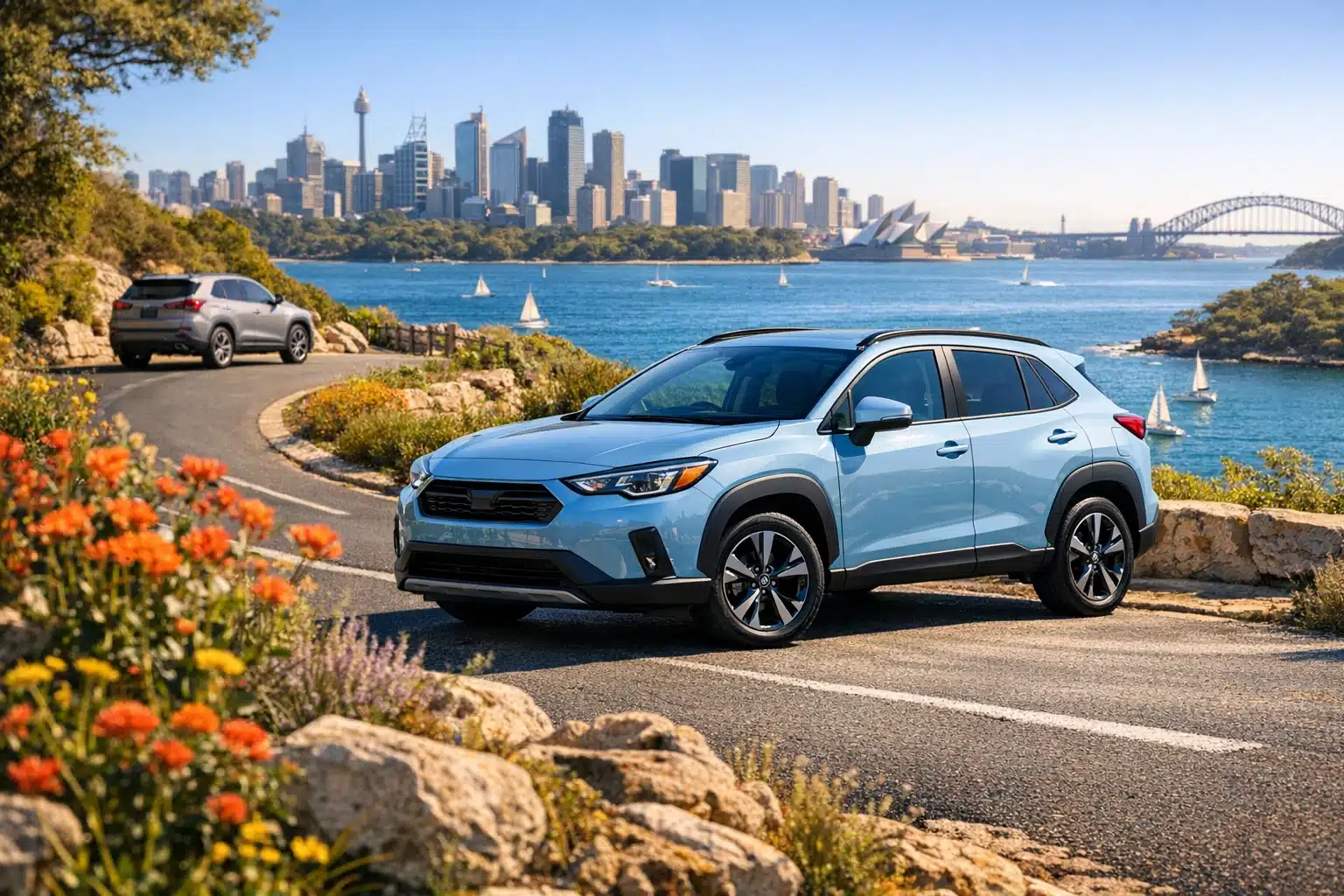
 Artificially generated image
 2026 Toyota Yaris Cross: Availability, Features, and U.S. Alternatives
The 2026 Toyota Yaris Cross sits at an interesting crossroads in the global auto market, blending city-friendly size with SUV styling that many buyers now expect. Yet its story is just as much about geography as engineering, because availability depends heavily on region, emissions rules, and local buyer tastes. For readers in the United States, the model raises an obvious question: why can drivers abroad buy it while American shoppers cannot? That puzzle opens the door to a wider look at Toyota’s worldwide crossover strategy, hybrid planning, and the closest U.S. alternatives.
Outline and Big-Picture Overview
Before diving into details, it helps to map the road ahead. This article follows a simple outline that mirrors the questions most readers actually ask when the Yaris Cross comes up in conversation. First, it defines where the model sits in Toyota’s wider family of small vehicles. Next, it examines where the vehicle is sold and why that map is not universal. After that, it explores the hybrid system and the everyday usability that make the Yaris Cross more than a stylish city runabout. Finally, it compares the model with Toyota crossovers that American buyers can purchase instead.
- How the Yaris Cross fits into Toyota’s small crossover strategy
- Which countries and regions receive it
- What hybrid features shape its appeal
- Which U.S. Toyota models come closest in purpose
Explore the 2026 Toyota Yaris Cross, its overseas availability, hybrid features, and comparable Toyota crossover options in the U.S.
At its core, the Yaris Cross is a subcompact crossover designed for drivers who want a higher seating position and SUV-inspired versatility without stepping into a bulky footprint. In many markets, that formula has become a sweet spot. Dense city centers, limited parking, rising fuel costs, and growing demand for electrified vehicles all favor smaller crossovers that feel easy to live with. Toyota recognized that shift years ago, and the Yaris Cross is one result of that strategy. It packages familiar Toyota priorities such as efficiency, safety technology, and a reputation for durability into something shorter and lighter than a Corolla Cross or RAV4.
There is another reason this topic matters: the Yaris Cross highlights how modern automakers no longer sell the same products everywhere. A vehicle can be common in Europe or Japan, attract strong interest in Australia, and still remain absent in the United States. That is not a mistake or oversight. It usually reflects deeper business calculations about cost, buyer expectations, production planning, and regulatory fit. In that sense, the Yaris Cross is more than a model name. It is a useful case study in how global car brands fine-tune their lineups one market at a time.
For the reader, this means the Yaris Cross story has two layers. One is practical: what the vehicle offers. The other is strategic: why Toyota offers it where it does. Taken together, those layers make the 2026 Yaris Cross worth understanding even if you cannot buy one in every country.
Where the Yaris Cross Is Available and Why That Matters
Global availability is one of the most interesting parts of the Yaris Cross story, because the badge does not mean exactly the same thing everywhere. In Europe, Japan, and Australia, the Yaris Cross is widely recognized as Toyota’s compact crossover with strong urban focus and notable hybrid appeal. These regions tend to reward smaller dimensions, lower emissions, and efficient drivetrains. As a result, the Yaris Cross fits naturally into local buying habits. In many European cities, for example, a shorter vehicle with excellent fuel economy can be more useful than a larger crossover with extra cargo space that rarely gets used.
Japan provides another logical home for the model. The domestic market often values compact exterior size, maneuverability, and smart packaging. Toyota has long excelled at designing vehicles that maximize cabin usefulness while respecting crowded streets and tight parking spaces. Australia, meanwhile, has shown steady enthusiasm for Toyota crossovers and hybrids, making the Yaris Cross a sensible addition there as well. Some Southeast Asian and other international markets also use the Yaris Cross name, though buyers should pay close attention because specifications, styling, platform details, and equipment can vary by region.
This naming overlap matters. A shopper reading about a Yaris Cross in one country may assume the same powertrain, body dimensions, and trim structure apply elsewhere. That is not always true. Automakers often adapt vehicles for local taxes, manufacturing networks, consumer preferences, and supply chains. The result is a family resemblance rather than complete uniformity.
Why is the United States missing from the list? Several factors likely shape that decision:
- American buyers generally favor larger vehicles than buyers in Europe or Japan.
- Toyota already sells the Corolla Cross in the U.S., which occupies a similar role with slightly bigger proportions.
- Certification, crash compliance, and market launch costs can be difficult to justify for a model that may overlap with an existing product.
- Dealer demand and pricing strategy often favor vehicles with broader margins and wider suburban appeal.
In short, the Yaris Cross is not absent from the U.S. because it lacks merit. It is absent because Toyota appears to believe another model serves that market more effectively. That distinction is important. Availability is often less about engineering limitations and more about business logic shaped by local roads, fuel prices, family size, and what shoppers expect from a crossover wearing a Toyota badge.
Hybrid Technology, Design, and Everyday Practicality
The Yaris Cross earns much of its attention through its hybrid identity. Depending on the market, buyers may see gasoline-only versions, hybrid variants, or both, but the electrified models usually dominate the conversation. Toyota’s small-car hybrid formula has become well known for a reason: it focuses on smooth low-speed response, efficient stop-and-go driving, and easy ownership rather than dramatic performance claims. In many overseas versions of the Yaris Cross, that means a 1.5-liter engine working with an electric motor and an electronically managed transmission setup designed to prioritize efficiency in everyday traffic.
On paper, that may sound modest. On the road, it often feels well judged for the mission. Urban driving rarely rewards big horsepower numbers as much as it rewards clean throttle response, quiet starts, and reduced fuel stops. A compact hybrid crossover can turn an ordinary commute into something less irritating, especially when traffic is heavy and parking is scarce. That is where the Yaris Cross tends to make sense. It is built for the real world, not for fantasy-spec bragging rights.
Some markets have also offered more than one hybrid output level, and exact 2026 specifications may vary by region. That is worth emphasizing because Toyota frequently adjusts power, trim, battery strategy, and equipment by market. Even so, the broader theme remains consistent: the Yaris Cross is aimed at drivers who want low running costs and crossover convenience without moving into a much larger vehicle class.
Its practicality is not only mechanical. The body shape provides several everyday advantages:
- A slightly elevated seating position that can improve visibility in traffic
- A hatchback-style cargo area that is easier to load than a traditional sedan trunk
- Flexible rear seating for groceries, luggage, or weekday family duties
- Optional all-wheel-drive capability in some markets for extra traction
Design also plays a role in its appeal. The Yaris Cross typically mixes crisp exterior lines with rugged touches such as cladding and a more upright stance, giving it a visual confidence that small hatchbacks sometimes lack. Inside, available digital displays, smartphone connectivity, driver-assistance systems, and modern infotainment features help it feel current rather than compromised. Imagine a rainy morning school run or a last-minute airport trip: the Yaris Cross is the sort of vehicle meant to slip into that scene without drama, simply doing its job with efficiency and quiet competence.
That combination of hybrid thrift, manageable size, and useful packaging explains why the model resonates in so many non-U.S. markets. It is not trying to be everything. It is trying to be genuinely handy, and that can be a stronger selling point than flashy excess.
Closest Toyota Crossover Alternatives in the United States
If you live in the United States and find the Yaris Cross appealing, the natural next question is simple: what should you look at instead? The clearest answer is the Toyota Corolla Cross, especially in hybrid form. While not identical, it fills much of the same role in the American lineup. It is a compact crossover that aims to blend Toyota familiarity, everyday practicality, and sensible efficiency into a manageable package. Compared with the Yaris Cross, the Corolla Cross is generally a bit larger and better matched to U.S. expectations for rear-seat room, cargo flexibility, and highway composure.
The Corolla Cross Hybrid is especially relevant because it carries the spirit of the Yaris Cross more closely than the gasoline version does. In recent U.S. specification, it has offered stronger total system output than many overseas Yaris Cross hybrids while still delivering excellent efficiency for the segment. For buyers who want a small Toyota crossover with electrified credentials and no need to hunt through import forums, it is the nearest showroom answer.
Another option is the RAV4, particularly hybrid trims. This is the bigger step up in the family. The RAV4 offers more space, stronger road-trip ability, and a broader trim range, but it also moves away from the Yaris Cross idea of compact simplicity. Someone drawn to the Yaris Cross for urban agility may find a RAV4 slightly more than necessary, even if it is an outstanding all-around vehicle.
For a different kind of buyer, Toyota’s bZ4X enters the conversation as an electric crossover alternative. It is not a direct substitute, because its powertrain, price position, and charging considerations place it in a distinct category. Still, shoppers attracted to efficient city-oriented mobility may want to compare it if they are ready for a battery-electric lifestyle.
- Corolla Cross: closest overall U.S. match in size and mission
- Corolla Cross Hybrid: best fit for drivers who value efficiency and modern Toyota hybrid behavior
- RAV4 or RAV4 Hybrid: better for families needing extra room and stronger long-distance versatility
- bZ4X: worth considering if full EV ownership is the goal rather than hybrid convenience
There is also a historical footnote. The C-HR once served as Toyota’s quirky small crossover in the U.S., but it occupied a different niche and lacked the broader practicality many shoppers wanted. In hindsight, the Corolla Cross became Toyota’s more mainstream solution. That helps explain why the Yaris Cross, despite its charm, has remained an overseas curiosity for American enthusiasts rather than a dealership staple.
Final Thoughts for U.S. Shoppers and Global Toyota Fans
The 2026 Toyota Yaris Cross matters for more than one reason. For buyers in markets where it is sold, it represents a thoughtful answer to modern driving needs: compact exterior dimensions, available hybrid efficiency, crossover styling, and enough practicality to handle daily life without feeling oversized. For readers in the United States, it serves a different purpose. It reveals how sharply Toyota tailors products to local demand, even when a vehicle seems universally appealing at first glance.
If you are a global shopper, the key takeaway is to verify the exact version sold in your country before making assumptions about power, trim, or technology. The Yaris Cross name can travel farther than a single specification sheet. Local features, drivetrain choices, and even platform details may differ, so careful market-specific research is essential. If you are in the U.S., the lesson is more straightforward: the Corolla Cross and Corolla Cross Hybrid are the Toyota models most worth cross-shopping if the Yaris Cross concept speaks to you.
It is also worth watching the wider trend rather than focusing only on one badge. Small crossovers with efficient electrified drivetrains are becoming increasingly relevant as urban congestion, parking constraints, and fuel-cost awareness reshape how people think about car ownership. Toyota understands that shift better than most manufacturers, and the Yaris Cross is evidence of that understanding. Whether or not the model ever reaches America in official form, the ideas behind it are already influencing the vehicles Toyota does sell there.
For enthusiasts, the Yaris Cross is a reminder that some of the most interesting Toyota products are not necessarily the biggest or most powerful. Sometimes the compelling story lies in precision: a vehicle sized for crowded streets, tuned for low running costs, and engineered to make routine travel easier rather than louder. That sort of intelligence tends to age well.
So who should care most about the 2026 Yaris Cross? City dwellers, efficiency-focused households, Toyota loyalists, and U.S. buyers wondering what sits between a hatchback and a family SUV all have a reason to pay attention. Even from a distance, the Yaris Cross offers a clear view of where practical mobility is heading, and that makes it worth understanding long before the next test drive is even on the calendar.