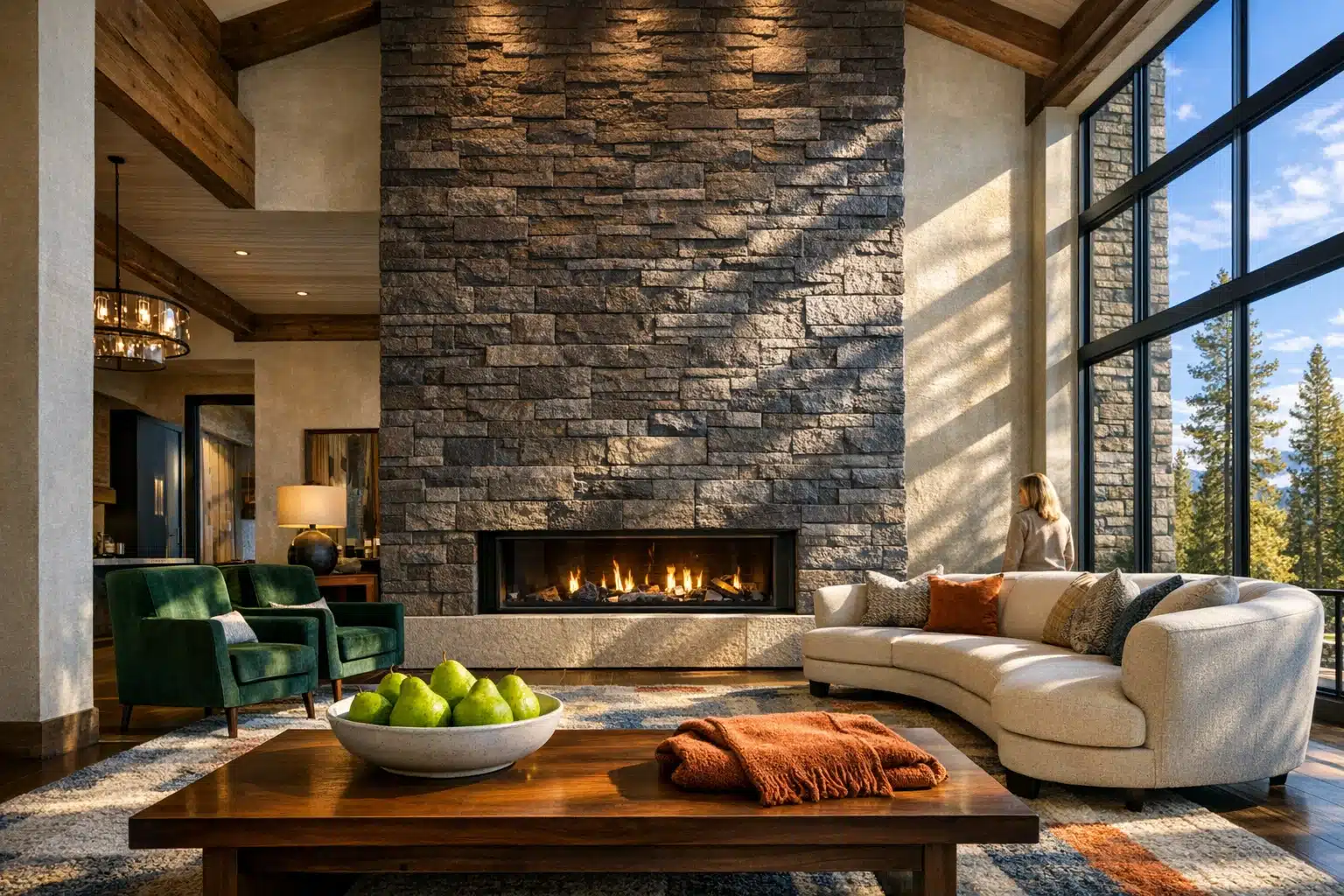
 Artificially generated image
 Faux Stone Panels: A Guide to Design, Installation, and Costs
Stone walls have a way of making a room feel grounded, but traditional masonry can be heavy, messy, and expensive. Faux stone panels offer a practical shortcut for homeowners who want texture without a major rebuild. They work in living rooms, entryways, fireplace surrounds, exterior facades, and compact accent areas. This guide explains style choices, installation basics, cost factors, and long-term performance so you can plan with confidence.
Outline
1. Understanding what faux stone panels are and how different styles affect the finished look.
2. Breaking down easy installation, including tools, prep work, and common mistakes.
3. Comparing costs, budgeting factors, and the value of faux stone versus heavier alternatives.
4. Reviewing durability, maintenance, and how panels perform indoors and outdoors.
5. Exploring home design ideas and offering practical guidance for homeowners, renovators, and DIY readers.
1. Understanding Faux Stone Panels and the Range of Design Options
Faux stone panels are decorative wall coverings made to imitate the appearance of natural stone while avoiding the weight, thickness, and labor intensity of full masonry. Most are manufactured from high-density polyurethane, molded composite materials, or other lightweight engineered products that can be fastened to walls and exterior surfaces. At a glance, the appeal is obvious: they bring texture, shadow, and visual depth to spaces that would otherwise look flat. A plain drywall surface can suddenly feel rustic, modern, industrial, or lodge-inspired depending on the profile, color blend, and joint pattern you choose.
Explore faux stone panels, including design options, installation considerations, costs, durability, and indoor or outdoor applications.
That broad view matters because the category is more varied than many buyers expect. Some panels mimic stacked ledgestone with long horizontal lines, which suits contemporary fireplaces or feature walls. Others imitate fieldstone, river rock, limestone blocks, or hand-cut ashlar patterns. The best choice depends less on what looks good in a showroom and more on what fits the scale and mood of your home. A dramatic, rough-cut profile may look stunning on a large exterior elevation, yet feel visually crowded in a small powder room. A smoother stone pattern can be easier to integrate with painted trim, cabinetry, and modern furnishings.
When comparing styles, it helps to think in layers:
• Pattern: stacked, irregular, block, or quarry-style
• Color: warm beige, cool gray, charcoal, sand, mixed earth tones
• Depth: shallow relief for subtle texture or deeper profiles for strong shadow lines
• Finish: matte, weathered, or more uniform molded surfaces
Faux panels are also useful because they solve design problems beyond appearance. Homeowners use them to define an entry, upgrade a kitchen island base, wrap a basement bar, or disguise an awkward transition wall. In commercial-style interiors, they can soften modern materials like steel and glass. In traditional homes, they often add the sense of age and permanence that fresh drywall simply cannot fake on its own. The creative part is not just choosing a stone look; it is deciding where texture should speak loudly and where it should whisper. That balance is what separates a polished installation from a wall that feels like a theme set.
2. Easy Installation: Why Faux Stone Panels Are Popular with DIY Homeowners
One of the biggest reasons faux stone panels continue to gain attention is simple: installation is usually far easier than laying individual stones or applying mortar-based veneer. On installation day, the project feels less like masonry and more like a careful mix of carpentry, measuring, and finishing. Many systems are designed with interlocking edges or repeating panel shapes that reduce visible seams and simplify alignment. Because the panels are lightweight, they can often be handled by one or two people without special lifting equipment, which lowers labor demands and makes smaller weekend projects realistic for experienced DIY homeowners.
Easy installation does not mean no preparation. The wall or substrate still needs to be clean, dry, structurally sound, and reasonably flat. Exterior applications may require weather-resistant barriers, flashing details, corrosion-resistant fasteners, and attention to manufacturer instructions. Interior applications are often more forgiving, but accuracy still matters. A rushed first row can create a chain reaction of misaligned panels, awkward cuts, and visible joints. Measuring twice remains a wiser investment than buying extra trim pieces later.
A typical install may involve:
• Marking a level baseline
• Dry-fitting several panels before fastening
• Cutting around outlets, corners, or trim
• Using recommended screws, construction adhesive, or both
• Sealing edges where moisture could become an issue
Corner treatment is especially important. Well-made corner pieces help preserve the illusion of real depth, while poorly planned edges can expose the fact that the material is decorative cladding. Fireplace surrounds need special caution as well. Some faux stone products are suitable for decorative walls but not for areas exposed to significant heat. Clearances, fire ratings, and local building codes should always guide the final decision.
For many homeowners, the sweet spot is a hybrid approach: do the design planning, purchasing, and possibly some basic prep yourself, then hire a pro for the final installation if the surface is large or highly visible. That can be particularly smart for exterior facades, tall entry walls, or projects with a lot of cutting around windows and doors. Faux stone panels are forgiving compared with real masonry, but like a good haircut, a sharp result still depends on patience, clean lines, and a steady hand.
3. Costs, Budget Planning, and How Faux Stone Compares to Other Wall Finishes
Cost is where faux stone panels become especially compelling. Traditional stone veneer can look beautiful, but it often requires more labor, more structural consideration, more installation time, and a larger overall budget. Faux stone panels typically reduce both material weight and installation complexity, which can lower project costs in meaningful ways. That said, the price range is not uniform. Basic interior-grade panels may sit at the lower end of the market, while premium molded panels with better color variation, stronger UV resistance, and matching accessories will cost more.
As a broad planning estimate, faux stone panels often range from roughly 8 to 20 dollars per square foot for materials alone, though premium styles may run higher depending on texture, thickness, and finish quality. Installed costs can vary widely based on labor rates, wall height, cuts, corner details, trim requirements, and whether the job is indoors or outdoors. In many markets, professionally installed faux stone may land somewhere around 14 to 35 dollars per square foot. By contrast, natural stone veneer systems frequently exceed that, especially once mortar work, specialized labor, and substrate prep are included.
Budgeting should include more than the panel price:
• Corner pieces and trim accessories
• Fasteners, adhesives, or sealants
• Surface preparation or repair
• Waste from cuts and pattern matching
• Delivery charges for bulky materials
• Labor for exterior weatherproofing details
It is also useful to compare faux stone with other decorative solutions. Painted drywall is cheaper, but it does not offer the same texture or architectural presence. Peel-and-stick wall treatments may cost less upfront, yet they usually do not create the same depth or long-term impact. Tile can be durable, though installation may become more complex and stylistically different. Faux brick panels compete in the same design category, but stone usually creates a broader range of visual moods, from refined to rugged.
Value is not just about the invoice. It also comes from where the material is used. A carefully placed accent wall in an entryway may deliver more design impact per dollar than covering an entire room. Similarly, upgrading a fireplace surround can change how the main gathering space feels every day. The most successful budgets are not the biggest ones; they are the ones that match spending to visibility, function, and the character of the home.
4. Durability, Maintenance, and Performance Indoors or Outdoors
Durability is one of the first questions practical buyers ask, and rightly so. Faux stone panels are decorative products, but they are still expected to live in real-world conditions: sunlight, rain, temperature swings, accidental bumps, cooking residue, dust, and the occasional enthusiastic child or moving chair. Their long-term performance depends on material quality, installation accuracy, and placement. A high-quality panel installed correctly on an appropriate surface can hold up well for years, while a cheaper product fastened poorly in harsh exposure may fade, loosen, or show seam problems sooner.
Indoor installations are generally the easiest environment. Accent walls, basement bars, media walls, and low-moisture living spaces place fewer demands on the material. Cleaning usually involves light dusting, a soft brush, or a damp cloth with mild soap. For fireplaces, the question is not just durability but safety. Decorative panels should only be used where manufacturer guidance and local code permit them. Heat exposure can affect some synthetic materials, so clearance rules matter more than appearance.
Exterior applications introduce tougher conditions. Panels may need to resist UV fading, wind-driven rain, freeze-thaw cycles, and fluctuating temperatures. Not every product marketed as faux stone is ideal for every climate. Buyers in hot, sunny regions should review fade resistance and color stability. Those in colder climates should pay attention to water management, expansion behavior, and installation methods around joints and penetrations. Moisture intrusion behind panels is often a bigger threat than weather hitting the face of the product.
Good maintenance usually means small, regular checks:
• Inspect seams and corners once or twice a year
• Clean dirt buildup before it becomes staining
• Verify caulking or sealant at vulnerable edges
• Look for loose fasteners after severe weather
• Keep sprinklers from constantly soaking low walls
Another factor is impact resistance. Faux panels do not behave like solid quarried stone. In most cases they are lighter and easier to work with, but they can also be more vulnerable to dents or cracks if struck hard. That does not make them fragile; it simply means they should be chosen with location in mind. In a sheltered dining room, durability needs are modest. On a busy exterior near a driveway or grill area, toughness matters more. A wise buyer treats faux stone not as magic, but as a material with clear strengths that performs best when matched to the right setting.
5. Home Design Ideas, Smart Buying Tips, and Final Takeaways for Homeowners
Once the practical questions are answered, faux stone panels become a design tool, and that is where the fun begins. They can create a focal point behind a sofa, give a kitchen island more weight, sharpen the look of a front porch, or turn a plain fireplace wall into the visual anchor of a room. The key is restraint. Because stone texture naturally attracts attention, it works best when it has a clear job to do. Covering every surface can make a room feel busy, while using panels in one intentional zone often creates a stronger result.
Consider how the stone will interact with the rest of the space. Warm beige or sand-toned panels pair well with wood floors, soft white paint, and bronze hardware. Cooler gray tones tend to suit black accents, modern lighting, and cleaner-lined furniture. Deeply textured profiles need thoughtful lighting because side lighting can dramatize shadows, while flat front lighting can reduce the effect. In small rooms, a lighter stone color usually keeps the space from feeling closed in. In larger rooms, darker tones can add welcome depth and intimacy.
Useful placement ideas include:
• Fireplace surrounds that need more architectural presence
• Entry walls that establish character right away
• Kitchen islands or breakfast bars that need texture
• Covered patio walls that feel too plain
• Basement feature walls that need warmth without major structural work
When shopping, do not rely on small samples alone. Ask how the panel looks across a larger area, whether corner pieces are available, and what warranty terms actually cover. Review installation instructions before buying rather than after the boxes arrive. If possible, compare panels in daylight and indoor lighting, because color shifts can be surprisingly noticeable. It is also smart to ask whether replacement pieces will be available later, especially if you plan to phase the project over time.
For homeowners and DIY renovators, the real advantage of faux stone panels is balance. They offer visual character without demanding the cost, weight, and disruption of traditional masonry in many situations. For design-minded readers, they provide a way to add texture and structure to spaces that feel flat or unfinished. For budget-conscious planners, they can deliver strong impact when installed in the right location with realistic expectations. If you want a project that looks more substantial than paint but less complicated than stonework, faux panels are worth a serious look. The best result comes from pairing the right style with the right surface, then installing it with patience instead of impulse.