 Artificially generated image
 Luxury Glamping Getaways: Experience Nature Without Sacrificing Comfort
Introduction and Article Outline
Luxury glamping has emerged as a smart answer to a familiar travel dilemma: many people crave silence, scenery, and open skies, yet very few want to trade every comfort for a sleeping bag and a camp stove. From tented suites on private ranches to glass cabins under dark-sky reserves, these stays reframe the outdoors as something restorative, stylish, and surprisingly accessible. That shift matters because travelers are increasingly choosing trips that feel personal, memorable, and rooted in place.
The rise of luxury outdoor getaways reflects a broader change in travel behavior. Many guests are no longer satisfied with generic rooms that could sit in any city, on any continent, with only the minibar changing from property to property. They want a stronger sense of setting. At the same time, they still value clean design, quality bedding, reliable climate control, good food, and service that solves problems before they become frustrations. Premium glamping sits squarely in that middle ground. It borrows the best ideas from boutique hospitality and places them in landscapes that traditional resorts sometimes struggle to showcase so intimately.
Market research firms regularly describe glamping as a multi-billion-dollar global segment, and growth forecasts often remain strong because the category appeals to several traveler types at once. Couples see romance in a canvas suite with a wood-burning stove. Families like the balance of novelty and convenience. Solo travelers value both the scenery and the structure. Remote workers, increasingly flexible about where they spend a week or two, are also joining the audience as more resorts invest in strong connectivity and private work-friendly spaces.
This article is organized to help readers move from inspiration to practical decision-making:
– First, it defines what makes a luxury outdoor getaway genuinely premium rather than merely expensive.
– Second, it compares major resort formats, amenities, and design approaches.
– Third, it explores experiential travel ideas that add meaning beyond the room itself.
– Fourth, it explains how to choose the right property based on season, traveler profile, and trip goals.
– Fifth, it closes with planning advice and a focused conclusion for travelers who want value as well as atmosphere.
Think of glamping at its best as hospitality with the walls pulled back. You still have the soft landing of a resort, but dawn arrives with birdsong instead of hallway noise, and the night sky becomes part of the architecture. That emotional difference is exactly why the category continues to attract travelers looking for something richer than a standard stay.
What Makes a Luxury Outdoor Getaway Truly Premium
Not every stylish tent or scenic cabin qualifies as a premium glamping resort. The difference lies in execution. A true luxury outdoor getaway blends environment, comfort, service, privacy, and design into one coherent experience. If any of those elements fails, the stay begins to feel like novelty rather than quality. A good starting point is accommodation itself. Premium properties usually invest in insulation, durable construction, weather protection, and thoughtful layouts. Guests may sleep in safari tents, domes, treehouses, yurts, cabins, or villas, but the form matters less than the function. The room should feel intentional, not improvised.
Comfort is the most obvious benchmark. High-end glamping typically includes hotel-grade mattresses, quality linens, en-suite bathrooms, strong water pressure, heating or cooling suited to the climate, and generous private outdoor space. Many of the best resorts also add details that move the stay from comfortable to memorable:
– Freestanding tubs or outdoor soaking baths
– Fire pits with seating and safe fuel arrangements
– Floor-to-ceiling openings or skylights for landscape views
– Locally sourced minibars, coffee setups, or welcome provisions
– Sound-conscious layouts that preserve quiet and privacy
Service is equally important. Guests who pay premium rates expect staff to be proactive, knowledgeable, and well organized. That does not mean formal, stiff hospitality. In fact, many successful glamping resorts lean toward warmth and ease. The luxury is often found in convenience: a guide who adjusts a hike to a family’s pace, a kitchen that accommodates dietary needs without fuss, or a host who times a private dinner to sunset. In remote locations, smooth logistics become part of the product. Reliable transfers, clear arrival instructions, and fast problem-solving are not extras; they are essential.
Another defining feature is connection to place. Traditional resorts can sometimes create comfort by sealing guests off from their surroundings. Premium glamping does the opposite. It invites the landscape in, whether through architecture, culinary programming, or guided experiences. Materials may reflect the region. Menus may highlight local produce. Activity schedules may follow the rhythm of the setting, such as early wildlife drives, desert astronomy, or coastal foraging walks. When done well, the stay feels inseparable from its location.
Sustainability also deserves attention, though it should be evaluated carefully. Some properties genuinely reduce environmental impact through low-footprint construction, renewable energy, water management, habitat restoration, and local hiring. Others use the language of eco-travel more loosely. Travelers should look for specific practices rather than vague claims. A premium resort today is increasingly judged not just by thread count and views, but by whether it respects the land that makes the experience possible in the first place.
Comparing Premium Glamping Resorts by Style, Setting, and Amenities
One reason glamping has broadened its appeal is that it no longer refers to a single type of stay. The category now includes desert camps with minimalist architecture, forest retreats built around wellness, coastal hideaways that feel half-lodge and half-boutique hotel, and safari-inspired properties designed for immersion in wildlife landscapes. Each format offers a different emotional tone, and the right choice depends less on trend than on temperament.
Safari tents remain the classic image, and for good reason. At their best, they deliver the romance of canvas without the discomfort people often associate with camping. Large beds, proper bathrooms, screened openings, and shaded decks make them especially attractive in warm climates. They work well for travelers who want a strong sensory link to the outdoors: morning light through fabric walls, the rustle of wind at night, and a closer awareness of temperature, sound, and scent. Glass cabins and domes, by contrast, are often chosen for their drama. They are popular in northern forests, alpine regions, and dark-sky locations where views are central to the stay. Their strength is visual immersion; their weakness can be privacy or heat management if design is poor.
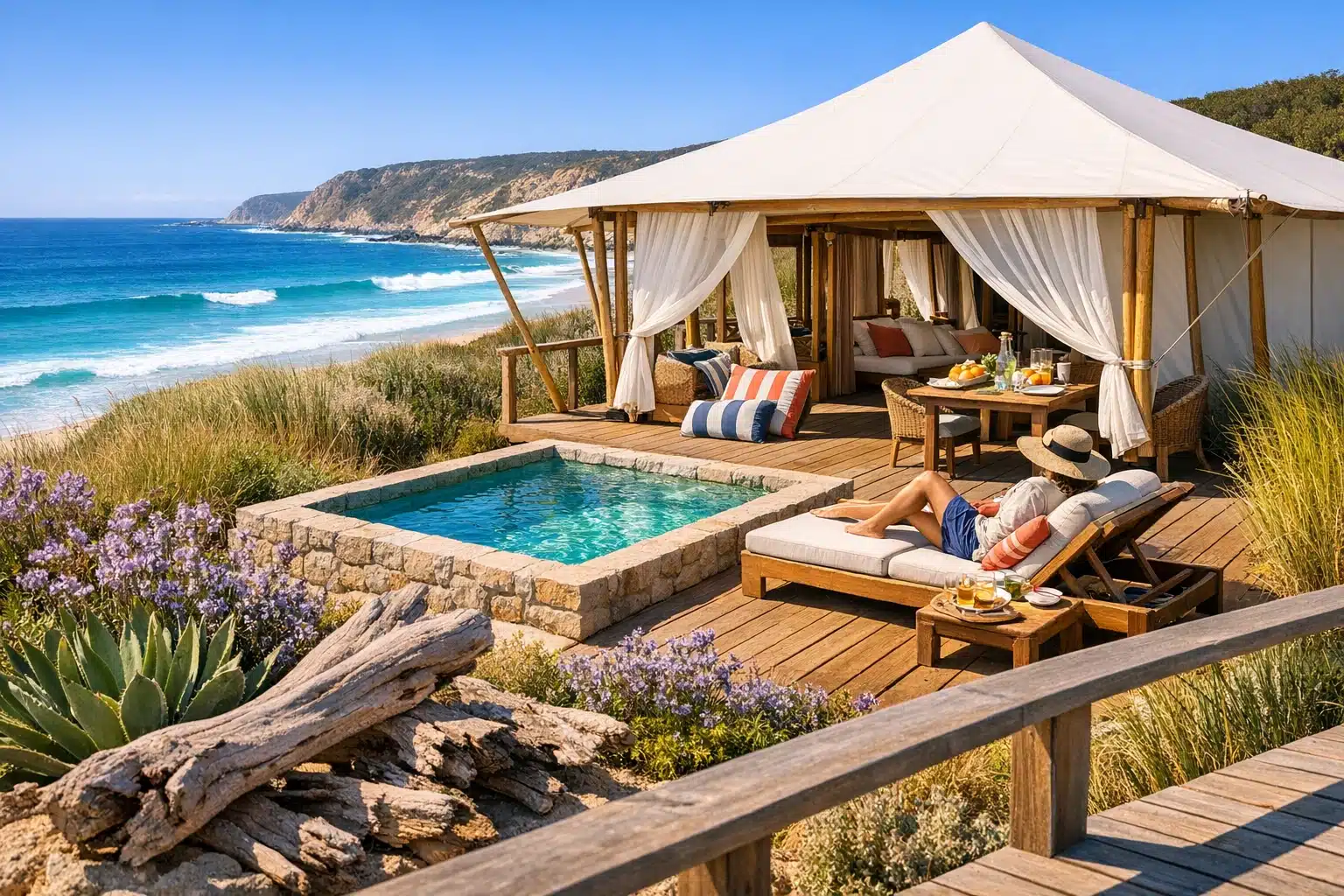
Treehouses and elevated cabins offer another kind of appeal. They tend to feel more secluded and storybook-like, making them popular with couples and creative travelers looking for a setting with personality. Luxury ranch stays bring a broader resort model into the conversation, often combining independent accommodations with horseback riding, fly-fishing, trail access, and expansive dining programs. Coastal glamping properties frequently attract guests who want an active daytime rhythm and a softer evening experience, pairing paddle sports, cliff walks, or beachcombing with fireplaces, seafood dinners, and open-air lounges.
Indulge in world-class amenities while immersing in nature with our curated guide to top luxury glamping destinations.
Amenities are often what separate a pleasant stay from a premium one. Travelers comparing resorts should pay close attention to the following:
– Bathroom quality, including shower pressure, hot water reliability, and privacy
– Climate readiness, especially in hot deserts, wet forests, or cold mountain zones
– Dining options, from chef-led tasting menus to flexible family-style service
– Activity depth, including guided excursions, cultural programming, and wellness offerings
– Shared spaces, such as spas, libraries, viewing decks, plunge pools, and lounges
There is also an important difference between spectacle and usability. A property may look striking in photos, but a premium resort performs well in real life. It should be easy to move around after dark, comfortable in changing weather, and welcoming whether guests stay two nights or a full week. In practical terms, the best glamping resorts do not ask visitors to overlook inconvenience for the sake of atmosphere. They prove that atmosphere and usability can coexist, and that combination is where the real value lives.
Experiential Travel Ideas That Turn a Stay into a Memory
Accommodation may get the booking started, but experiences are usually what make a luxury outdoor getaway worth talking about months later. This is where premium glamping aligns naturally with experiential travel. Rather than treating the room as the entire product, the best resorts design the day around the landscape, the season, and the local culture. That approach matters because modern travelers increasingly judge a trip by what it taught them, how it made them feel, and whether it offered stories more interesting than a standard check-in and checkout.
Nature-based experiences remain the backbone of the category, yet the strongest programs are more layered than a simple hike or kayak rental. Skilled guiding makes a visible difference. A walk through a forest becomes richer when a naturalist explains bird calls, native plants, or ecological restoration efforts. Stargazing gains depth when paired with high-quality telescopes and a knowledgeable host rather than a casual glance upward. In mountain settings, sunrise coffee on a ridge can feel cinematic, but it also works because the resort has thought through timing, transport, weather, and guest ability levels.
Culinary experiences are another major differentiator. Premium glamping resorts increasingly treat food as part of place-based storytelling. Menus may reflect regional ingredients, nearby farms, fisheries, vineyards, or ranches. Some properties host open-fire cooking classes, guided tastings, or outdoor dinners staged in beautiful but practical settings. The point is not performance for its own sake. It is to give the traveler a sensory memory tied to location. A cedar-smoked meal by a lake, bread baked in a desert oven, or breakfast after a wildlife excursion can anchor the day in a way that a standard dining room rarely does.
Wellness programming has also evolved beyond spa basics. While massages and hot tubs remain popular, many resorts now offer experiences with stronger context:
– Breathwork or yoga sessions timed to sunrise or sunset
– Forest bathing walks focused on attention and calm rather than fitness
– Thermal circuits, cold plunges, or soaking rituals linked to climate and setting
– Digital detox periods supported by intentional low-noise spaces
– Journaling, photography, or sketching workshops that encourage slower observation
Cultural connection deserves just as much weight. The most thoughtful experiential travel ideas include local artisans, historians, conservationists, or community partners in ways that feel respectful and specific. A weaving demonstration, ranch lesson, guided heritage walk, or conservation briefing can give a trip texture that scenery alone cannot provide. When hospitality, landscape, and story align, something subtle happens: the destination stops feeling like a backdrop and starts feeling like a place you briefly learned to inhabit. That is the real promise of experiential luxury, and it is far more durable than a pretty room photo.
How to Choose the Right Glamping Escape and Make It Worth the Price
Luxury glamping can deliver exceptional value, but only when the property matches the traveler. The nightly rate alone does not tell the full story. A resort that feels perfect for a honeymoon may be frustrating for a family with small children, while a wellness-focused retreat may disappoint guests hoping for a packed schedule of adventure. The smartest way to choose is to begin with trip purpose rather than image. Ask what the stay is meant to do: restore energy, celebrate an occasion, entertain multiple generations, support active exploration, or provide quiet time away from routine. Once that answer is clear, the field narrows quickly.
Couples often prioritize privacy, design, and atmosphere. They tend to benefit most from properties with isolated units, good dining, and experiences that feel intimate without requiring constant planning. Families usually need different strengths: flexible meal times, safe walking paths, larger accommodations, easy bathroom access, and activities that span age ranges. Solo travelers may prefer resorts with guided programming and communal spaces that create optional social contact. Remote workers, meanwhile, should verify practical details many listings understate, including Wi-Fi speed, workspace comfort, mobile signal reliability, and backup power.
Seasonality also changes the equation. A desert retreat can be magical in the cooler months and punishing in peak summer. Mountain properties may trade easy trail access for snowbound beauty depending on the calendar. Rainforest and coastal destinations need extra scrutiny around humidity, insects, and storm patterns. Travelers should not assume that a premium resort neutralizes climate. The best operators manage it well, but conditions still shape the experience. Reading reviews for the exact month of travel is often more useful than looking at overall ratings alone.
Budget planning should account for the full package, not just the room:
– Airport transfers or required shuttle services
– Activity fees for guided excursions, wellness classes, or equipment use
– Dining structure, especially where properties are remote and alternatives are limited
– Resort charges, conservation fees, or gratuity expectations
– Clothing or gear needs for weather, terrain, and evening temperatures
For travelers wondering whether the category is worth its premium positioning, the answer depends on priorities. If you mainly need a convenient place to sleep, a standard hotel may serve you better. But if setting, sensory richness, and intentional pacing matter to you, glamping can justify the cost in ways that conventional lodging often cannot. The target audience is clear: people who want nature without roughing it, design without stiffness, and experiences that feel grounded rather than manufactured. Choose carefully, book with the season in mind, and look past the prettiest photographs toward the property’s real strengths. When those pieces line up, a luxury outdoor getaway becomes more than a trip. It becomes a rare kind of pause, one where comfort supports discovery instead of replacing it.