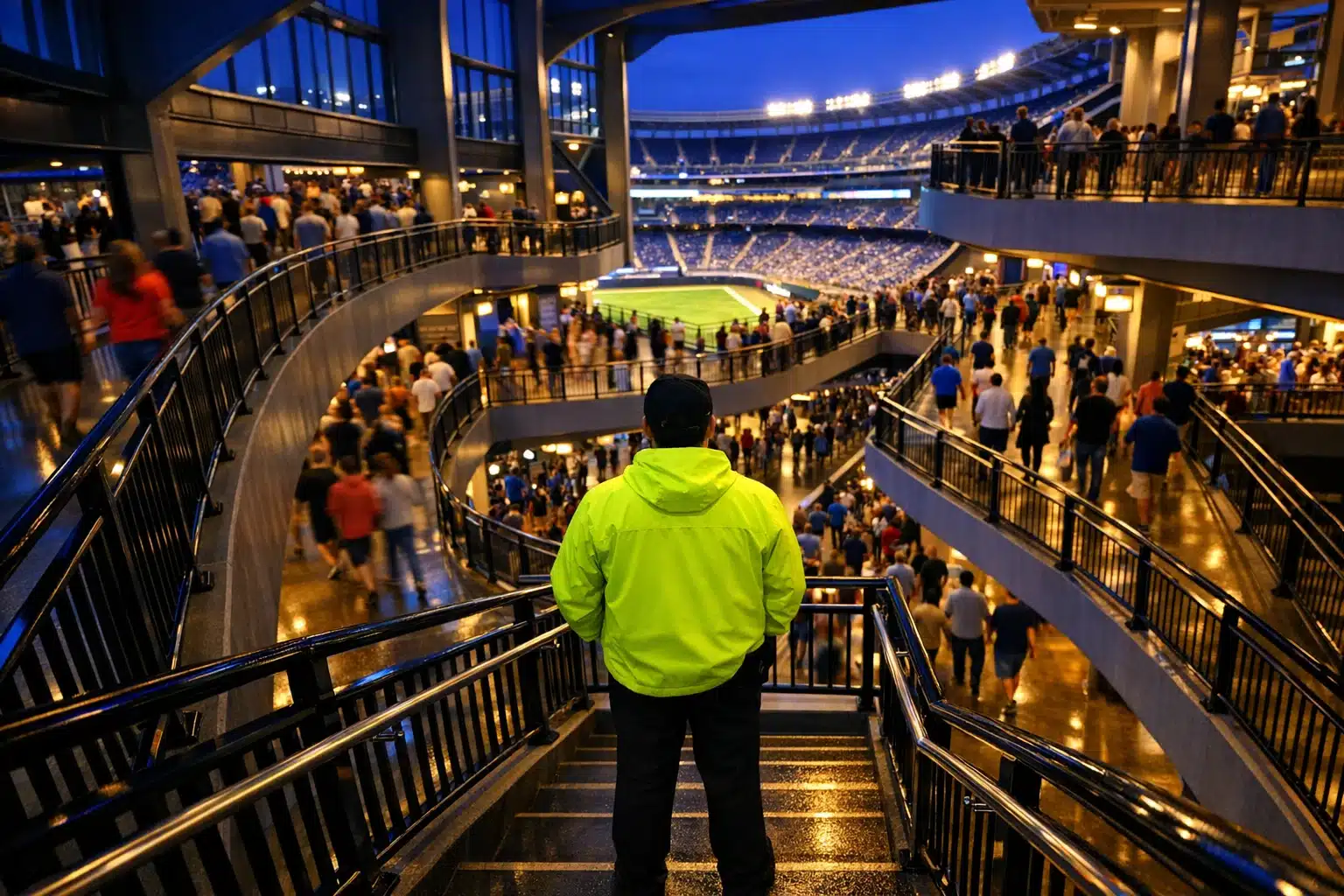
Part-Time Stadium Event Staff: Jobs, Pay, and How to Get Hired
A packed stadium can look effortless from the seats, yet every smooth entry line, clear direction sign, and calm response to a last-minute issue depends on trained part-time staff. This article explains how those roles fit together, what venues expect from applicants, and how event-day operations guide thousands of people through one shared space. If you want flexible work with energy, structure, and real responsibility, knowing the system before you apply can make a genuine difference.
Outline: Why Part-Time Stadium Work Matters and What This Article Covers
For many job seekers, a stadium job seems simple from the outside. You picture scanning tickets, pointing fans toward sections, maybe answering a few questions, and then heading home after the game. In reality, part-time stadium staffing is a carefully arranged system built around timing, safety, communication, and customer service. A modern venue can welcome tens of thousands of people within a short window, and that only works when part-time staff understand their assignments and how those assignments connect to the larger operation.
This matters for more than convenience. Strong event staffing affects entry times, concession traffic, emergency readiness, and the overall tone of a fan’s experience. A guest who enters through a clearly marked gate, gets quick help finding an accessible route, and receives calm guidance during a weather delay is likely to remember the venue as well run. That experience is not accidental. It comes from training, planning, and hundreds of small decisions made by staff members who may work only a few shifts each month.
This article is organized to help readers see the full picture before they apply. It moves from the public-facing side of the job to the hidden systems that support it, then closes with practical guidance for candidates who want to get hired and succeed.
- Guest services and crowd-flow basics: how fans move through the building and why direction, patience, and awareness matter.
- What stadiums look for in part-time staff: the habits, skills, and attitudes hiring managers notice first.
- How event-day operations work behind the scenes: briefings, radio communication, timing, staffing zones, and coordinated response.
- Pay, schedules, and hiring: what shapes compensation, why flexibility matters, and how applicants can stand out.
There is also a practical reason these roles attract attention. Part-time stadium jobs often appeal to students, retirees, career changers, and workers looking for supplemental income because shifts are tied to event calendars rather than a standard weekly office routine. The atmosphere can be lively, the work can feel purposeful, and the variety keeps the role from becoming dull. One night might be a football game, the next a concert, and another a family event with a very different audience profile.
Think of the venue as a temporary city that appears for a few hours and then dissolves again. Streets become concourses, checkpoints become gates, and the people in uniform become the guides who keep everything moving. Once you understand that, part-time stadium work starts to look less like casual labor and more like operational teamwork in a fast, public environment.
Guest Services and Crowd-Flow Basics: The Front Line of the Fan Experience
Guest services is often the most visible part of stadium staffing. These workers greet visitors, answer questions, help with seat location, explain venue policies, assist guests with accessibility needs, and de-escalate small frustrations before they turn into larger problems. At the same time, they are part of crowd-flow management, even if that phrase sounds technical. Every direction they give, every line they help form, and every bottleneck they spot affects how safely and smoothly people move through the building.
Crowd flow begins long before fans reach their seats. It starts with transportation arrival patterns, parking lot access, pedestrian routes, gate distribution, and ticket readiness. Many venues see a sharp surge in arrivals shortly before kickoff or showtime, which means staff must handle the busiest period in a compressed span. If one gate slows because too many guests bring prohibited bags or open the wrong app at the scanner, delays can spread quickly. A well-trained usher or guest services attendant helps solve these friction points by giving short, clear instructions and keeping people informed rather than guessing.
Several basics shape effective crowd movement:
- Visibility: staff should be easy to spot and easy to approach.
- Clarity: directions must be brief, specific, and consistent.
- Positioning: one staff member in the right location can prevent confusion for hundreds of guests.
- Observation: noticing a forming backup early is better than reacting late.
- Calm tone: people mirror the energy of the person helping them.
Guest services also involves judgment. Fans do not arrive in identical moods or circumstances. One family may need stroller guidance, another guest may need elevator access, and another may be upset after being told an item cannot enter the venue. The most effective part-time employees do not treat every situation like a script. They use policy as the foundation, then communicate with patience and confidence.
There is an almost theatrical quality to the work. The doors open, the building fills, and suddenly every concourse becomes a moving stream of color, sound, and urgency. In that setting, small actions carry weight. A staff member who redirects traffic away from a clogged stairwell can reduce congestion. Another who clearly explains a re-entry rule can prevent an argument at the gate. Another who notices a spill and alerts operations can prevent a fall in a crowded corridor.
Guest services is therefore not only about friendliness. It is about reading space, anticipating movement, and helping people get where they need to go without confusion or risk. For job seekers, that means the role rewards awareness just as much as enthusiasm.
What Stadiums Look for in Part-Time Staff
Hiring managers usually know they can teach venue-specific procedures. What they cannot easily teach is reliability, composure, and a service mindset. That is why stadiums often prioritize personal habits over flashy resumes when they recruit part-time staff. A candidate with direct event experience may have an advantage, but someone with a record of punctuality, customer-facing work, and strong communication can be just as appealing.
In practical terms, venues tend to look for people who can do four things well. First, arrive on time and ready to work. Second, communicate clearly with guests and supervisors. Third, follow procedures without drifting into guesswork. Fourth, stay steady when the environment becomes loud, crowded, or unpredictable. Those qualities matter because event work has limited room for hesitation. Gates open at a fixed time. Crowds move when they move. Delays are public. A single absent employee can affect an entire zone.
A recruiting message may summarize the opportunity like this:
- Explore part‑time stadium event staff roles, including guest services, ticketing, safety awareness, and flexible schedules ideal for supplemental inco
That line captures the broad appeal of the work, but hiring teams read deeper than the headline. They often ask themselves whether an applicant can represent the venue in a professional way. Can this person handle a frustrated guest without becoming defensive? Will this person listen during pre-shift briefings? If weather changes, a queue builds, or a section needs extra help, will this person adapt quickly?
Common qualities venues value include:
- Dependability and attendance consistency
- Friendly but firm communication
- Comfort working on evenings, weekends, and holidays
- Basic digital comfort for ticket scanners or staff apps
- Willingness to stand, walk, and stay alert for long stretches
- Respect for chain of command and radio procedure
Previous experience in hospitality, retail, transportation, security support, or campus events can translate well because those jobs also involve public interaction and time-sensitive service. Even volunteer experience can help if it shows responsibility in busy settings. On the other hand, candidates sometimes underestimate the physical and mental side of the role. Stadium work can involve weather exposure, long periods on your feet, steep stairs, and constant human interaction. Hiring managers notice applicants who understand that reality and still show genuine interest.
A strong application usually sounds grounded rather than grand. It does not need dramatic language. It helps more to say that you are comfortable assisting large groups, following event procedures, and staying calm in fast-paced environments. In interviews, venues often respond well to candidates who can give short examples of problem solving, teamwork, and customer service under pressure. The best answer is usually concrete: describe the situation, what you did, and what result followed. Simple, clear, believable.
How Event-Day Operations Work Behind the Scenes
What spectators see is the performance in the arena. What staff experience is the machinery that allows the performance to happen on time. Event-day operations begin well before gates open. Supervisors review staffing levels, incident plans, radio assignments, weather conditions, access control points, and any unusual factors linked to that event. A rivalry game, a playoff match, and a summer concert may all happen in the same building, yet each can require different staffing patterns because the audience, timing, and risk profile differ.
Part-time staff usually enter this system through a pre-shift check-in or briefing. They may receive updated instructions on gate procedures, prohibited items, expected attendance, premium area access, emergency routes, or transportation issues around the venue. This is where the larger strategy becomes local. One team may be assigned to east gate entry, another to escalator control, another to suite level scanning, and another to post-event egress support. Good operations depend on each zone understanding both its own duty and when to escalate a problem upward.
Behind the scenes, several functions work in parallel:
- Operations management coordinates the building, timing, and staffing map.
- Security teams oversee screening, restricted areas, and incident response.
- Guest services handles questions, complaints, seating help, and accessibility support.
- Ticketing resolves scan failures, mobile ticket issues, and account questions.
- Housekeeping and maintenance address spills, restroom conditions, lighting, and facility issues.
- Concessions teams manage food service speed, inventory, and queue pressure.
Communication ties all of it together. Radios, messaging systems, and supervisor check-ins allow quick updates when conditions shift. A backed-up entry point may trigger staff redistribution. A medical incident may require route clearing. Heavy rain may change the pace of arrivals. A broken scanner may send guests to another line. None of these moments look dramatic from far away, but they matter because small delays can multiply when thousands of people are moving at once.
There is also a timing rhythm to the day. Before gates open, the focus is preparation and readiness. During ingress, the priority is entry speed and problem resolution. Once the event starts, staffing emphasis moves toward in-bowl support, wayfinding, safety awareness, and guest comfort. Near the end, the building prepares for egress, which can be one of the fastest movement periods of the entire event. People leave in waves, often all at once, and staff must direct them toward exits, transportation links, and external routes safely.
For part-time employees, understanding this bigger picture helps the job make sense. You are not just stationed at a point in the building. You are part of an operation designed to absorb pressure, manage movement, and keep a very public environment orderly without making it feel rigid. When it works well, most guests barely notice the complexity. That is usually the sign that the team has done its work properly.
Pay, Scheduling, How to Get Hired, and Final Advice for Applicants
Pay for part-time stadium work varies widely by city, venue type, job function, union status, and local labor conditions. Entry-level ushering or guest services roles often start around local service-sector wage levels, while specialized positions such as licensed security, team leads, or overnight conversion support may earn more. Some venues also offer differential pay for late hours, premium events, or added responsibilities. Because events are irregular, applicants should think about total earning potential in terms of available shifts across a season rather than judging the opportunity by a single hourly number.
Scheduling is one of the main attractions. Stadium jobs can fit around school, freelance work, family commitments, or another part-time role. That flexibility, however, works both ways. Venues place a high value on availability during nights, weekends, and holidays because that is when most events happen. A candidate who can reliably work high-demand dates may be more competitive than one with stronger experience but limited scheduling range. Consistency matters. Supervisors remember the employees who show up, stay engaged, and remain dependable through the busy stretch of a season.
If you want to get hired, your preparation should be practical rather than overly polished. Research the venue, understand the kinds of events it hosts, and read the job description carefully. Tailor your resume so that public-facing experience is easy to spot. In interviews, connect your background to the actual demands of the role: standing for long periods, assisting large groups, handling questions quickly, and following instructions in a structured environment.
- Highlight customer service, attendance, and teamwork on your resume.
- Mention flexibility for evenings, weekends, and major event dates.
- Show that you understand safety awareness and policy compliance.
- Use short examples that prove composure under pressure.
- Dress neatly and communicate with straightforward confidence.
It also helps to approach the role with the right expectations. This is not passive work, and it is not simply about being near sports or entertainment. The best staff members enjoy the energy, but they also respect procedure. They know that a full venue is exciting precisely because someone is helping it function. One gate opens on time. One line stays organized. One family gets to the right section without stress. One radio call prevents confusion from spreading. Those small wins create the event people remember.
For readers considering this path, the main takeaway is simple. Part-time stadium work can be a smart option if you want flexible income, a lively environment, and a role that mixes service with real operational responsibility. Employers are usually looking for people who are steady, observant, and coachable more than people who want the spotlight. If that sounds like you, apply with a clear understanding of the job, bring examples of reliability, and be ready to contribute to the crowd experience from the moment the gates open.