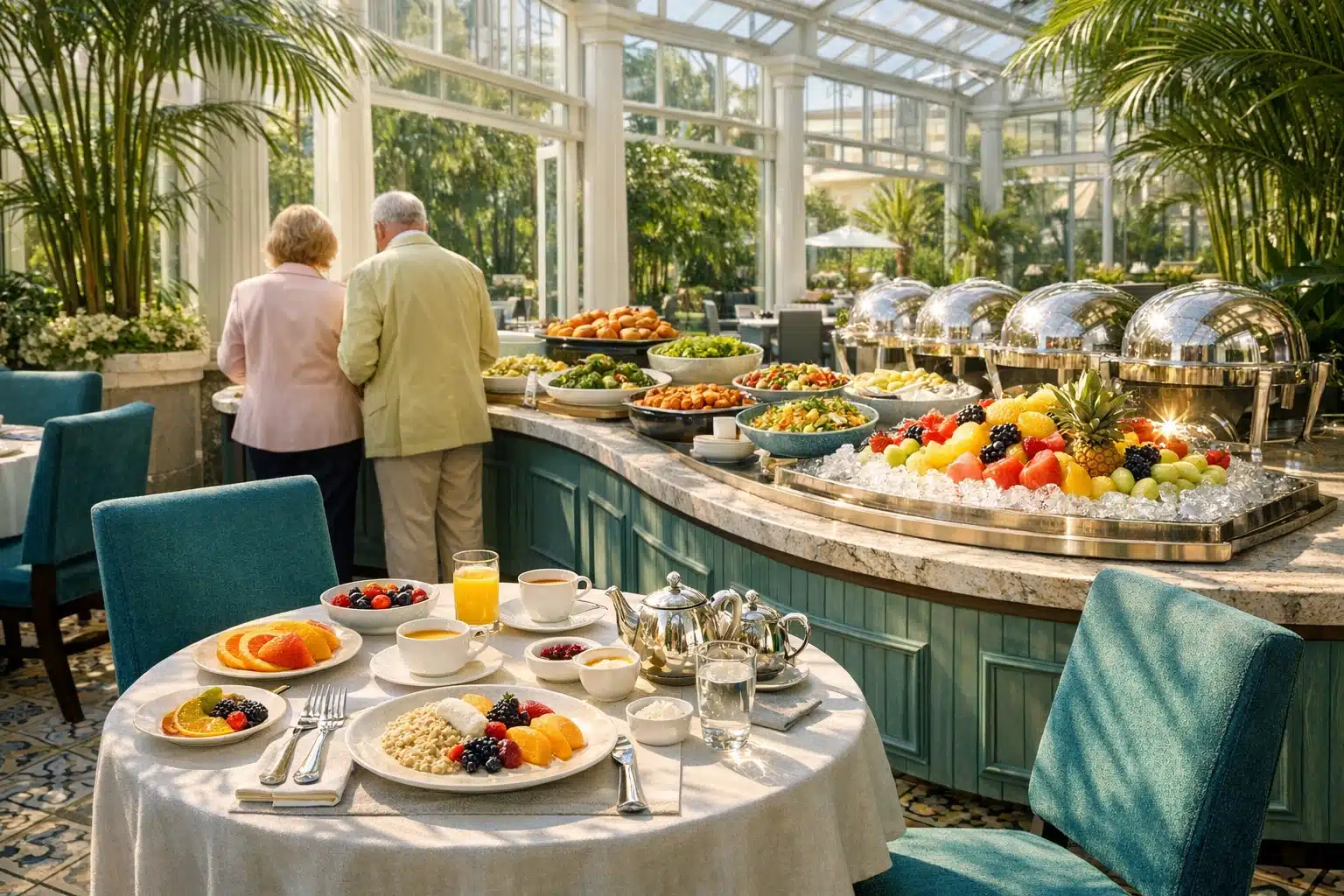
 Artificially generated image
 The Complete Guide to Buffet Restaurants for Seniors
Buffet dining can feel wonderfully simple until small details turn a pleasant outing into a tiring one. A short walk from the parking lot, labels you can actually read, and a menu that fits real health needs often matter more than the dessert station. Explore buffet restaurants for seniors, including accessibility, menu variety, dietary options, food quality and value considerations. The goal is not to eat more, but to choose a place where comfort, choice, and price work together.
Outline:
1. Why buffet dining can work well for seniors and what to check before visiting.
2. Accessibility features that support comfort, safety, and independence.
3. Menu variety and dietary choices that matter in everyday life.
4. Food quality, cleanliness, and the small signs that shape the dining experience.
5. Senior discounts, smart price comparisons, and a practical conclusion on overall value.
1. Why Buffet Restaurants Can Be a Practical Choice for Seniors
Buffet restaurants occupy an interesting place in dining culture. They are casual enough for a weekday lunch, flexible enough for family gatherings, and often predictable enough to feel less stressful than a trendy new spot with a dense menu and tight seating. For many seniors, that predictability matters. A buffet lets diners move at their own pace, inspect food before choosing it, and build a plate around appetite rather than around a fixed portion. That sounds simple, but it can be especially useful when medication schedules, energy levels, chewing comfort, or dietary restrictions influence what feels manageable on a given day.
There is also a social advantage that does not get enough attention. In mixed-age groups, buffets reduce the tug-of-war that often happens at traditional restaurants. One person may want soup and salad, another may be looking for a full hot meal, and someone else may only want a light plate and tea. A buffet can absorb those differences with less friction. Grandchildren can find familiar foods, adults can sample more variety, and older diners can return for smaller second portions instead of facing one large entrée. That control can make the meal feel calmer and less wasteful.
Of course, convenience depends on execution. A buffet is only senior-friendly when the layout, service, and menu work together. A crowded line, slippery floor, tiny print on food labels, or chairs that are hard to rise from can quickly cancel out the benefits. That is why a little planning goes a long way. Checking current photos online, calling ahead during a quiet hour, or asking a few direct questions can reveal more than a glossy advertisement ever will.
A useful pre-visit checklist includes:
• whether parking is close and level
• whether the entrance is step-free
• whether there are quieter meal times
• whether common dishes are labeled clearly
• whether staff can help carry plates or refill drinks
Seen this way, a buffet is not just a place to eat a lot. It is a format that can either support independence or make a meal harder than it needs to be. Seniors and family members who assess the full experience before arriving usually end up making better choices, and they often enjoy the outing more.
2. Accessibility Features to Consider at Buffet Restaurants
Accessibility starts before anyone reaches the serving line. The first test is the arrival experience. Is parking close to the door, or does the restaurant require a long walk across a busy lot? Are there curb cuts, stable pavement, and enough space to get in and out of a vehicle comfortably? A restaurant may advertise itself as convenient, but if the path from car to entrance is uneven, narrow, or exposed to heavy traffic, the outing begins with stress instead of ease. Seniors who use canes, walkers, wheelchairs, or simply prefer steadier footing benefit from restaurants where the approach feels direct and well maintained.
The entrance itself matters just as much. Heavy doors, abrupt steps, and awkward vestibules can be surprisingly tiring. Step-free entry, handrails where needed, and doors that open easily are practical features, not luxuries. Once inside, the floor plan becomes the next checkpoint. Wide aisles help mobility aids move without constant maneuvering, while non-slip flooring reduces the risk of slips near beverage stations or buffet counters. Lighting also deserves attention. Dim rooms may look atmospheric, but poor visibility makes it harder to read labels, judge floor changes, and navigate around other guests carrying plates.
The buffet line deserves a close look because self-service is where design either helps or hinders independence. Important questions include whether counters are reachable, whether serving utensils are easy to grip, and whether items are positioned so diners do not need to stretch over hot trays. Some buffets also create bottlenecks with narrow turns, dessert islands, or drink stations placed directly in the traffic flow. That kind of layout may not bother younger guests, but it can make a senior feel rushed or off balance.
Accessibility is also about comfort once seated. Chairs with backs and firm support are usually easier to use than deep booths or lightweight seats that slide easily. Restrooms should be easy to find, easy to enter, and clean enough that using them does not become another challenge. Noise levels matter too. A room with constant clatter and loud background music can be exhausting for diners with hearing aids or sensory sensitivity.
When calling ahead, ask specific questions:
• Is there a step-free entrance from the parking area?
• Are aisles wide enough for walkers or wheelchairs?
• Can staff help carry a plate to the table if needed?
• Are food labels large and easy to read?
• Are accessible restrooms located on the same floor?
A buffet restaurant does not need luxury finishes to be accessible. It needs thoughtful basics: clear paths, stable seating, readable information, helpful staff, and a layout that respects how real people move through space. Those details often determine whether a meal feels independent and enjoyable or unnecessarily complicated.
3. Menu Variety and Dietary Options at Buffet Restaurants
Variety is the selling point of most buffets, but for seniors, variety only has real value when it includes useful choices. Twenty fried items do not create a balanced meal any more than a long dessert bar counts as nutritional flexibility. A strong buffet menu offers contrast in texture, preparation style, and portion possibilities. That means having vegetables that are not drenched in sauce, proteins that are not all breaded or heavily salted, starches beyond white rolls and mashed potatoes, and softer options for diners who prefer foods that are easier to chew.
Dietary needs can differ widely among older adults. Some diners are managing blood pressure and want lower-sodium choices. Others are watching carbohydrate intake, limiting saturated fat, seeking vegetarian options, or avoiding specific ingredients due to allergies or intolerances. A buffet cannot satisfy every need perfectly, but it should at least make good decisions possible. Clear labels are a major help. Knowing whether a soup is cream-based, whether vegetables contain bacon, or whether a casserole includes cheese or gluten saves guesswork and prevents awkward surprises at the table.
It is also worth looking beyond the headline items. A buffet may advertise carved meats or signature casseroles, but the most useful foods are often found in the side dishes and simpler preparations. Plain rice, grilled chicken, steamed vegetables, cooked fruit, broth-based soups, baked fish, beans, yogurt, oatmeal, and fresh salad ingredients can create a more balanced meal than richer featured dishes. For seniors with smaller appetites, that mix matters because every plate has to count.
Helpful signs of a thoughtful buffet menu include:
• ingredient labels that can be read without leaning in
• at least a few lower-salt or plainly prepared dishes
• fruit and vegetable options in more than one form
• proteins that are baked, grilled, roasted, or stewed rather than only fried
• softer foods for guests with dental concerns
• sugar-conscious beverage choices beyond regular soda
There is also the question of cross-contact. Buffets are shared environments, so diners with medically serious allergies should be cautious even when labels are present. Serving utensils get moved, sauces spill, and guests are not always careful. In those cases, speaking directly with staff is wiser than relying on signage alone.
From a practical angle, buffet dining often works best when seniors build one small plate first, then decide whether a second trip is worthwhile. That slows the meal, prevents waste, and gives the body time to register fullness. A buffet with true menu value is not the one with the most trays. It is the one that offers enough range for diners to create a meal that feels satisfying, appropriate, and easy to enjoy.
4. Food Quality, Cleanliness, and Overall Dining Comfort
Price and variety get most of the attention, yet food quality often decides whether a buffet feels like a smart choice or a disappointing shortcut. Quality at a buffet is not only about flavor. It is also about freshness, temperature, texture, and how well the restaurant maintains its stations during service. Seniors, in particular, may notice when soups have thickened from sitting too long, vegetables have turned limp under heat lamps, or meats have dried out at the edges. Those are not tiny cosmetic flaws. They change how easy food is to chew, digest, and enjoy.
One of the best signs of quality is steady turnover. Dishes that are replenished in moderate amounts tend to look and taste better than large pans left sitting for long stretches. Busy periods can help with turnover, although the trade-off is more noise and more crowding. Quieter hours can be more comfortable, but only if the restaurant still keeps the buffet fresh. Watching the line for a few minutes before paying can reveal a lot. Are staff checking trays, wiping spills, and replacing utensils? Do cold foods actually look chilled? Do hot foods appear properly heated and recently stirred? These clues are practical and visible.
Cleanliness shapes comfort too. A good buffet usually has tidy counters, clear sneeze guards, uncluttered beverage stations, and staff who respond quickly when something spills. The table area should feel easy to navigate, not cramped with dirty plates waiting too long to be cleared. Older diners may especially appreciate staff who notice when someone needs water, a napkin, or help carrying an extra plate.
Useful quality signals include:
• salad greens that look crisp rather than wet and tired
• hot foods that are moist, not crusted at the edges
• utensils placed correctly at each tray
• floors that are dry near drink and soup stations
• a dining room that feels attended to instead of merely occupied
Comfort extends beyond the food itself. A bright, echoing room can make conversation hard, while a dim and overly packed room can make movement uneasy. The strongest buffet experiences come from balance: enough activity to keep food fresh, enough space to move safely, enough staff presence to solve small problems quickly, and enough menu quality that diners feel respected rather than processed. For seniors, that combination often matters more than a giant spread. A smaller buffet that is clean, calm, and well maintained can easily deliver the better meal.
5. Senior Discounts and Ways to Compare Dining Value
Senior discounts sound straightforward, but real dining value is a little more layered than a reduced sticker price. Some buffet restaurants offer a percentage discount based on age, while others provide a lower fixed price on certain weekdays, earlier lunch hours, or special community nights. A few locations tie discounts to loyalty programs or local promotions. Because policies vary widely, it makes sense to ask directly rather than assume. A polite question at the register or a quick phone call beforehand can prevent confusion, especially when one location in a chain follows different pricing than another.
The smartest way to compare value is to look at the full cost of the outing, not only the posted buffet rate. A lunch buffet priced at 14 dollars may be the better deal than a 12-dollar competitor if the first includes drinks, soup, and fruit while the second adds separate charges for beverages and small extras. Transportation matters too. A lower-priced restaurant across town may not be the better choice if the trip is longer, parking is difficult, or the walk from the lot is tiring. In practical terms, convenience has value because it reduces physical effort and makes repeat visits more realistic.
A simple comparison method can help:
• Start with the base buffet price.
• Add beverage charges, taxes, and the tip you expect to leave.
• Consider whether the menu actually fits your needs.
• Factor in accessibility, seating comfort, and noise level.
• Ask yourself how much of the food offered you would genuinely eat.
Imagine two options. Restaurant A offers a modest senior discount and a smaller menu, but it has close parking, softer lighting, helpful staff, and several plainly prepared dishes. Restaurant B has a dramatic-looking spread and a cheaper headline price, yet drinks cost extra, the buffet line is crowded, and most entrées are heavy or repetitive. For many seniors, Restaurant A will provide better value even if the receipt is slightly higher, because more of the meal is usable, enjoyable, and comfortable.
The best buffet choice is rarely the one that promises the most food. It is the one that makes eating easier, safer, and more pleasant without stretching the budget. Seniors comparing restaurants should think like careful shoppers and relaxed diners at the same time: look at access, menu fit, food quality, staff support, and true total cost. When those pieces line up, a buffet can be more than convenient. It can be a reliable place to enjoy a meal with confidence, dignity, and good company.