These Are the Designer Shoes People Are Choosing This Season
Footwear is doing more than completing an outfit right now; it is guiding the whole look, shifting proportions, sharpening basics, and making familiar clothes feel newly considered. Across designer collections and daily wardrobes, the strongest pairs are not only eye-catching but also easy to live with, which explains the rise of refined loafers, directional flats, sleek sandals, and retro-leaning sneakers. The sections below unpack the trends, the standout luxury styles, and practical ways to wear them with confidence.
Article outline:
- How current fashion priorities are influencing shoe choices.
- The luxury footwear silhouettes getting the most attention.
- The design details, colors, and materials shaping the market.
- Easy outfit formulas for work, weekends, and evenings.
- A concluding guide for readers building a smarter shoe rotation.
Reading the Season: Why Shoes Are Leading the Conversation
One reason shoes feel so important right now is that modern wardrobes are increasingly modular. Many people are working with familiar building blocks such as relaxed denim, wide-leg trousers, column skirts, tailored jackets, soft knitwear, and plain dresses. In that kind of wardrobe, the shoe often becomes the element that determines whether the final look reads polished, artistic, sporty, or understated. A crisp loafer can turn loose trousers into something tailored. A mesh flat can make a simple skirt look current. A retro sneaker can loosen the formality of an otherwise serious outfit. In other words, the shoe is no longer an afterthought; it is the point where personal taste becomes visible.
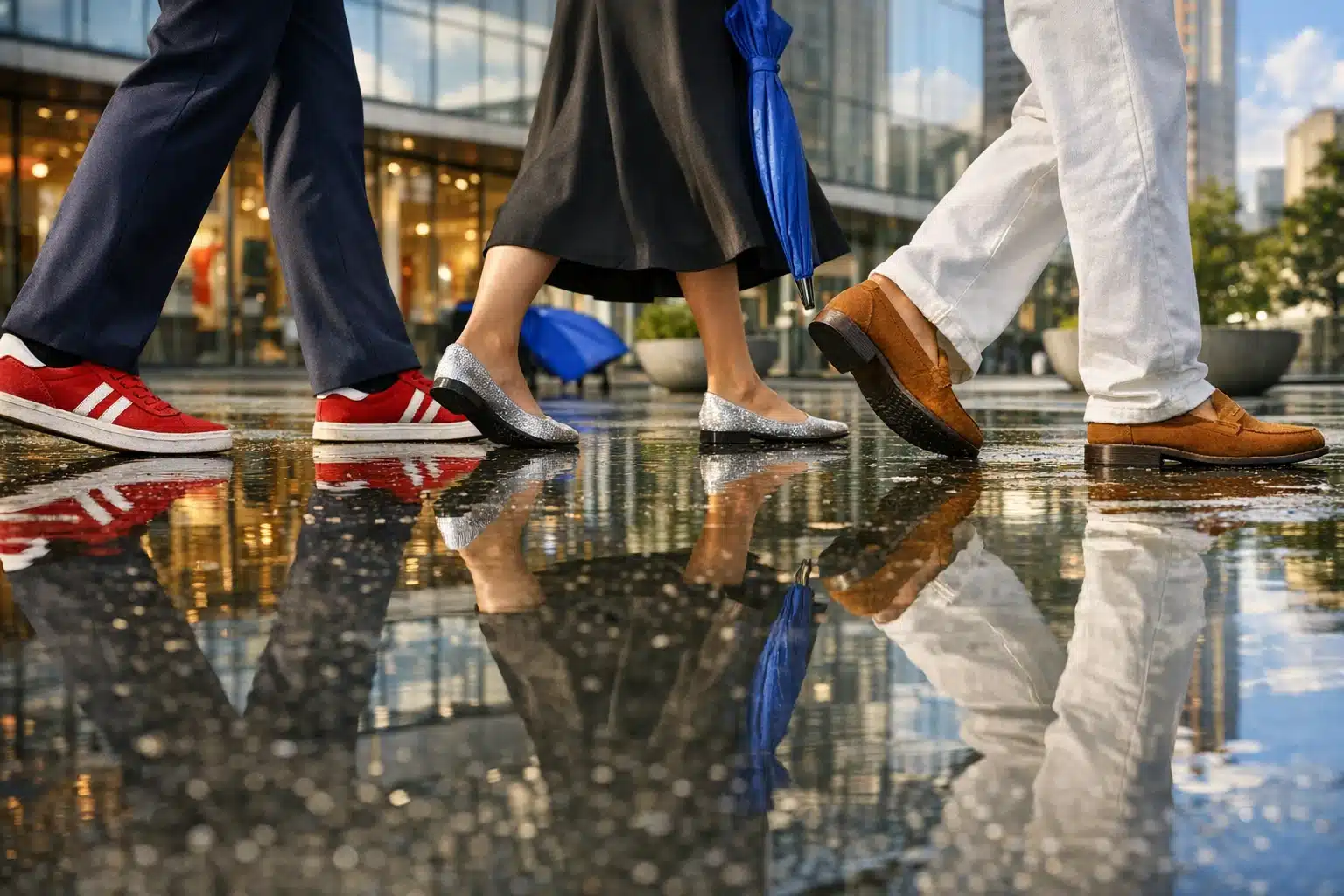
An overview of designer shoes people are choosing this season, focusing on design trends and versatile styling.
That overview reveals a clear pattern. People are gravitating toward pieces that balance distinction with function. Rather than choosing extreme novelty for its own sake, shoppers are responding to styles that offer visual interest without becoming difficult to wear after the first outing. This helps explain the strength of almond-toe flats, elegant slingbacks, low-profile sneakers, cleaner loafers, and sandals with sculptural but walkable shapes. Even when a pair looks directional, it usually has one practical anchor: a manageable heel, a stable sole, a neutral shade, or a familiar silhouette.
There is also a broader cultural shift at work. After several years of dramatic swings between flashy statement dressing and stripped-back minimalism, footwear is settling into a more nuanced middle ground. Logos are often smaller or less central than before. Texture, line, and construction are doing more of the talking. Woven leather, brushed suede, mesh panels, patent finishes, and precise stitching are becoming part of the appeal. Luxury, in this context, is not always loud. Sometimes it appears in the curve of a heel, the softness of a leather upper, or the way a shoe sits against the ankle.
Several recurring cues make the season easy to read:
- Refined flats are being treated as serious fashion pieces, not backup options.
- Menswear-inspired shapes, especially loafers, remain relevant because they work with tailoring and denim alike.
- Retro athletic references continue, though many pairs now look slimmer and less bulky.
- Warm neutrals, metallic accents, and deep brown tones are competing with black for everyday dominance.
What makes this moment especially interesting is its wearability. The most desired shoes are not locked into one dress code or one age group. They move between office days, dinners, travel, and casual routines. That flexibility is exactly why designer footwear trends feel more relevant than decorative. They are not just things to admire under bright store lights; they are tools for building outfits that feel current in real life.
Popular Luxury Footwear Styles That Keep Showing Up
When you look across luxury assortments, runway styling, and the outfits fashion insiders actually repeat, a handful of categories appear again and again. They vary in mood, but they share a useful quality: each can bridge several kinds of dressing. The popularity of these styles is not random. They solve wardrobe problems while still delivering enough design language to feel special.
Loafers remain one of the clearest examples. Their staying power comes from range. A sleeker leather loafer can sharpen denim and a white shirt, while a chunkier version adds weight to softer garments such as pleated skirts or roomy trousers. Editorially, brands such as Gucci and Prada have helped keep loafers in rotation for years, but the latest preference leans slightly cleaner than the heaviest soles of previous seasons. The shape is still strong, though often more streamlined through the toe and less aggressive through the platform.
Slingbacks are another standout, especially for readers who want a dressier option that does not feel overly formal. Chanel’s long-standing slingback language continues to influence the category, but many labels now reinterpret the idea with sharper toes, lower heels, or architectural details. Their advantage is proportion: they expose part of the heel, lighten the foot visually, and work with cropped denim, midi hemlines, and fluid trousers. Compared with a full pump, a slingback often feels fresher and less rigid.
Flats have also evolved beyond the basic ballet shoe. Mesh styles, Mary Janes, woven versions, and softly structured square-toe pairs are all finding space in luxury collections. Alaïa’s mesh-forward direction and Miu Miu’s playful reinterpretations helped make fashion flats feel high-impact again, while quieter brands have pushed the category toward elegant practicality. These shoes are especially appealing to people who want comfort without giving up a strong visual point.
Several other styles deserve attention:
- Minimal sandals, especially in leather or suede, bring a clean finish to warm-weather outfits.
- Backless mules offer easy sophistication, particularly with tailoring or evening separates.
- Retro sneakers remain relevant, though slimmer profiles are gaining ground over oversized versions.
- Ankle boots and knee-high boots continue to matter, especially in smooth leather or sharp suede, but they are being styled more selectively rather than worn as default options.
What separates popular luxury footwear from mere passing hype is usability. A woven flat from Bottega Veneta, a sculptural heel from Loewe, or a pared-back sandal from The Row may express very different aesthetics, yet each succeeds for the same reason: it can transform an outfit without requiring a complete change in personal style. That is why these categories keep resurfacing. They are expressive, but they are also remarkably cooperative.
Design Trends Defining the Shoes Themselves
If the first question is which types of shoes are getting attention, the next is what those shoes actually look like. The answer lies in a set of design details that are shaping luxury footwear from the ground up. These details are subtle enough to work across many wardrobes, yet strong enough to make even a simple pair feel current.
Toe shape is a major clue. Very round toes still exist, and extreme points never disappear completely, but the most balanced direction sits somewhere between an almond, a softened square, and a tapered point. These shapes elongate the foot without feeling severe. They also pair more easily with the wider and longer trouser silhouettes that have become common. When the line of the shoe is too blunt, it can look heavy under relaxed tailoring. When it is too sharp, it can feel overly formal. The middle ground is winning because it is versatile.
Heel design is changing as well. Stilettos remain part of luxury fashion, especially for eveningwear, but there is growing interest in heels that look sculptural while offering more stability. Think block-leaning heels with a refined profile, gently flared kitten heels, and curved supports that function almost like small pieces of design. These choices allow brands to create visual interest without sacrificing walkability. A shoe does not need towering height to feel dramatic; sometimes a clever line is enough.
Material is another major driver. Suede has been especially influential because it adds softness and depth, particularly in shades such as chocolate, tobacco, sand, and muted olive. Polished leather remains central for loafers and structured dress shoes, while mesh and woven constructions bring airiness to flats and warm-weather styles. Patent finishes are appearing in more strategic doses, often used to add shine without turning the whole shoe into a statement object.
Color tells its own story:
- Black remains foundational, especially in work-friendly and evening styles.
- Brown is expanding quickly because it feels rich, modern, and less predictable than black.
- Cream, stone, and soft beige provide a light neutral base for spring and summer dressing.
- Metallics, especially silver, are being treated almost like neutrals in sandals, flats, and heels.
- Animal prints appear in controlled ways, often as a pointed flat, mule, or small accent panel.
Perhaps the most important trend is restraint. Many luxury houses are allowing craftsmanship to carry more weight than overt branding. You see it in precise seams, better leather quality, improved foot shape, and soles that feel designed rather than attached as an afterthought. This does not mean statement shoes are gone. Instead, the statement is often built into silhouette and finish rather than logos. For shoppers, that is good news. It makes expensive footwear easier to wear for years, not just one season, which is exactly what many people now want from a purchase at the premium end of the market.
Everyday Shoe Styling Ideas That Actually Work
The true test of any trend is not how it looks in a campaign image but how it behaves in a real wardrobe. Designer shoes can feel intimidating if they seem reserved for special occasions, yet the most effective styling often happens in ordinary settings. A good pair becomes useful when it can move through your week with ease, adding shape and intent to outfits you already wear.
Start with loafers if your wardrobe leans classic, work-focused, or slightly tailored. They pair naturally with wide-leg trousers, straight jeans, shirt dresses, and pleated skirts. For a balanced look, match a substantial loafer with fuller hems and a sleeker loafer with cropped or cleaner lines. Add fine socks for a deliberate touch in cooler weather, or wear them bare-ankled with a relaxed trouser during warmer months. The result is often smart without feeling stiff. Loafers are especially effective when the rest of the outfit is simple, because the structure of the shoe does the heavy lifting.
Flats offer a different kind of energy. Mesh flats, Mary Janes, and woven styles work beautifully with understated clothing because they add texture and lightness. A black mesh flat with a column skirt and soft knit can feel quietly directional. A cream Mary Jane with loose denim and a blazer creates a polished daytime look with little effort. If you are worried that flats might read too delicate, offset them with stronger shapes elsewhere, such as a boxy jacket or a larger tote. This creates contrast and keeps the outfit from becoming overly sweet.
Slingbacks and low heels are ideal when you want a little lift without moving into full eveningwear. They pair well with ankle-length trousers, mid-length skirts, and straight denim with a neat hem. For dinners or events, try a pointed slingback with a monochrome outfit so the shoe becomes the sharpest note in the composition. For office wear, a lower heel in brown or deep burgundy can look sophisticated without drawing too much attention.
Here are a few reliable outfit formulas:
- Relaxed jeans, white shirt, belt, slim loafer, and structured shoulder bag.
- Midi slip skirt, lightweight knit, mesh flat, and minimal jewelry.
- Tailored trousers, fitted tank, blazer, slingback, and clean leather tote.
- Soft dress, simple sandals, oversized sunglasses, and a woven bag.
- Straight-leg denim, crisp coat, retro sneaker, and crossbody bag for travel days.
Sneakers deserve their own note because the styling has shifted. Rather than leaning on oversized, highly technical pairs for every casual outfit, many people are choosing slimmer retro-inspired sneakers. These look better with tailored pieces, long skirts, and simpler outerwear. They introduce energy without overwhelming the outfit. Meanwhile, minimal sandals and mules work best when the hemline allows them space to breathe. A great sandal needs visible ankle and foot; otherwise much of its design disappears.
If there is one practical rule to remember, it is this: let one element lead. When the shoe is sculptural, keep the clothing quieter. When the outfit is layered or textured, choose a cleaner shoe. Styling becomes easier the moment you stop asking a pair to do everything at once.
Conclusion: Choosing Designer Shoes for Real Life
For most readers, the goal is not to own every trend or chase every luxury release. The smarter approach is to understand what the season is emphasizing and then translate that into purchases that fit your routine. Right now, the message from designer footwear is refreshingly clear: style matters, but so does usefulness. The shoes attracting real attention are the ones that offer shape, quality, and personality without becoming difficult to wear after the novelty wears off.
If your days involve commuting, meetings, and a lot of walking, a polished loafer, a fashion-forward flat, or a refined sneaker will probably deliver the most value. If you attend dinners, events, or dressier occasions more often, a slingback or a low sculptural heel can add elegance without asking too much from the rest of your wardrobe. For warm-weather dressing, a minimal sandal or thoughtful mule can carry an entire outfit with surprising ease. The right choice depends less on what is labeled essential online and more on how you actually live.
Before buying, it helps to ask a few grounded questions:
- Can this pair work with at least three outfits I already own?
- Does the heel height or sole shape match how I move through the day?
- Is the appeal coming from craftsmanship and silhouette, or just short-term novelty?
- Will the color integrate easily with the palette I wear most often?
These questions may sound simple, but they separate smart purchases from expensive experiments. Luxury footwear can absolutely be exciting, and it should be. Still, the most satisfying pairs are usually the ones that earn their place over time. They become the shoes you reach for when you want to feel composed, current, and comfortably yourself.
That is the real takeaway for anyone following designer shoe trends this season. You do not need a dramatic overhaul. A small number of well-chosen styles, selected with attention to proportion, material, and practicality, can update a wardrobe more effectively than a long list of impulse buys. In a fashion landscape that often moves at dizzying speed, that kind of clarity feels not only stylish, but genuinely useful.