Timeless Elegance: The Ultimate Guide to Modern Style for Women Over 50
Style after 50 is less about rules and more about clarity: knowing what flatters, what feels comfortable, and what still sparks delight when you open the wardrobe. This guide looks at how mature women can build an elegant, modern, and genuinely useful closet without chasing every passing trend. From fabrics and tailoring to color, dresses, and accessories, the goal is simple: help you dress with confidence, ease, and personality every day.
Article Outline
1. Why style evolves with age and why that can be an advantage rather than a limitation.
2. How to build a luxury ageless wardrobe with strong essentials, better fabrics, and expert tailoring.
3. The role of dresses and occasion wear in creating an elegant, modern image.
4. How color, accessories, and shoes refine an outfit and make it feel current.
5. How to shop wisely, care for quality pieces, and create a wardrobe that supports real life for years.
1. The Mature Style Mindset: Why Fashion Often Improves After 50
One of the most refreshing truths about personal style is that it often gets better with age. By the time a woman reaches her 50s, 60s, or 70s, she usually knows far more about herself than she did at 25. She understands which silhouettes feel right, which colors wake up her complexion, and which clothes look beautiful on a hanger but never quite work in daily life. That self-knowledge is not a small advantage; it is the foundation of elegant dressing.
Fashion for mature women is sometimes discussed in narrow, outdated terms, as if age automatically demands dull colors or anonymous clothing. In reality, elegant style has much more to do with balance than restriction. A strong wardrobe at this stage of life tends to prioritize proportion, quality, and polish. Instead of buying ten average pieces, many women prefer three excellent ones that fit well and can be worn in several ways. This is where luxury becomes less about logos and more about construction, fabric, and finish.
There are also practical reasons style choices change over time. Body proportions may shift, comfort becomes more important, and lifestyle often looks different from earlier decades. Many women are dressing for a mix of social events, travel, work, family gatherings, cultural outings, and relaxed afternoons rather than a single routine. That means versatility matters. A blazer that works with trousers, denim, and a midi skirt offers more value than a dramatic statement piece worn once a year.
A useful way to think about mature style is to compare trend-led dressing with wardrobe-led dressing. Trend-led dressing asks, What is everyone wearing right now? Wardrobe-led dressing asks, What makes me look refined, current, and at ease? The second question usually produces better results. It encourages intentional choices instead of impulse buying.
Core principles often include:
• fit before fashion
• fabric before novelty
• comfort without sloppiness
• personality without costume
• polish without excess
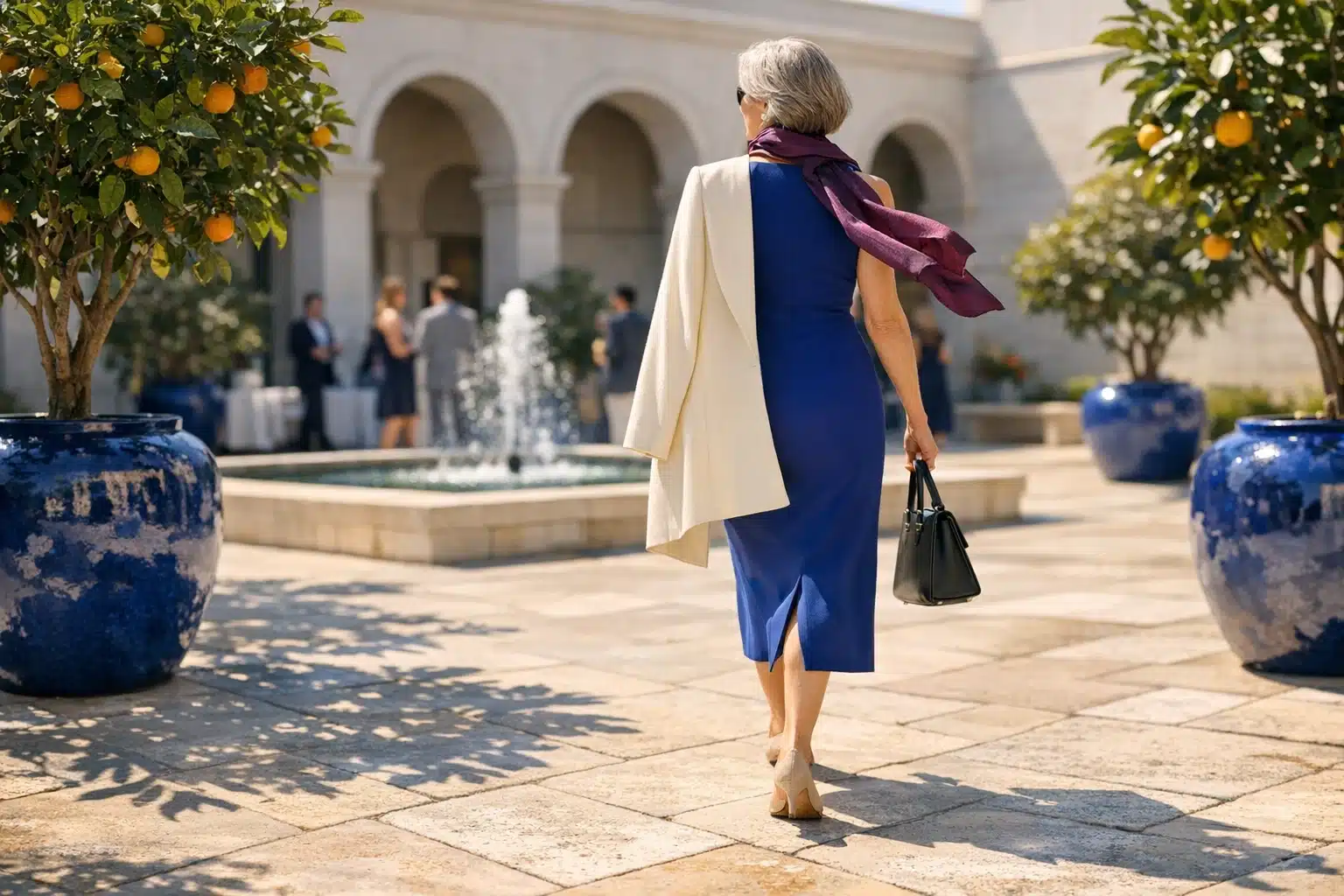
There is also a quiet confidence in dressing with restraint. A simple navy column dress in a beautiful fabric can have more impact than an outfit overloaded with embellishment. A perfectly cut ivory shirt can feel more luxurious than a heavily branded top. This is the difference between being dressed and being styled. Mature elegance often lives in these subtle details, where every element has a purpose and nothing begs for attention.
When women embrace this mindset, fashion becomes less stressful and more expressive. The wardrobe stops trying to imitate youth and starts reflecting experience, taste, and presence. That is not settling down; it is leveling up.
2. Building a Luxury Ageless Wardrobe: Essentials, Fabrics, and Fit
A luxury ageless wardrobe begins with essentials that are versatile, flattering, and made to last. This does not mean owning a huge number of garments. In fact, the opposite is usually more effective. A smaller collection of excellent pieces creates more outfit options than an overcrowded closet filled with items that do not coordinate, drape poorly, or require special effort to style. The goal is not minimalism for its own sake. The goal is reliability.
Start with the structure of the wardrobe. Most women benefit from a core group of pieces that can be combined across seasons. These often include a tailored blazer, straight-leg or wide-leg trousers, a great pair of dark denim jeans, refined knitwear, a crisp shirt, a midi skirt, a polished day dress, and a well-cut coat. Depending on climate and lifestyle, you might also add a trench, cashmere layers, loafers, ankle boots, and a handbag in a neutral tone. These items are not exciting because they are basic; they are exciting because they make everything else easier.
The real difference between an average wardrobe and a luxurious one usually comes down to fabric and fit. Natural fibers such as wool, cashmere, cotton, silk, and linen often breathe better and age more gracefully than cheaper synthetics. Fabric with a bit of weight tends to skim the body rather than cling to it, which can create a cleaner line. Even simple garments look elevated when the material moves well and keeps its shape.
Fit is equally important, and tailoring is often the hidden ingredient. Off-the-rack clothing is made for standard measurements, yet very few bodies are standard. Hemming trousers, adjusting sleeve length, taking in a waist, or refining a shoulder line can completely change how a piece looks. Many stylish women over 50 rely on a tailor not because they are fussy, but because they understand value. A moderately priced garment that fits beautifully often outperforms an expensive item that sits awkwardly.
When editing or building a wardrobe, it helps to evaluate pieces using a practical checklist:
• Does it fit well today, not five pounds from now?
• Can it be worn at least three different ways?
• Does the fabric feel good against the skin?
• Is the color easy to pair with what I already own?
• Would I wear it more than once a season?
Comparisons matter here. A cropped jacket may be chic, but a slightly longer blazer often offers more flexibility. Thin jersey can be comfortable, but structured crepe may look more elegant. A wardrobe based on these thoughtful choices feels calm and coherent. It also saves time. Instead of standing in front of the closet negotiating with clothes that almost work, you can dress quickly and still look composed. That kind of ease is one of the most underrated luxuries in fashion.
3. Dresses, Occasion Wear, and the Power of Soft Structure
Dresses deserve special attention in any elegant wardrobe because they solve several style problems at once. A good dress offers instant coordination, a complete silhouette, and a polished impression with relatively little effort. For mature women, dresses can be especially valuable because they create vertical lines, simplify dressing, and adapt beautifully to accessories, layers, and changing occasions.
Not every dress shape works equally well for every body or lifestyle, which is why understanding structure matters. Shirt dresses are practical and intelligent-looking; they suit women who like definition without stiffness. Wrap dresses are often praised for flexibility, although they work best when the fabric has enough weight to avoid constant adjusting. A-line dresses can balance the frame and feel graceful in motion. Column dresses, especially in crepe or knit with structure, create a sleek modern effect that can be dressed up or down. Midi lengths are often a strong choice because they feel current while offering coverage and comfort.
When choosing occasion wear, it helps to think beyond formality and focus on atmosphere. A family celebration, gallery opening, dinner party, charity event, or vacation evening each calls for a different kind of elegance. Beading, shine, and intricate prints can work beautifully, but they should support the woman wearing them rather than dominate her. In many cases, a beautifully cut solid-color dress paired with thoughtful jewelry has more sophistication than something overly busy.
Elegant, effortless, and modern luxury dresses tailored for sophisticated women over 50, 60, and 70.
That line captures a genuine need in the market. Many women want dresses that respect their taste and experience without becoming conservative in a tired way. The ideal dress is not trying to make the wearer invisible, nor is it trying too hard to look youthful. Instead, it offers shape, fluidity, and confidence. Details such as sleeve length, neckline placement, waist definition, and fabric finish make a major difference. A bateau neckline can look quietly regal, while a V-neck can elongate the upper body. Three-quarter sleeves often strike a flattering balance between coverage and lightness.
For styling, dresses respond well to simple formulas:
• day dress plus flats and a structured bag
• knit dress plus boots and a long coat
• silk midi dress plus low heels and fine jewelry
• black dress plus a scarf or statement cuff for personality
A dress should never feel like a compromise. It should feel like an ally. When the cut is right, the color is right, and the fabric moves with ease, the effect is immediate. You stand differently. You walk differently. The outfit does not carry you; you carry it. That is why dresses remain one of the smartest investments in an ageless wardrobe.
4. Color, Accessories, and Finishing Touches That Make Style Feel Current
If wardrobe essentials create the architecture of elegant style, color and accessories provide the atmosphere. They are the elements that shift an outfit from simply appropriate to memorable. For women over 50, these details matter even more because they can soften, brighten, modernize, or sharpen a look without requiring a complete wardrobe overhaul.
Color is deeply personal, but it also has practical effects. As skin tone, hair color, and contrast levels change over time, certain shades may become more flattering than others. This does not mean abandoning favorite colors. It simply means adjusting how they are worn. For example, harsh stark white may feel less forgiving near the face for some women, while ivory, cream, soft stone, or warm beige can be gentler and equally elegant. Likewise, black remains useful, but navy, charcoal, chocolate, forest green, and deep plum can offer similar sophistication with a little more softness.
A useful approach is to build around a controlled palette. This makes mixing easier and gives the wardrobe a more luxurious feel. Neutrals create stability, while accent colors add life. A woman might choose camel, navy, cream, and olive as her base, then introduce coral, burgundy, teal, or gold through scarves, blouses, lipstick, or jewelry. When colors repeat across garments and accessories, outfits look intentional rather than random.
Accessories are where personality often becomes visible. A silk scarf can bring movement and color to a plain jacket. A leather belt can restore shape to a relaxed dress. Earrings can frame the face when hair is worn short or swept back. Shoes, too, influence the overall tone of an outfit. Loafers suggest ease and intelligence. Slingbacks can look polished without feeling too formal. Clean white sneakers may work well with tailored separates if the rest of the outfit is sharp enough to balance them.
Helpful finishing strategies include:
• choose one focal accessory rather than several competing ones
• match the mood of the shoe to the outfit, not just the color
• use texture, such as suede, silk, or woven leather, to add depth
• keep handbags structured if the clothing is soft and fluid
• repeat a metal tone for coherence, but do not fear mixing if it feels natural
The difference between dated and current style often lies in proportion and restraint. A classic outfit can feel modern when the trouser length is right, the bag is clean-lined, and the jewelry is edited. It can feel tired when everything is overly matched or too precious. Think of finishing touches as the punctuation of fashion. They clarify the message. A wardrobe may begin with clothing, but it is often the final details that make a woman look unmistakably herself.
5. Shopping Wisely, Caring for Quality, and a Confident Final Word for Women Building Timeless Style
Creating a luxurious ageless wardrobe is not only about what you buy. It is also about how you buy, how you care for your clothing, and how honestly you assess your real life. Smart shopping starts with patience. Instead of purchasing something because it is on sale, because it is trending, or because it resembles a stylish image online, it helps to ask whether the piece supports the life you actually live. The most beautiful wardrobe is not the most expensive one. It is the one that gets worn.
Many experienced dressers use a cost-per-wear mindset, and for good reason. A well-made coat that is worn for five winters may offer better value than several cheaper coats that never feel quite right. The same logic applies to handbags, boots, knitwear, and occasion pieces. Investment dressing does not require unlimited money; it requires selectivity. It means choosing pieces with longevity, maintaining them well, and resisting the clutter of constant replacement.
Care is part of luxury. Clothing lasts longer when it is stored properly, cleaned correctly, and repaired before damage becomes severe. Sweaters should be folded rather than stretched on hangers. Leather shoes benefit from conditioning and rest between wears. Delicate fabrics often look better when steamed than aggressively ironed. Buttons can be reinforced, hems refreshed, and shoes resoled. These small acts preserve not only garments but also the sense of order within a wardrobe.
Shopping with intention often looks like this:
• keep a running list of true wardrobe gaps
• try on with the undergarments and shoes you would actually wear
• sit, walk, and move before deciding
• check the fabric label and inner construction
• leave room for tailoring in both budget and timeline
It is also worth remembering that style is allowed to evolve. The wardrobe you need at 52 may not be the one you want at 68, and that is perfectly normal. Some women lean more into fluid shapes over time. Others discover bold jewelry, richer color, or more dramatic outerwear. Elegance is not a fixed costume. It is a language, and you are allowed to keep refining your accent.
For women building timeless style, the most powerful goal is not to look younger. It is to look vivid, assured, and comfortable in your own presence. Clothes cannot create that confidence on their own, but they can support it beautifully. A thoughtful wardrobe gives you ease in the morning, assurance at social events, and a quiet sense of self-respect in the ordinary moments too. That may be the greatest luxury of all: dressing in a way that honors who you are now, not who the fashion world assumes you should be.