5 Old Household Items That Are Suddenly Worth Money
Why Old Household Items Matter Again
Not long ago, many families cleared out old kitchens, linen closets, and garages without a second thought. Now the same spaces are being searched more carefully, because vintage household pieces have become a meeting point between design history and practical value. A chipped mixing bowl, a heavy brass lamp, or a well-made sewing box can tell a story about how people lived and, in some cases, attract serious attention from collectors who appreciate age, craftsmanship, and authenticity.
The renewed interest in old household goods is not just a passing trend. It reflects several larger shifts in consumer habits. Buyers are increasingly drawn to durable materials, repairable objects, and designs that feel distinctive when compared with mass-produced modern alternatives. Mid-century forms, early industrial finishes, Art Deco details, and farmhouse utility all appeal to people who want objects with personality. At the same time, online marketplaces have made price discovery easier, so owners can quickly learn whether an item is common, desirable, or unexpectedly rare.
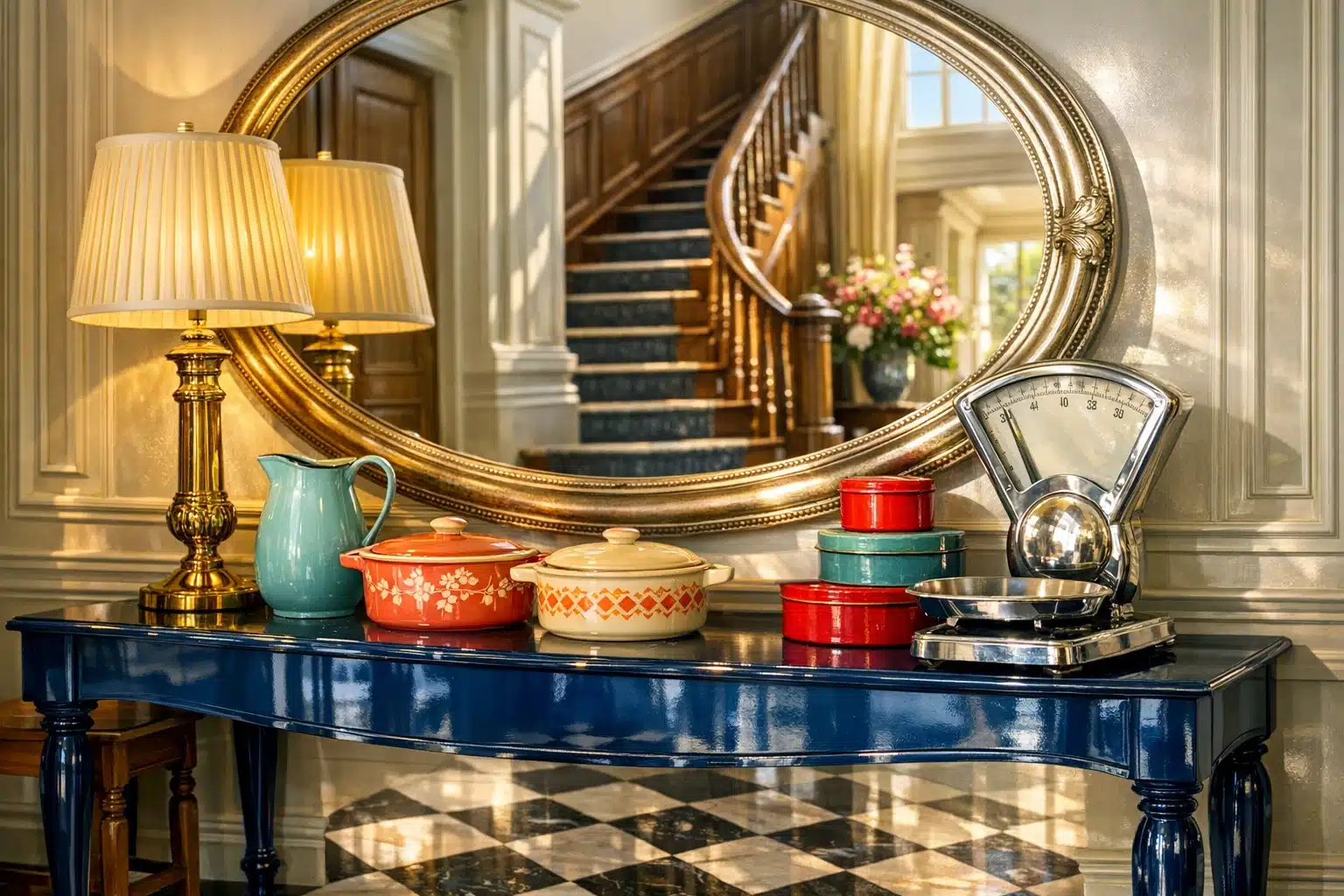
An overview of old household items that collectors still seek, focusing on vintage design and historical interest.
This article follows a practical path so readers can move from curiosity to confident evaluation. It begins with an outline of the main questions most people ask when they spot an old object at home:
• Which everyday household items are most likely to hold value?
• What kinds of collectibles are still actively searched for?
• How can you tell whether something is truly old, merely vintage-inspired, or a later reproduction?
• When should you clean, store, research, or seek a professional appraisal?
Those questions matter because value rarely comes from age alone. Condition, maker, rarity, original parts, and market demand all shape whether an object stays sentimental or becomes a genuine collectible.
Think of an attic, basement, or cupboard as a quiet archive rather than a dumping ground. A set of nesting bowls might reveal a famous maker. A wooden side table could show prewar joinery. A lamp with its original shade may tell a stronger story than a polished reproduction ever could. The goal is not to assume every old object is a fortune, but to understand why some humble items have moved from ordinary use to collector interest. Once you learn what to look for, the search becomes both more grounded and more enjoyable.
Valuable Vintage Household Items Hiding in Plain Sight
Some of the most collectible household items were never considered luxurious when they were new. They were simply practical objects bought for daily use. That is exactly why they matter now: many were heavily used, damaged, or discarded, which makes complete examples harder to find. Among the strongest categories are kitchenware, lighting, small furniture, storage tins, and sewing-related pieces. Buyers often want them for both display and function, especially when the design reflects a recognizable era.
Cast iron cookware is a classic example. Older skillets, Dutch ovens, and griddles from respected makers are valued for their weight, smooth cooking surface, and longevity. Collectors look for clear maker marks, matching lids, and surfaces that are not cracked or deeply pitted. In many cases, a well-preserved pan from an established manufacturer can be worth far more than a newer equivalent, especially if it has an unusual size or shape. Condition matters here, but original integrity often matters more than aggressive refinishing.
Vintage glass and ceramic kitchenware also remain popular. Mixing bowls, refrigerator dishes, patterned casserole sets, and old canisters appeal to collectors because they combine utility with color and graphic design. Certain patterns from the mid-twentieth century can command higher prices than plain examples, especially when sold as complete sets. The same is true for enamelware in unusual colors, particularly pieces with clean surfaces, legible markings, and minimal chips around the rim.
Lighting is another category that surprises many homeowners. Brass table lamps, banker’s lamps, mid-century floor lamps, and early electric fixtures can be sought after if they retain original components or period-correct shades. Buyers pay attention to proportion, finish, switch hardware, and whether the piece has been altered. A lamp that still carries its original base, socket details, and maker label usually presents better than one rebuilt with mismatched parts.
Other overlooked items include:
• Sewing boxes and notions cabinets with original compartments
• Decorative tins with strong graphics and readable branding
• Solid wood stools, side tables, and plant stands from the mid-century period
• Mechanical kitchen scales and hand-crank tools
• Old mirrors with quality frames and intact silvering
A useful comparison can be made between old handmade or early machine-made objects and later decorative reproductions. The earlier pieces tend to show sturdier materials, better proportions, and details that came from function rather than imitation. If an item feels unusually heavy, carefully finished, or cleverly designed for everyday use, it deserves a second look. In many homes, these are the pieces still waiting quietly in a cupboard, as if they know their second life has already begun.
Collectibles People Still Look For and Why Demand Has Lasted
Collectors do not all chase the same era, but certain categories keep returning to the market with steady demand. What ties them together is a mixture of nostalgia, recognizable design, and limited survival. People still actively search for vintage holiday decorations, costume jewelry, old radios, classic glassware, barware, typewriters, clocks, postcards, and small advertising items. These objects are often compact, display well, and connect buyers to a specific period in a way modern goods rarely do.
One reason demand remains strong is that collecting has become more personal. Some buyers want objects linked to childhood memories. Others prefer design movements such as Art Deco, mid-century modern, or early industrial. Younger collectors often enter the market through affordable pieces like ashtrays, tins, record holders, spice racks, or patterned mugs before moving toward higher-value categories. A modest object can still be desirable if it captures a strong visual style. That helps explain why old bar sets, cocktail shakers, and serving trays from the 1950s and 1960s still attract attention: they fit modern interiors while carrying a clear historical identity.
Glassware is especially interesting because it sits at the intersection of beauty and familiarity. Depression-era glass, mid-century serving sets, and distinctive colored tumblers can range from common to highly collectible depending on pattern, color, and completeness. The same pattern in an unusual color may be worth far more than a standard version. Holiday collectibles behave in a similar way. One ornament, figurine, or tree topper may be ordinary, while a rarer variation from the same line can be much harder to replace.
Collectors also continue to look for paper-based items that survived household life against the odds. Recipe booklets, labeled storage boxes, vintage catalogs, and advertising ephemera can carry value because they document how products were marketed and used. These pieces may not look impressive at first glance, yet they offer a direct window into domestic life. For historians, decorators, and collectors alike, that context is part of the appeal.
Several features usually keep demand alive:
• Strong visual design that stands out in photos and displays
• Easy storage and shipping compared with large furniture
• Clear maker names or themes that help buyers search quickly
• Emotional resonance tied to family memories or cultural eras
• Finite supply, since many pieces were broken, thrown away, or separated from their original sets
The market is not uniform, of course. Not every collectible rises in value, and trends can shift. Still, the categories people continue to seek tend to be the ones that combine story, style, and authenticity. When an object looks unmistakably of its time and survives with good details intact, it usually has a better chance of drawing interest than something old but generic.
How to Identify Antiques at Home Without Relying on Guesswork
Identifying antiques at home starts with a simple but important distinction: old is not always antique, and antique is not always highly valuable. In general use, an antique is often defined as an item around one hundred years old or more, while vintage usually refers to objects from a later period that still reflect a recognizable era. That definition is helpful, but the real work begins with observation. A careful eye will tell you more than a hopeful guess.
Start with materials and construction. Solid wood furniture may show hand-cut or early machine-cut joinery, uneven saw marks, or older fasteners. Screws, nails, and dovetails can provide clues about age, although they should be interpreted cautiously because repairs are common. Ceramics may have maker’s marks, painted numbers, transfer patterns, or glaze characteristics associated with specific periods. Metal objects often reveal age through patina, wear at touch points, and methods of casting or stamping. Glass can show seams, pontil marks, mold lines, or thickness that helps place it in a rough timeframe.
Next, examine wear patterns. Genuine age usually leaves consistent signs in areas that would naturally be handled, moved, opened, or cleaned. Drawer pulls, table edges, chair arms, handles, and base rims often wear in predictable ways. Artificial distressing can look theatrical, with scratches placed where use would never have created them. Real wear tends to be quieter and more convincing. It is the difference between a life lived and a costume made for the part.
Labels, stamps, and patent information are especially useful. Many household items carry marks on the underside, inside lids, under lamp bases, or on metal plates. These clues can point to a maker, country of origin, production line, or patent period. A patent date does not always equal the manufacturing date, but it creates a useful starting point. Once you have a mark, compare it with reference books, museum resources, auction archives, and sold listings rather than unsold asking prices.
A practical at-home checklist can help:
• Look underneath, inside, and behind the object for labels or stamped marks
• Measure the item, because uncommon sizes may indicate special use or rarity
• Check whether finishes, hardware, and parts appear original to the piece
• Photograph details in natural light for later comparison
• Search completed sales, not just optimistic listings
• Avoid deep cleaning before research, since original surfaces can matter
Finally, consider provenance and context. If an object came from a long-held family home, was purchased abroad decades ago, or appears in old photographs, that background can support identification. When an item looks promising but remains unclear, a local appraiser, specialist dealer, or auction house can help refine the answer. You do not need to become an expert in every category. You only need a method: observe carefully, compare patiently, and let evidence lead the way.
Conclusion: What Homeowners, Inheritors, and Curious Thrifters Should Do Next
If you have ever wondered whether the older objects around you deserve more attention, the practical answer is yes, but with a measured approach. Valuable vintage household items are often hiding in everyday spaces, not behind velvet ropes. Collectibles people still look for tend to be the pieces that combine strong design, good condition, and a clear connection to a past era. Identifying antiques at home is less about luck than about slowing down, noticing construction, and researching details before making decisions.
For homeowners, the most useful next step is a room-by-room review. Open cabinets, check under tables, lift lamp bases, and look at the backs of framed pieces. Inherited homes deserve particular care because ordinary domestic objects are often separated from their stories over time. A stack of kitchenware, a box of holiday decorations, or a tray of sewing tools may seem modest until maker marks and original sets come into view. Small items are especially easy to overlook, yet they are often the most marketable because they store well and appeal to a wide range of buyers.
For people who enjoy thrift stores, estate sales, and flea markets, the lesson is similar. Train your eye on quality before hype. Ask whether the item has original parts, a strong period look, or evidence of good materials. Compare sold prices, not wishful ones. Learn a handful of makers, patterns, and construction clues in the categories you enjoy most. A narrow focus often produces better results than trying to memorize the entire antiques world.
Keep these final habits in mind:
• Research before cleaning or repainting
• Save boxes, lids, shades, and matching accessories
• Photograph items clearly if you plan to ask for opinions
• Store fragile objects safely and away from moisture
• Separate sentimental value from market value, because both matter in different ways
The real reward is not only the possibility of money. It is the shift in perspective. Once you understand how design, age, rarity, and use come together, the home becomes less like a storage space and more like a collection of clues. Some items will be modest, some will be charming, and a few may be surprisingly desirable. For readers willing to look carefully, that is where the fun begins: not in chasing fantasies, but in recognizing the quiet importance of objects that have already lived one full life and may still have another ahead of them.