3-Night All-Inclusive Edinburgh City Break: What Makes This Worth It?
Edinburgh rewards short visits in a way few capitals can. In a single long weekend, travelers can move from volcanic viewpoints to medieval lanes, then finish the night in a polished hotel lounge without wasting hours in transit. That efficiency is why 3-night breaks remain popular: they balance sightseeing, rest, and dining while keeping planning manageable. Understanding what is actually included helps visitors judge whether a package offers convenience or just clever marketing.
Article Outline
This guide first explains why a three-night stay fits Edinburgh so well, then breaks down what city break packages usually include. It next looks at the historic attractions and cultural experiences travelers consistently prioritize. After that, it examines how hotel comfort, location, and new booking habits influence short stays. The final section helps readers decide which type of package offers real value for their budget and travel style.
Why a 3-Night Edinburgh Break Fits the City So Well
A three-night stay often hits the sweet spot in Edinburgh because the city feels rich without being unwieldy. Visitors can cover a remarkable amount of ground on foot, yet the place never becomes merely efficient. There is atmosphere here: steep closes, layered stone façades, sudden views of the castle, and the kind of skyline that makes even a walk to dinner feel like part of the itinerary. Compared with a two-night break, three nights offer one precious advantage: breathing room. You do not have to choose between seeing the Royal Mile and venturing into the Georgian streets of the New Town, and you are less likely to spend the whole trip racing from one attraction to another.
That extra day also changes how travelers experience value. A package that includes transport, hotel stay, breakfast, and a few add-ons can look expensive at first glance, but it may work out well when weighed against separate bookings, especially during busy weekends or festival periods. Edinburgh is strongly seasonal. Prices can rise sharply in August during the Fringe and around December for holiday travel, so bundled deals sometimes provide more predictable costs than piecing everything together at the last minute. On quieter dates, the reverse can be true, which is why the fine print matters more than the label on the package.
There is also a practical reason this format has become popular: a city break is easier to slot into real life than a full holiday. Travelers often use three-night trips for birthdays, anniversaries, cultural weekends, or a quick reset between busy work periods. Edinburgh suits all of these. Its airport has strong connections, the tram link into the city is straightforward, and rail arrivals place visitors close to the historic core. Once checked in, many visitors find they can spend most of the trip without needing taxis or a rental car.
When people see the phrase all-inclusive in a city context, they sometimes imagine a resort model with every meal and drink covered. That is rarely how Edinburgh packages work. In practice, the term usually signals a combination of core elements bundled for convenience rather than endless on-site consumption. A sensible buyer compares two questions: what has been included, and what has been simplified? If the answer is central accommodation, daily breakfast, useful transport arrangements, and perhaps a ticket or dining credit, then the package may genuinely save time. If the inclusions are vague, inflexible, or padded with extras you would not use, the deal is less compelling. In short, Edinburgh is absolutely suited to a three-night escape, but the value comes from fit, not from the wording alone.
What’s Typically Included in Edinburgh City Break Packages
Most Edinburgh city break packages are built around a small set of essentials, then expanded with optional extras. The base usually includes accommodation for two or three nights, and in many cases breakfast is part of the rate. Some deals add return flights or rail travel, while others focus only on the hotel component. Higher-priced options may include airport transfers, attraction tickets, or dining credits, though the exact structure varies widely by provider. This is where travelers need to slow down and compare like with like, because a package with a lower headline price can end up costing more once local transport, breakfast, and entry fees are added separately.
Common inclusions often look like this:
• three nights in a hotel, guesthouse, or serviced apartment
• breakfast each morning, usually buffet style in larger hotels
• return flights or train travel on selected departures
• a room type upgrade, welcome drink, or late checkout
• optional attraction passes, restaurant discounts, or flexible cancellation
The biggest point of confusion is the meaning of all-inclusive. In an Edinburgh city break, that wording often means inclusive of the main travel components, not unlimited meals and beverages throughout the day. Some packages are closer to half-board, especially if one dinner is included. Others are simply bed and breakfast with transport attached. A traveler who expects resort-style benefits may be disappointed, while a traveler who values convenience may be perfectly satisfied. The smart approach is to check whether the package covers the expenses most likely to affect your budget: central lodging, breakfast, transport, and the timed-entry sites that frequently sell out.
Location also matters as much as the list of perks. A hotel near Waverley Station, Princes Street, the Royal Mile, or Haymarket can reduce daily friction in a way no welcome prosecco ever will. On a short stay, being able to walk back after dinner or drop bags between activities has real value. By contrast, a cheaper hotel far outside the center may look attractive online but require buses, extra planning, and lost time. For first-time visitors, centrality often beats novelty.
Another feature becoming more common is flexibility. Because travelers now book shorter trips around work calendars and changing transport prices, providers increasingly advertise free date changes, refundable options, or bundled insurance. These are not glamorous extras, but they can be more useful than generic discounts. In comparing packages, it helps to separate decorative add-ons from practical ones. A package is usually worth it when it removes planning friction, protects the traveler from surprise costs, and aligns with how people actually use a city break: a compact, comfortable escape with limited time and high expectations.
Historic Attractions and Experiences Travelers Explore
Edinburgh’s greatest strength is that history is not tucked away behind museum glass; it is woven into the everyday shape of the city. The Old and New Towns together form a UNESCO World Heritage Site, and that designation makes sense the moment a visitor starts walking. The Royal Mile links Edinburgh Castle with the Palace of Holyroodhouse, creating a route that feels less like a single street and more like a corridor through centuries of politics, religion, trade, and storytelling. For many travelers, this is where the city break becomes more than a checklist. Stone closes hint at older lives, church spires anchor the skyline, and even the steep climbs contribute to the drama.
Headline attractions usually include Edinburgh Castle, St Giles’ Cathedral, the Palace of Holyroodhouse, and the National Museum of Scotland. The museum is especially useful on a short trip because it combines Scottish history, science, design, and world cultures under one roof, making it a flexible stop in uncertain weather. Meanwhile, the castle remains one of the city’s signature experiences not just for its military history, but for its position above the city. Even travelers who are selective about paid attractions often consider it worth prioritizing. Timed entry is common at major sites, so packages that include pre-booked tickets can reduce hassle during busy periods.
Visitors often balance formal sightseeing with atmospheric experiences:
• walking tours focused on ghosts, crime, literature, or hidden closes
• whisky tastings and cellar visits that add cultural context to food and drink
• an early-morning climb up Arthur’s Seat or Calton Hill for panoramic views
• live traditional music in pubs and intimate venues
• seasonal events, from winter markets to festival performances
What makes Edinburgh distinctive is how easily these experiences can be combined. A traveler might begin with royal history at Holyroodhouse, pause for lunch in a vaulted old building, spend the afternoon among the Georgian terraces of the New Town, and end the evening listening to folk music in a room small enough to feel personal. That variety matters on a short stay. Not everyone wants a schedule dominated by ticketed monuments, and Edinburgh allows for a blend of structured visits and unplanned discovery.
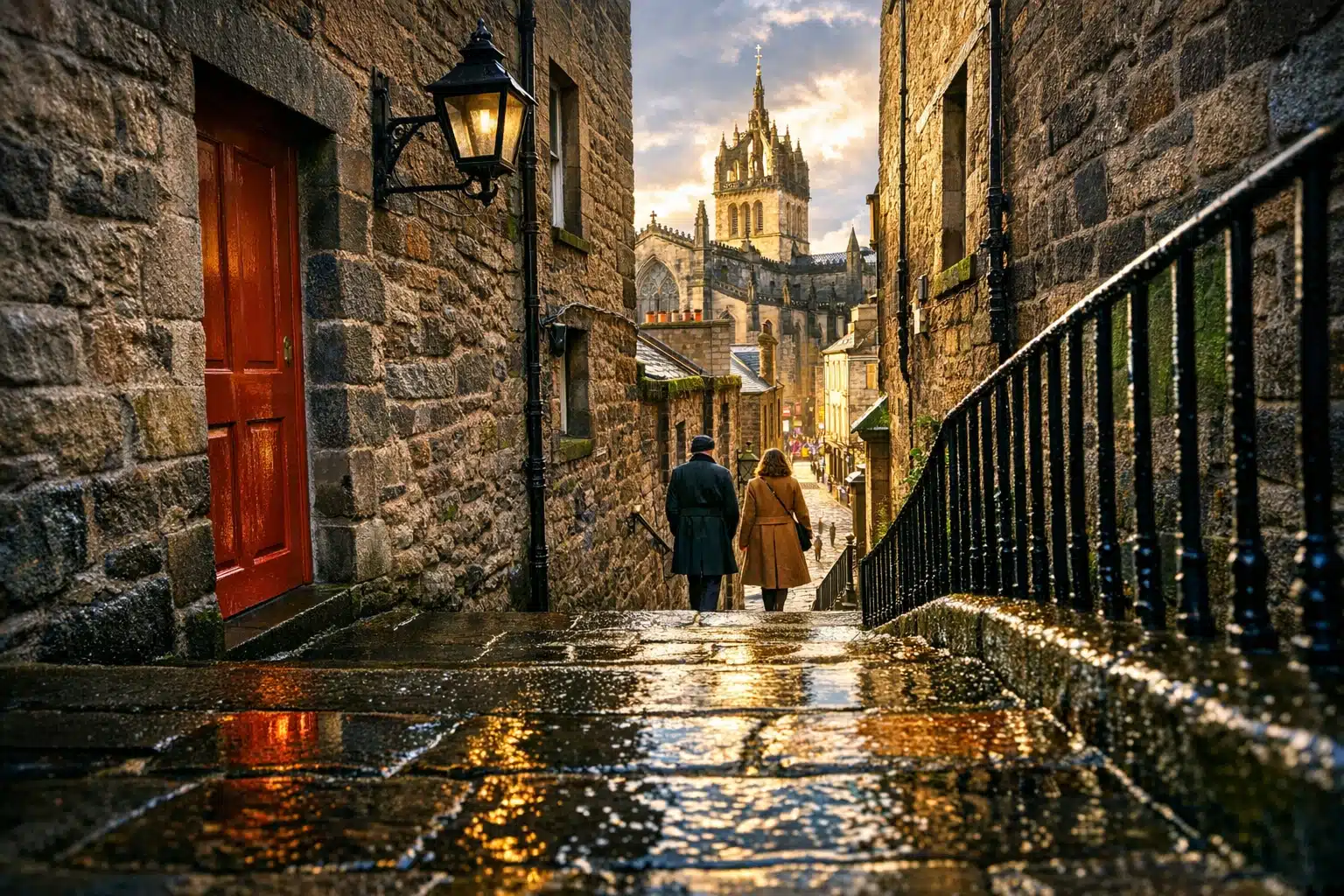
There is also a literary quality to the city that shapes the experience even when no explicit literary tour is booked. The light changes quickly, the closes narrow into shadow, and the castle appears and disappears between buildings like a stage set with very old ambitions. That sense of place is one reason travelers return. They may come first for the obvious landmarks, but they often remember the in-between moments: rain glossing black stone, the smell of coffee drifting out onto a cold street, or the sudden hush inside a historic courtyard just a minute from the crowds. In practical terms, Edinburgh offers strong historical value for a short trip because many of its most memorable elements are visible, walkable, and deeply interconnected.
Hotel Comfort and the Rise of Smarter Short-Stay Travel
On a brief trip, hotel comfort becomes more important, not less. Travelers used to accept a cramped room if it meant a lower price, especially for a stay built around sightseeing. Increasingly, that trade-off is being questioned. When a visit lasts only three nights, the hotel shapes the rhythm of the entire break. Good bedding, quiet rooms, strong showers, reliable heating, and a useful breakfast can determine whether guests start the day energized or already slightly worn down. In a city known for hills, stone steps, and long walks, those small comforts carry more weight than they might on a beach holiday where much of the day is spent on site.
Location remains the first comfort feature, though travelers do not always think of it that way. A hotel near the center can reduce decision fatigue, shorten returns between outings, and allow visitors to rest without feeling detached from the city. After location, guests tend to value practical features over flashy design. These often include:
• soundproofing or at least solid street noise control
• breakfast starting early enough for day trips or morning departures
• luggage storage before check-in and after checkout
• fast Wi-Fi for work, planning, and entertainment
• walk-in showers, blackout curtains, and easy self check-in
Short-stay trends also reveal a change in traveler mindset. Many guests now want what could be called frictionless comfort. They are less interested in formality for its own sake and more interested in a hotel that works smoothly. That may mean contactless entry, mobile booking updates, flexible arrival times, or public spaces that double as work-friendly lounges in the afternoon and relaxed bar areas at night. Boutique hotels, aparthotels, and well-designed chain properties all compete in this space, and each appeals to a slightly different kind of traveler.
Explore Edinburgh city break trends with insights on hotel stays, local attractions, comfort features, and short getaway experiences.
That sentence captures the current mood rather well. Travelers increasingly combine comfort with intentionality. They may spend more on one central night and less on shopping. They may choose a room with a castle view for a special occasion, or they may prioritize a simple modern space near transport because they plan to be outdoors most of the time. There is also growing interest in hybrid trips, where one traveler works remotely for part of the day while the other explores, turning a city break into something between leisure and routine. In this environment, the best hotel is not always the most luxurious. It is the one that supports the pace of the trip, matches the neighborhood the guest wants to experience, and removes little points of friction that would otherwise nibble away at a very short holiday.
Conclusion for Short-Break Travelers: When an Edinburgh Package Is Really Worth It
For most short-break travelers, an Edinburgh package is worth considering when it saves time, protects the budget from a few common surprises, and places the visitor close to the parts of the city they actually want to experience. That matters whether you are planning a first visit, a romantic weekend, a birthday trip, or a quick cultural escape with friends. The strongest packages are not necessarily the ones with the most extras. They are the ones that combine the right hotel, a sensible location, and enough included elements to make the stay smoother without locking you into a rigid schedule.
First-time visitors usually benefit most from central accommodation and at least one or two booked experiences. Edinburgh is easy to love, but it is even easier to under-plan. A deal that includes breakfast, convenient transport, and entry to a major attraction can remove a surprising amount of stress. Couples may value atmosphere and room quality more highly, especially if the trip is meant to feel restorative rather than busy. Solo travelers often gain from flexible packages and hotels with easy access to station links, walkable neighborhoods, and safe late-evening routes. Families and mixed-age groups tend to appreciate practical features such as lift access, spacious rooms, and fewer daily transfers.
If you are comparing options, focus on a small decision framework:
• Is the hotel central enough to save time every day?
• Are the included meals or tickets things you would truly use?
• Is the package flexible if transport schedules change?
• Does the total cost still look good after fees, local travel, and attraction entry are added?
The answer to what makes a 3-night all-inclusive Edinburgh city break worth it is therefore quite grounded. It is worth it when the package respects the reality of city travel. You need a comfortable base, a manageable itinerary, and enough freedom to let the city work on you a little. Edinburgh is not a place best consumed at speed. Its charm arrives in layers: the grand silhouette first, then the stories, then the quieter pleasures of a well-timed coffee, a museum stop in the rain, or a view that appears unexpectedly at the end of a narrow lane. Choose a package that makes space for both the landmarks and those smaller moments, and the trip is likely to feel not only efficient, but genuinely memorable.