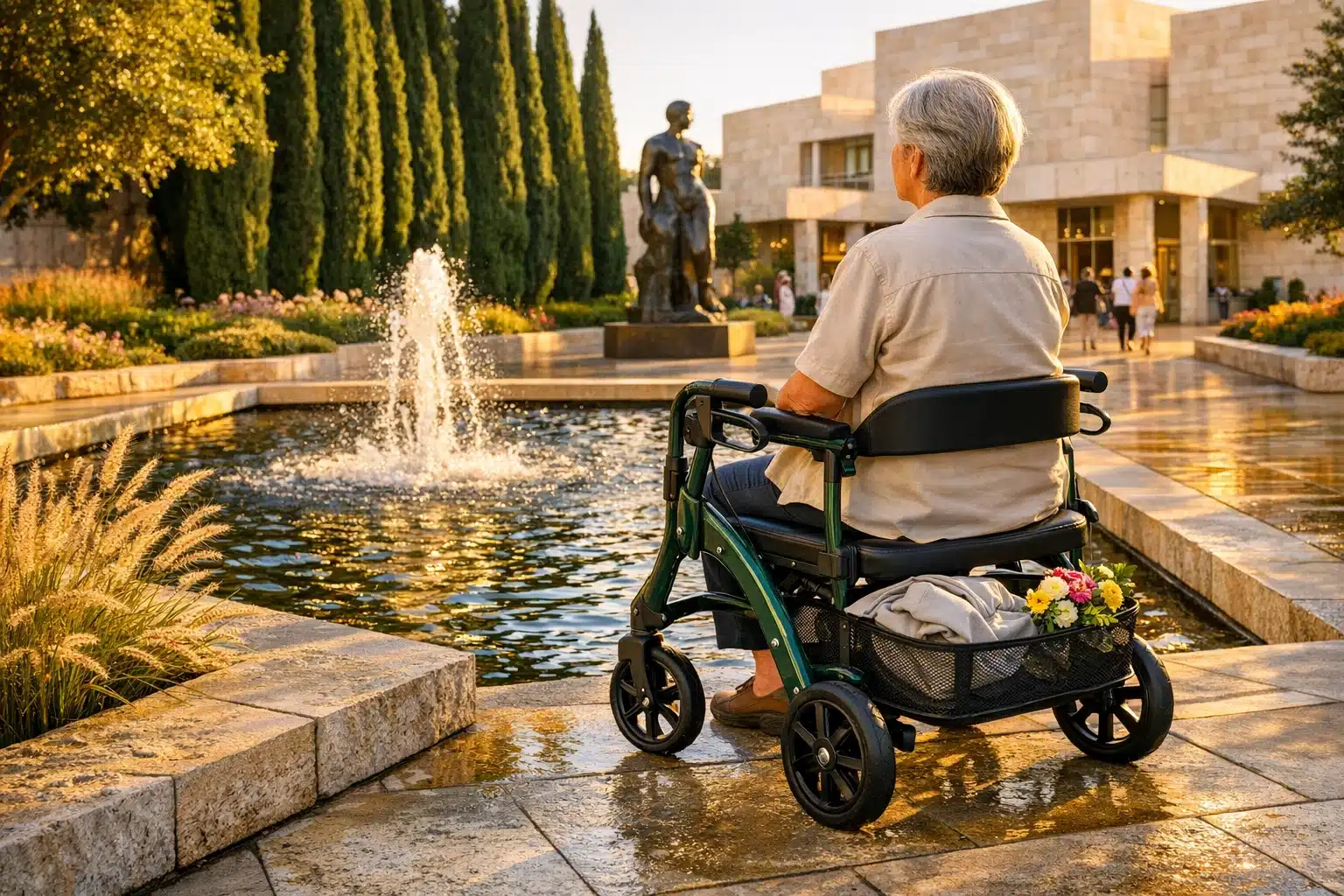
 Artificially generated image
 Modern Mobility Solutions: An Informational Guide to Innovative Alternatives for Senior Independence and Safety
A mobility aid is more than a frame with handles; it shapes how a person moves through the kitchen, answers the door, shops for groceries, and feels about leaving home. Many older adults begin with a standard walker because it is familiar, yet daily life can change faster than that device can adapt. Newer designs now offer seats, smoother wheels, upright posture support, and easier steering. Understanding those options can help families choose equipment that protects safety without quietly shrinking independence.
This guide begins with a simple outline: first, it explains why a conventional walker may stop meeting everyday needs; next, it reviews modern walker alternatives; then, it shows how to compare important features with a practical eye; after that, it covers how to change your walker safely; finally, it closes with a summary aimed at seniors and caregivers who want a solution that supports confidence as well as stability.
Why a Standard Walker Sometimes Stops Being the Right Fit
A traditional walker remains useful in many situations. It is often prescribed after surgery, during rehabilitation, or when a person needs a broad and predictable base of support indoors. Because it has four fixed points of contact, it can feel reassuring on flat floors. Many models are also relatively light, with basic frames commonly weighing less than many rollators. For short distances in controlled spaces, that simplicity can be a strength.
Still, a standard walker asks a lot from the person using it. It usually requires a lift-and-step pattern: lift the frame, set it down, step into it, then repeat. That movement can slow walking speed and interrupt rhythm. For someone with arthritis in the hands, shoulder weakness, reduced coordination, or limited stamina, the repeated lifting may become tiring. What once felt secure may begin to feel clumsy. A walker should assist motion, not turn every doorway into a small engineering project.
There are also environmental issues to consider. Older homes may have narrow bathrooms, thresholds, rugs, or tight turns between furniture. Outdoors, uneven pavement, gravel, and grass can make a fixed walker awkward. If the user starts avoiding the garden, a neighbor’s porch, or even the mailbox because the device feels difficult to manage, that is valuable information. Mobility tools are meant to expand life, not trim it down.
Common signs that it may be time to change your walker include:
– leaning heavily forward instead of standing upright
– feeling exhausted after a short distance
– trouble managing curbs, thresholds, or carpets
– avoiding social outings because movement feels stressful
– needing frequent rests but having nowhere safe to sit
– difficulty carrying small personal items while walking
Another important clue is posture. When a person bends far over a device or grips it with tense, raised shoulders, the issue may not be motivation or strength alone. It may be poor fit. Improper handle height can increase strain through the wrists, neck, and back. A standard walker can also encourage a stop-start pattern that makes movement feel less natural, especially for seniors who are still fairly active and want something that keeps pace with everyday life. The goal is not to abandon a familiar device simply because something newer exists; the goal is to decide whether the current aid still matches the user’s body, habits, and surroundings. That is the real turning point.
Modern Walker Alternatives and What They Actually Offer
The phrase modern walker alternative can describe several different devices, and they are not interchangeable. Each one solves a different problem. A two-wheeled walker, for example, keeps rear stability while making forward movement smoother. It can be easier for someone who struggles to lift a standard frame but still needs a controlled pace. A rollator, by contrast, typically has four wheels, hand brakes, and a seat. It supports a more continuous walking pattern and can be a strong option for users who tire easily yet remain mobile enough to manage braking and turning safely.
Upright rollators are another growing category. These models raise the arm position so the user can rest forearms on supports instead of hunching over handles. For some seniors, especially those who complain of back pain or neck strain while walking, this design can promote a more open chest and a straighter gaze. That change may sound small, but it can alter how the entire walk feels. Looking ahead instead of down at the floor often improves confidence and awareness of the environment.
Other alternatives may fit more specific needs. A hemi walker can help someone who has use of only one hand after a stroke or injury. A transport chair and rollator combination can work for longer outings when walking ability varies. Some narrow indoor rollators are designed for apartment living, while heavier-duty outdoor versions use larger wheels to handle cracks and rougher ground more comfortably.
Useful distinctions include:
– Two-wheeled walker: steady, simple, often better for controlled indoor support
– Four-wheel rollator: smoother motion, built-in seat, better for community walking
– Upright rollator: encourages taller posture and may reduce upper-body strain
– Hemi walker: intended for one-sided support needs
– Transport combo: helpful when fatigue makes full outings unpredictable
There are trade-offs with every option. More wheels can mean easier movement, but also less automatic resistance. In plain terms, a rollator can roll away if brakes are not used properly. Seats are convenient, yet they add weight and frame size. Larger wheels handle outdoor surfaces better, but a bulkier device may be harder to lift into a car. This is why “better” depends entirely on who is using the device and where. A senior mobility aid should match walking pattern, balance, arm strength, cognitive comfort with brakes, and daily routines. The strongest choice is rarely the flashiest model. It is the one that blends into life so naturally that movement feels less like a task and more like a return to normal living.
How to Compare Mobility Aids Without Getting Lost in Features
Shopping for a mobility device can feel surprisingly technical. Product pages highlight wheel size, frame width, seat height, folding method, brake design, and weight capacity, yet many families are still left wondering what will matter in real use. The best way to compare options is to begin with the person, not the product. Start with the routes they actually travel in a typical week: bedroom to bathroom, kitchen to table, driveway to car, clinic corridor, grocery aisle, church entrance, or local park path. A device that excels on a showroom floor may not fit through a narrow half-bath door or into a small trunk.
When families begin sorting through choices, one practical instruction keeps the process grounded: Compare the top-rated senior mobility aid options currently available for enhanced daily stability.
That comparison should focus on meaningful criteria:
– Stability: Is the frame supportive enough for the user’s balance level?
– Fit: Are the handles adjustable so the elbows can bend slightly without hunching?
– Width: Can it move through common doorways, which are often around 30 to 32 inches inside older homes?
– Weight: Can the user or caregiver lift it into a car without strain?
– Wheels: Smaller wheels often suit smooth indoor floors, while larger wheels generally cope better with outdoor cracks and bumps.
– Brakes: Are they easy to squeeze, lock, and understand?
– Seat and storage: If present, are they actually useful rather than decorative extras?
Weight capacity and seat height deserve careful attention too. Many general models support typical daily use, while heavy-duty versions can accommodate higher weight ranges and provide a wider base. Seat height matters because a seat that is too low can make standing up difficult. Foldability is another overlooked point. A device that folds quickly with one motion may be far more practical than one that requires awkward adjustments every time it goes in the car.
Price should be considered, but not in isolation. Standard walkers often cost less than rollators, and upright models are usually at the higher end of the range. However, replacing an ill-suited device after only a few months can cost more in the long run than choosing carefully at the start. Reviews can help, especially when they mention real-world use on carpet, pavement, and tight indoor turns, but clinical fit still matters. A physical therapist or occupational therapist can assess gait, posture, and home setup in ways a product description cannot. The smartest comparison combines measurements, personal comfort, and professional input. That is how a list of features becomes an informed decision rather than a gamble.
How to Change Your Walker Safely and Make the Transition Feel Natural
Deciding to change your walker can be emotional. Mobility aids are practical objects, but they are also personal companions in daily life. They learn the shape of the hallway, the timing of morning tea, the path to the garden gate. Replacing one may feel like admitting weakness, even when the real story is progress, adaptation, or simply a smarter fit. Framing the change correctly matters. Moving from a basic walker to a better-suited option is not giving up. It is updating the tool so it serves the current version of life.
The transition should be gradual and structured. If a senior shifts from a fixed walker to a rollator, for instance, the new movement pattern can feel faster and less restrained. That may be liberating, but it also requires practice. Brakes must become automatic. Turning should be calm and deliberate. Sitting on a built-in seat should be tested only when the brakes are locked and the user understands the device’s balance points. A trained professional can make this learning period much safer, especially for anyone with recent falls, dizziness, neuropathy, stroke history, or memory concerns.
A sensible transition plan often includes:
– checking handle or forearm support height for upright posture
– practicing indoors on a clear path before going outdoors
– removing loose rugs, cords, and clutter during the adjustment period
– testing brake use repeatedly until it becomes familiar
– wearing shoes with secure soles rather than slippery slippers
– avoiding heavy bags on the handles, which can shift balance
It is also wise to study daily routines. Does the user need a tray for meals, a basket for medications, or a seat for rest breaks? Does the device need to fit beside a favorite chair? Can it be parked safely near the bed at night? These details sound ordinary, yet they decide whether a new aid becomes useful or annoying. Convenience shapes adherence. If a device is awkward to reach, too heavy to fold, or difficult to steer in the bathroom, people stop using it correctly.
Family members and caregivers can help by observing rather than hovering. Watch whether the senior stands taller, walks farther, or seems less anxious with the new device. Notice if hands struggle with brake tension or if the frame clips furniture corners. Ask simple questions: Does this feel easier? Does it help outside? Are you less tired? Good mobility support often reveals itself in quiet ways. The user takes one extra lap in the yard, agrees to a short outing, or walks to the mailbox without turning it into a major event. That is the kind of progress worth noticing. Safety improves most when the equipment fits the person well enough that confidence begins to return on its own.
Conclusion: Choosing the Right Mobility Aid for Independence, Comfort, and Confidence
For seniors and the people who care about them, the central question is not whether a standard walker is old-fashioned. The better question is whether the current device still supports the life the user wants to live. A senior mobility aid should make ordinary movement smoother, safer, and less draining. If walking through the home feels awkward, posture has worsened, outings are being skipped, or fatigue arrives too early, those are meaningful signals. They suggest that the device may no longer match the person’s needs.
Modern alternatives offer real advantages when chosen carefully. Two-wheeled walkers can ease the effort of lifting. Rollators can support longer distances with built-in rest stops. Upright models may improve posture and comfort for some users. Specialized designs can address one-sided weakness, transport needs, or narrow indoor layouts. None of these tools is universally superior, and that is exactly why comparison matters. The right choice depends on balance, strength, home layout, travel habits, and the user’s confidence with features such as brakes and folding mechanisms.
If you are helping decide what comes next, keep the process grounded in everyday reality:
– measure key spaces at home
– list where the device will be used most often
– consider how much rest support is needed
– check whether the user can manage brakes and steering
– ask a clinician for fitting guidance when possible
– choose a model that supports routines rather than complicating them
There is no prize for sticking with equipment that no longer works well. Likewise, there is no need to chase every new design simply because it looks modern. The smartest move sits in the middle: choose the device that fits the body, the setting, and the pace of real life. For many older adults, that decision can restore more than mobility. It can reopen familiar habits, reduce fear during simple tasks, and make movement feel less like a negotiation. A good walker alternative does not promise perfection, and it does not erase all risk. What it can do is offer steadier steps, more practical support, and a better chance to keep participating in daily life with dignity. For most seniors, that is the outcome that matters most.