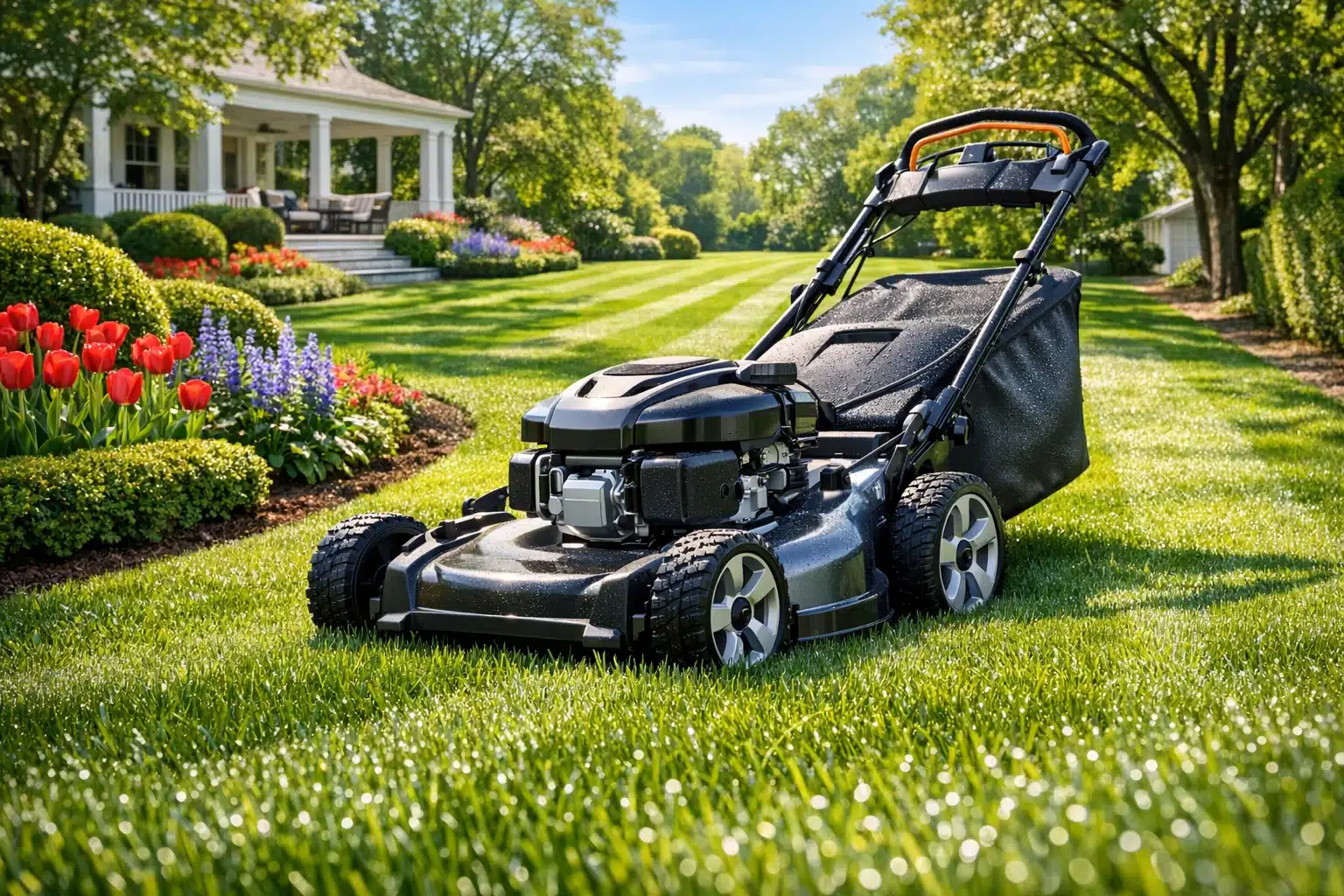
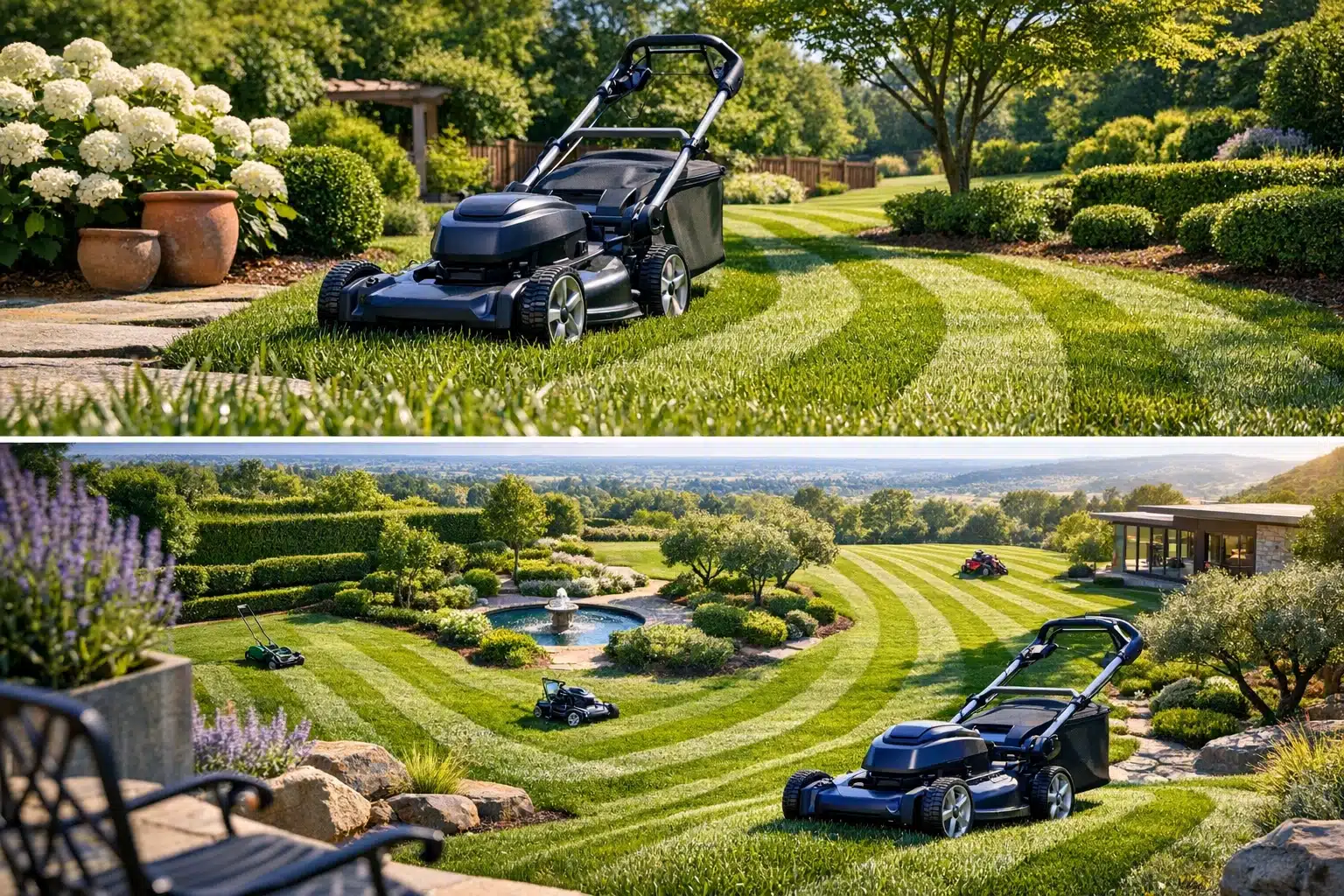
 Artificially generated image
 Choosing the Right Lawn Mower: Your Ultimate Buyer’s Guide
A lawn mower is one of those tools that seems simple until a rough patch, a steep slope, or a tiny storage shed makes the wrong choice painfully obvious. The right model saves time, trims more cleanly, and makes regular care feel manageable instead of annoying. This guide breaks down mower types, core lawn care habits, and the buying details that matter before money leaves your wallet. If you want a yard that looks good without buying blindly, the sections ahead will give you a practical path.
A Clear Outline Before the First Cut
Before comparing motors, batteries, or deck widths, it helps to step back and see the full map of the decision. Many buyers start with advertisements and end up focusing on flashy extras instead of the conditions that actually shape mowing performance. A smarter approach is to begin with an outline: what kinds of mowers exist, what your lawn really needs, what ownership will cost over time, and how your daily preferences fit into the decision. In other words, the best lawn mower is not the one with the longest feature list. It is the one that solves your particular yard problems with the least friction.
This article follows a practical order that mirrors the way experienced homeowners often learn, usually after one regrettable purchase. First, we will look at the major mower categories and how they differ in cutting power, convenience, noise, and maintenance. Next, we will move beyond the machine itself and cover lawn care essentials, because even an expensive mower cannot rescue grass that is cut too short or neglected through the season. Then we will walk through a buying guide built around the factors that matter most in real life: yard size, terrain, storage, effort level, and budget. Finally, we will close with long-term ownership advice and clear recommendations for different kinds of households.
- Understand the main mower types and who they suit best.
- Learn the lawn care basics that influence cutting results.
- Match mower design to yard size, slope, and obstacles.
- Compare initial price with maintenance, fuel, and battery costs.
- Choose with confidence based on how you actually live and mow.
That outline matters because mowing is not just about removing grass height. It is about time, energy, storage space, noise tolerance, and how much routine maintenance you are willing to handle. A small urban yard of 2,000 to 4,000 square feet asks very different things from a half-acre suburban lot or a sprawling property with hills and fence lines. Tight turns around flower beds favor agility. Long straight passes reward wider cutting decks. Uneven ground makes traction and wheel size more important. And if you already know that oil changes, spark plugs, or winter fuel prep will annoy you every season, that truth should shape your choice early rather than later.
Think of this outline as your walking path across the lawn before the first blade turns. It keeps the decision tidy, prevents feature overload, and turns a confusing shopping process into a series of manageable comparisons.
Understanding Lawn Mower Types and Their Real-World Trade-Offs
Lawn mowers fall into a few major categories, and each one serves a different style of yard care. The oldest and simplest option is the manual reel mower. It uses spinning blades powered by your push, which means no fuel, no battery charging, and almost no engine-related maintenance. Reel mowers can produce a very clean scissor-like cut on small, flat lawns, especially when grass is not overgrown. Their limits appear quickly in tall grass, bumpy terrain, or larger spaces where pushing becomes a workout rather than a chore.
Corded electric mowers offer more power with less effort, and they are often lighter and quieter than gas models. They work best on smaller lawns where an extension cord is practical. The cord is both the benefit and the burden: you get steady power without worrying about runtime, but you must manage the cable carefully around trees, beds, and patio corners. For many homeowners, battery-powered cordless mowers feel like the modern sweet spot. They start easily, run more quietly than gas units, and avoid fumes and fuel storage. Typical runtime depends on battery size, grass conditions, and deck width, but many consumer models are designed for small to medium yards, often up to about a quarter acre on one charge, sometimes more with higher-capacity batteries or spare packs.
Gas mowers still matter because they bring strong cutting power and longer uninterrupted use. They are especially useful for dense grass, larger lawns, and situations where waiting for batteries to recharge would be inconvenient. Within this group, self-propelled models reduce physical strain and help on gentle slopes or longer mowing sessions. The trade-off is clear: more noise, more maintenance, and ongoing fuel costs. Riding mowers and lawn tractors step in when the property becomes too large for a walk-behind model to feel sensible. Zero-turn mowers add exceptional maneuverability and can dramatically cut mowing time on open layouts with many turns, though they usually cost more and can be overkill for compact yards.
- Reel mowers: best for tiny, flat lawns and simple upkeep.
- Corded electric: useful for small spaces near power outlets.
- Battery mowers: convenient, quieter, and increasingly capable.
- Gas push or self-propelled: strong performers for tougher mowing.
- Riding and zero-turn mowers: time-savers for larger properties.
- Robotic mowers: low-effort maintenance cutting for suitable layouts.
Robotic mowers deserve a brief mention too. They maintain lawns by trimming frequently and lightly, which can support a tidy look, but they require boundary setup, clear expectations, and a yard that suits their navigation style. The right type, then, depends less on trend and more on how your lawn behaves week after week.
Lawn Care Essentials That Matter More Than Most Buyers Expect
A good mower helps, but good lawn care habits determine whether the yard looks healthy or stressed. One of the most important rules is to avoid cutting too much at once. Turf specialists often recommend the one-third rule, which means removing no more than one-third of the grass blade in a single mowing. Cutting too low can weaken roots, expose soil to more sunlight, and invite weeds to move in. A closely shaved lawn may look neat for a day, but it often pays for that look with slower recovery and greater vulnerability during heat or dry spells.
Mowing height should also match the grass type and the season. Cool-season grasses, such as fescue or bluegrass, are commonly kept a bit taller, often in the range of roughly 2.5 to 4 inches depending on climate and growing conditions. Warm-season grasses, such as bermuda or zoysia, are usually maintained shorter, though exact height still varies by cultivar and local conditions. Taller grass can shade the soil, reduce evaporation, and encourage deeper root development. That is why the healthiest lawns do not always look like a golf fairway. In many home landscapes, slightly taller turf is actually the smarter target.
Blade sharpness is another overlooked factor. Dull blades tear grass instead of slicing it cleanly, leaving ragged brown tips and increasing plant stress. If your lawn looks whitish or frayed after mowing, the blade may need sharpening. Many homeowners sharpen once or twice a season, but frequency depends on mowing area, soil grit, and accidental contact with sticks or stones. Cleaning the deck, checking wheel height, and clearing buildup also help the mower perform consistently.
- Mow when grass is dry for a cleaner, more even cut.
- Adjust height seasonally instead of using one setting all year.
- Sharpen or replace blades when cuts begin to look torn.
- Water deeply and less often rather than giving shallow daily sprinkles.
- Leave clippings when practical, since they can return nutrients to the soil.
Mulching, bagging, and side discharge each have a place. Mulching works well when grass is not too long and clippings are fine enough to settle back into the turf. Bagging can help after heavy growth, during leaf cleanup, or when the lawn is diseased and you want to reduce spread. Side discharge can be efficient for rougher areas or faster cutting. Seasonal timing matters too. Spring growth may demand more frequent mowing, summer heat often calls for higher settings, and fall is a good time to remove leaves and prepare turf for cooler weather. The broader lesson is simple: the mower is only one player in the scene. The lawn responds best when cutting habits, blade care, watering, and timing work together.
Smart Buying Guide for Yard Size, Terrain, Storage, and Budget
Find the perfect lawn mower for your yard size, terrain, and budget with our quick step-by-step guide.
Start with size, because it influences almost every other choice. For a small yard, especially under about a quarter acre, a reel mower, corded electric mower, or compact battery mower often makes the most sense. These options are lighter, easier to store, and generally cheaper to run. Once the lawn moves into the quarter-acre to half-acre range, cordless and gas walk-behind mowers become stronger contenders, especially if the grass grows thick or the layout includes many turns. Above that range, a wide-deck self-propelled mower or a riding mower begins to save meaningful time. On properties around an acre or more, many homeowners shift to riding equipment simply because walking the entire space week after week becomes a major time investment.
Next, study terrain honestly. Flat ground is forgiving, but hills, roots, dips, and tight borders quickly expose weak choices. Slopes often favor self-propelled walk-behind models because they reduce pushing effort and can offer better control than heavy riding machines on certain grades. Yards with many trees, beds, and curved edges benefit from compact designs that turn easily. Large open lawns reward wider cutting decks, because every extra inch reduces the number of passes needed. Wheel size, handle comfort, and mower weight also matter more on uneven ground than they do on a simple rectangle of turf.
- Small, flat lawn: reel, corded, or smaller battery mower.
- Medium mixed lawn: battery or self-propelled gas mower.
- Large open lawn: wide-deck walk-behind or riding mower.
- Steep or uneven lawn: prioritize traction, control, and manageable weight.
- Obstacle-heavy lawn: choose a nimble mower with easy turning.
Then consider storage and maintenance. A foldable handle can make a surprising difference in a crowded garage. Battery mowers are attractive for homeowners who want push-button starts and less seasonal upkeep. Gas models can still be the right answer for power and endurance, but they bring oil checks, air filter attention, fuel storage, and winterization into the picture. Budget should be judged in two layers: purchase price and ownership cost. A cheap mower that struggles, stalls, or needs frequent service may not remain cheap for long. Approximate price bands help set expectations: manual reel mowers often sit at the low end, corded electrics remain relatively affordable, battery models range widely depending on battery system and deck size, gas mowers often cost more up front and over time, and riding mowers step into a much higher bracket altogether.
The smart buyer does not ask, “What is the fanciest mower I can afford?” A better question is, “What level of machine will handle my lawn reliably without adding unnecessary cost or hassle?” That small shift turns shopping into a practical decision instead of an impulsive one.
Choosing with Confidence and Living Happily with the Result
The final decision becomes easier when you imagine not just buying the mower, but owning it for the next several years. That perspective changes everything. A machine that looks impressive in a product photo may feel awkward in a narrow shed, tiring on a slope, or annoying if it requires more upkeep than you realistically plan to give. The right mower should fit your routine as much as your lawn. Busy households often benefit from convenience first: easy starts, simple height adjustment, and low maintenance. People who enjoy yard work as a weekly ritual may be more comfortable with a heavier gas model or even a reel mower for the satisfying, old-school rhythm it offers on a small patch of turf.
Think in household scenarios. A first-time homeowner with a modest suburban lot often does well with a cordless mower that balances ease, noise control, and storage-friendly design. An owner of a larger property with thick seasonal growth may still get better value from a dependable self-propelled gas mower or a riding mower if time is the bigger cost than fuel. Someone living close to neighbors may appreciate the quieter operation of battery equipment, especially for early morning or evening mowing. Older users or anyone with limited strength should pay special attention to machine weight, propulsion, and handle ergonomics rather than focusing only on deck size or engine numbers.
- If you want simplicity, lean toward lighter electric options.
- If you need endurance, look harder at gas or larger battery systems.
- If time matters most, wider decks or riding models may justify the cost.
- If storage is tight, compact frames and folding handles become valuable.
- If lawn appearance is the priority, combine a good mower with consistent care habits.
Ownership basics also deserve respect. Keep blades sharp, clean the underside of the deck when safe to do so, store batteries according to manufacturer guidance, and check fasteners and wheels periodically. For gas models, routine oil service and fuel management are part of responsible ownership. For battery systems, it is wise to consider whether you may want matching tools later, since one battery platform can sometimes cover a trimmer, blower, and hedge cutter as well. That broader ecosystem can improve value, though it should never outweigh the core requirement that the mower itself suits your yard.
For most readers, the best outcome is not a showroom-perfect machine with endless features. It is a mower that starts reliably, cuts evenly, fits your space, and makes weekly lawn care feel manageable. If you choose based on yard size, terrain, budget, and your willingness to maintain the equipment, you are far more likely to end up with a tool you appreciate rather than tolerate. That is the real goal for homeowners, renters with yard duties, and anyone trying to keep outdoor chores efficient without sacrificing results.