 Artificially generated image
 Metal Sandwich Panels: Ultimate Guide to Durability & Savings
Outline and Why This Topic Matters
Roofs do far more than keep rain outside; they shape energy use, indoor comfort, maintenance demands, and the long-term resilience of a building. As utility costs rise and weather swings become more intense, property owners are looking beyond basic coverings and paying closer attention to insulated metal systems. This guide explains the main metal roof options, the science behind thermal performance, and where long-term savings actually come from.
Before comparing products, it helps to start with a clear roadmap. This article is organized to move from broad understanding to practical decision-making, so readers can follow the subject without getting buried under jargon. We begin with an outline, then move into the types of metal roofing available today, the role of thermal insulation, the financial logic behind life-cycle savings, and finally the steps that help match a roof system to a specific building.
- The first part introduces the major roof system categories and explains why metal sandwich panels attract growing interest.
- The second part compares common metal roof options, including exposed-fastener panels, standing seam systems, and insulated composite panels.
- The third part focuses on thermal insulation, covering heat flow, indoor comfort, condensation control, and seasonal performance.
- The fourth part examines long-term cost savings, from energy bills and maintenance to durability and replacement timing.
- The fifth part offers a practical conclusion for owners, managers, and renovators who need to balance cost, performance, and risk.
The relevance of this topic is easy to see in both residential and commercial settings. Warehouses, workshops, retail units, farm structures, multifamily buildings, and even modern homes are under pressure to perform better with less wasted energy. Roofing matters because a large amount of heat gain or loss happens through the upper envelope of a building. In warm climates, a poorly designed roof can turn afternoon sun into an expensive burden for cooling equipment. In cold climates, weak insulation and air leakage can cause persistent heat loss, ice formation, and discomfort near the ceiling line.
Metal sandwich panels sit at the intersection of structural protection and energy strategy. They combine outer metal facings with an insulating core, creating a system that can be quicker to install than multi-layer roof assemblies while offering predictable thermal performance. For many property owners, that combination feels less like a construction detail and more like a business decision. A roof is overhead every day, quietly absorbing sun, wind, rain, and time. Choosing the right one is not glamorous, but it can influence utility spending, maintenance schedules, and the useful life of the building beneath it.
Understanding Metal Roof Options: What Sets Each System Apart
Metal roofing is not a single product category. It is a family of systems with different profiles, fastening methods, thermal behaviors, and price points. The most common options include exposed-fastener panels, standing seam roofs, and insulated metal sandwich panels. Each one can be effective in the right context, but they solve problems in different ways.
Exposed-fastener panels are often used on agricultural buildings, storage facilities, workshops, and budget-sensitive projects. They are typically made from steel or aluminum and installed with visible screws that secure the panel directly to the structure or purlins. Their strengths are simplicity, speed, and relatively low initial cost. However, the visible fasteners can become maintenance points over time as seals age, expansion and contraction place stress on attachment points, and weathering affects washers. This does not make the system poor; it simply means owners should expect a more active maintenance profile compared with higher-end assemblies.
Standing seam roofing is often chosen for homes, offices, institutional buildings, and architecturally visible projects. The panels interlock vertically, and many designs conceal the fasteners. This creates a cleaner appearance and often improves weather resistance because fewer penetrations are directly exposed. Standing seam systems also handle thermal movement more gracefully than some rigidly fixed panel types, which can support long-term durability. Their disadvantages usually include higher material and labor costs, plus the need for skilled installation. When aesthetics, durability, and water management are top priorities, standing seam remains a strong contender.
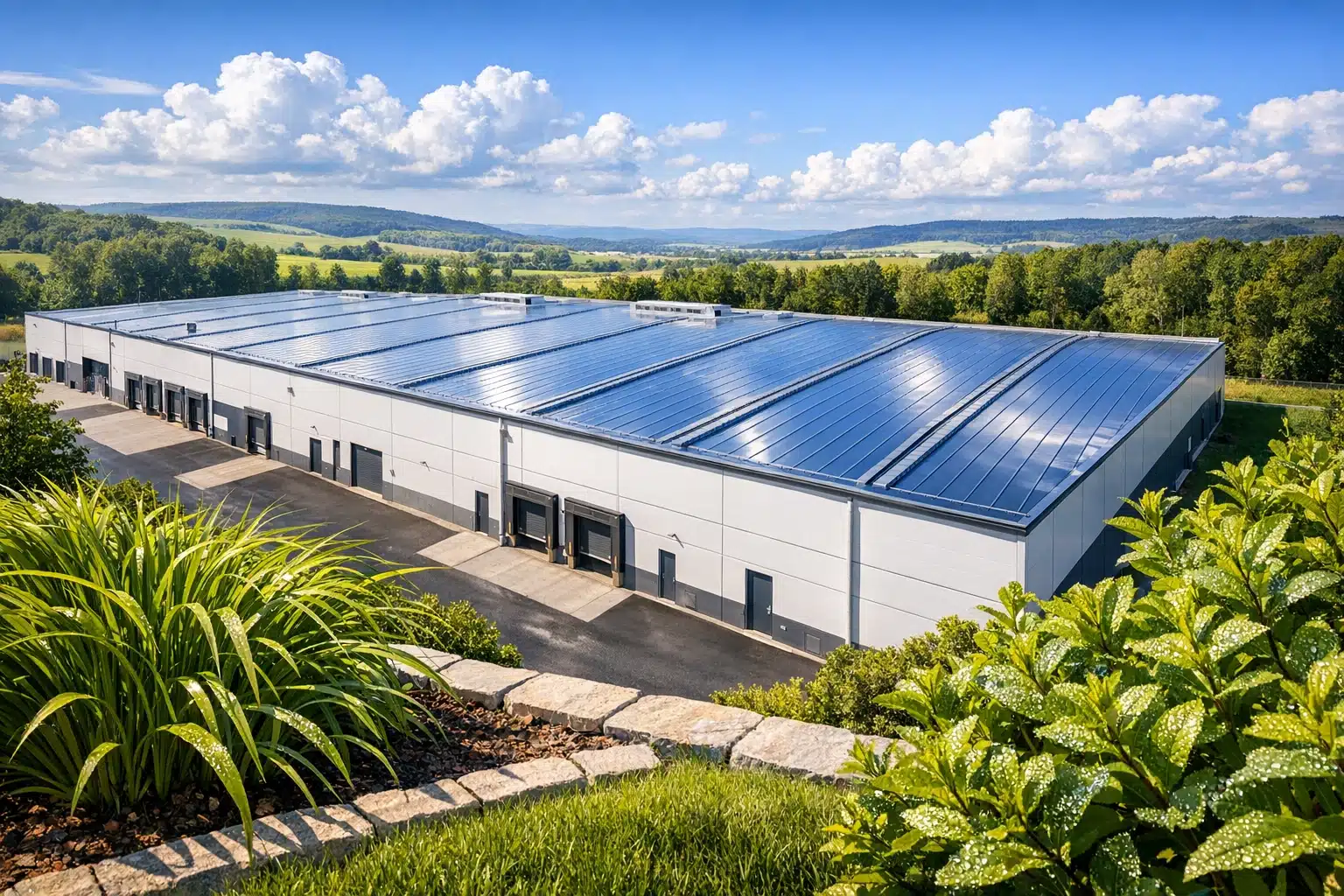
Metal sandwich panels are different because they combine outer metal skins with a factory-bonded insulating core, commonly made from polyisocyanurate, polyurethane, mineral wool, or expanded polystyrene depending on the application. Instead of building a roof in many layers on-site, sandwich panels arrive as a more complete component. That can reduce installation complexity, improve consistency, and shorten construction timelines. These systems are especially attractive for industrial buildings, cold storage facilities, logistics centers, modular construction, and energy-conscious renovations.
- Steel offers strength, broad availability, and favorable cost for many projects.
- Aluminum resists corrosion well and is often preferred in coastal or chemically demanding environments.
- Protective coatings, paint finishes, and panel thickness significantly affect longevity.
The best option depends on the building’s use, local climate, structural design, and budget priorities. A warehouse owner may value quick enclosure and energy control. A homeowner may care more about appearance and lifespan. A factory manager may prioritize fire performance, washability, and predictable interior temperatures. Choosing wisely means comparing the whole roof assembly, not just the sheet on top. Material, fasteners, insulation, coatings, and installation quality all shape real performance over time.
Thermal Insulation Benefits: Comfort, Efficiency, and Building Performance
Thermal insulation is often discussed in numbers, but its effects are felt in daily life. It influences how quickly a building heats up under the afternoon sun, how steadily indoor temperatures hold overnight, and how hard mechanical systems must work to maintain comfort. In roofing, insulation is especially important because the roof receives direct solar exposure and often covers a very large surface area. A weak roof assembly can behave like a giant radiator in summer and a heat drain in winter.
Insulated metal sandwich panels help manage this by combining weather protection with a continuous insulating layer. Compared with some traditional assemblies that depend on multiple site-installed layers, factory-made panels can reduce gaps and inconsistencies. That matters because thermal performance is not only about nominal insulation thickness; it is also about continuity. When insulation is interrupted by framing, fasteners, or poorly sealed joints, thermal bridging can lower the real-world effectiveness of the system.
Depending on the core material and thickness, sandwich panels can achieve meaningful R-values that support better control of heat transfer. Polyisocyanurate and polyurethane cores are often chosen where high thermal resistance per inch is a priority. Mineral wool may be selected when fire performance and acoustic control are equally important. The right choice depends on the building’s regulatory requirements and operational needs rather than one universal formula.
The benefits of good roof insulation extend beyond the utility bill:
- More stable indoor temperatures can improve occupant comfort and support temperature-sensitive operations.
- Reduced heat gain may lower peak cooling loads, which can ease strain on HVAC equipment.
- Better winter retention of heat can reduce drafts and cold ceiling effects.
- Properly detailed panels can help limit condensation risks that threaten insulation, finishes, and stored goods.
Condensation deserves special attention. In many buildings, especially warehouses, workshops, sports facilities, and food-related spaces, warm interior air can meet a cold roof surface and form moisture. Over time, uncontrolled condensation can contribute to corrosion, staining, mold growth in adjacent materials, or damage to inventory. Insulated roof systems help keep interior-facing surfaces warmer, reducing the chance that moisture in the air will reach dew point at the panel surface. Air sealing and vapor control still matter, but insulation is a central part of the strategy.
There is also a quieter benefit: sound moderation. Rain on bare metal can sound sharp and lively, which some people enjoy and others do not. Insulated assemblies generally soften that effect, and certain core materials can improve acoustic performance further. The result is a building that feels less harsh during storms or high winds. In practical terms, thermal insulation transforms a roof from a simple cover into a more complete environmental control layer, one that works in silence even when the weather does not.
Long-Term Cost Savings: Looking Beyond the Purchase Price
The initial price of a roof is easy to compare, which is why many decisions stop there. Yet roofs are long-lived systems, and their real cost emerges over years of operation. Energy use, maintenance frequency, downtime during repairs, coating durability, and eventual replacement all matter. A less expensive system may still prove economical, but only if its long-term demands fit the building and the owner’s tolerance for upkeep.
Metal sandwich panels often enter the discussion because they can shift value from ongoing costs to upfront performance. Their insulating core may reduce heating and cooling loads, especially in buildings with large roof spans and frequent interior conditioning. The exact energy savings vary by climate, insulation thickness, air tightness, and occupancy patterns, but the principle is straightforward: lower heat transfer can reduce the amount of energy required to maintain target temperatures. In facilities that operate long hours, even modest percentage improvements can accumulate into meaningful savings over time.
Maintenance is another part of the equation. Factory-finished metal skins are designed to resist weathering, and integrated systems can reduce the number of separate layers that may degrade or detach. Fewer site-built components can mean fewer points of failure, although no roof is maintenance-free. Periodic inspection is still essential, especially at penetrations, joints, flashings, gutters, and attachment details. The financial advantage comes from lowering the frequency and scale of interventions, not from pretending the roof will never need attention.
Construction speed can also affect project economics. Faster enclosure may reduce labor exposure, equipment rental time, and weather-related delays. On commercial projects, time saved can have a real value because it may allow interior trades to begin earlier or shorten the path to occupancy. That benefit rarely appears on a simple material quote, but owners often feel it elsewhere in the budget.
Upgrade your roof with durable metal sandwich panels to lower energy bills and protect your building for decades.
That statement resonates because it captures the practical appeal of the system, but smart buyers still need to ask careful questions. What core material is being used? What coating system protects the exterior skin? How is thermal bridging addressed at supports and penetrations? What are the warranty terms, and what maintenance is required to preserve them?
- Lower energy demand can reduce operating expenses over the roof’s service life.
- Durable finishes may postpone major refurbishment compared with lower-grade assemblies.
- Consistent insulation performance can support equipment longevity by reducing extreme load swings.
- Long service life can improve life-cycle value even when the initial investment is higher.
Seen through a life-cycle lens, the right roof is less like a commodity and more like infrastructure. It protects assets, supports comfort, and influences monthly costs in a way that compounds quietly. That is why the cheapest quote is not always the least expensive choice.
Choosing the Right System for Your Building: A Practical Conclusion for Owners and Managers
If you are selecting a roof for a new project or planning a replacement, the strongest approach is to match the system to the building’s actual demands rather than to trends or slogans. A light-use storage building may do well with a simpler metal roof and a carefully designed insulation package beneath it. A temperature-controlled facility, workshop, logistics center, or energy-conscious renovation may benefit more from integrated insulated panels that deliver enclosure and thermal control in one package. The right answer depends on use, climate, code requirements, structural conditions, and how long you expect to keep the property.
Start with a few grounded questions. How important are heating and cooling costs in the yearly budget? Is condensation already a problem? Does the building face coastal exposure, snow loads, strong sun, or airborne pollutants? Will roof access for maintenance be frequent? Are aesthetics visible to customers or neighbors, or is functional performance the main objective? These questions narrow the field quickly and prevent overspending on features that add little value in a specific context.
It is also wise to compare systems using life-cycle thinking rather than a simple installed-price snapshot. Ask suppliers and contractors for information on panel thickness, core type, coating class, fastening method, fire ratings where relevant, and expected maintenance intervals. Request clarity on air sealing details, flashing treatment, and how transitions around skylights, vents, and parapets will be handled. A well-specified roof usually outperforms an impressive brochure.
- For homeowners, appearance, noise control, and long service life may lead the decision.
- For commercial owners, energy use, speed of installation, and maintenance access often matter most.
- For industrial operators, durability, hygiene, temperature stability, and operational downtime can be decisive.
The central lesson of this guide is simple. Metal roof options should be judged as full systems, not isolated sheets of material. Thermal insulation is not merely a comfort upgrade; it is part of how a building controls energy, moisture, and wear. Long-term cost savings come from the interaction of durability, efficiency, installation quality, and maintenance planning.
For the target audience, whether that means a homeowner comparing renovation bids or a facility manager responsible for a large roof area, the goal is not to chase the newest product with blind enthusiasm. It is to invest in a roof that fits the building honestly and performs with consistency. When that match is made well, the roof stops being a recurring worry and starts acting like a dependable asset above your head.